
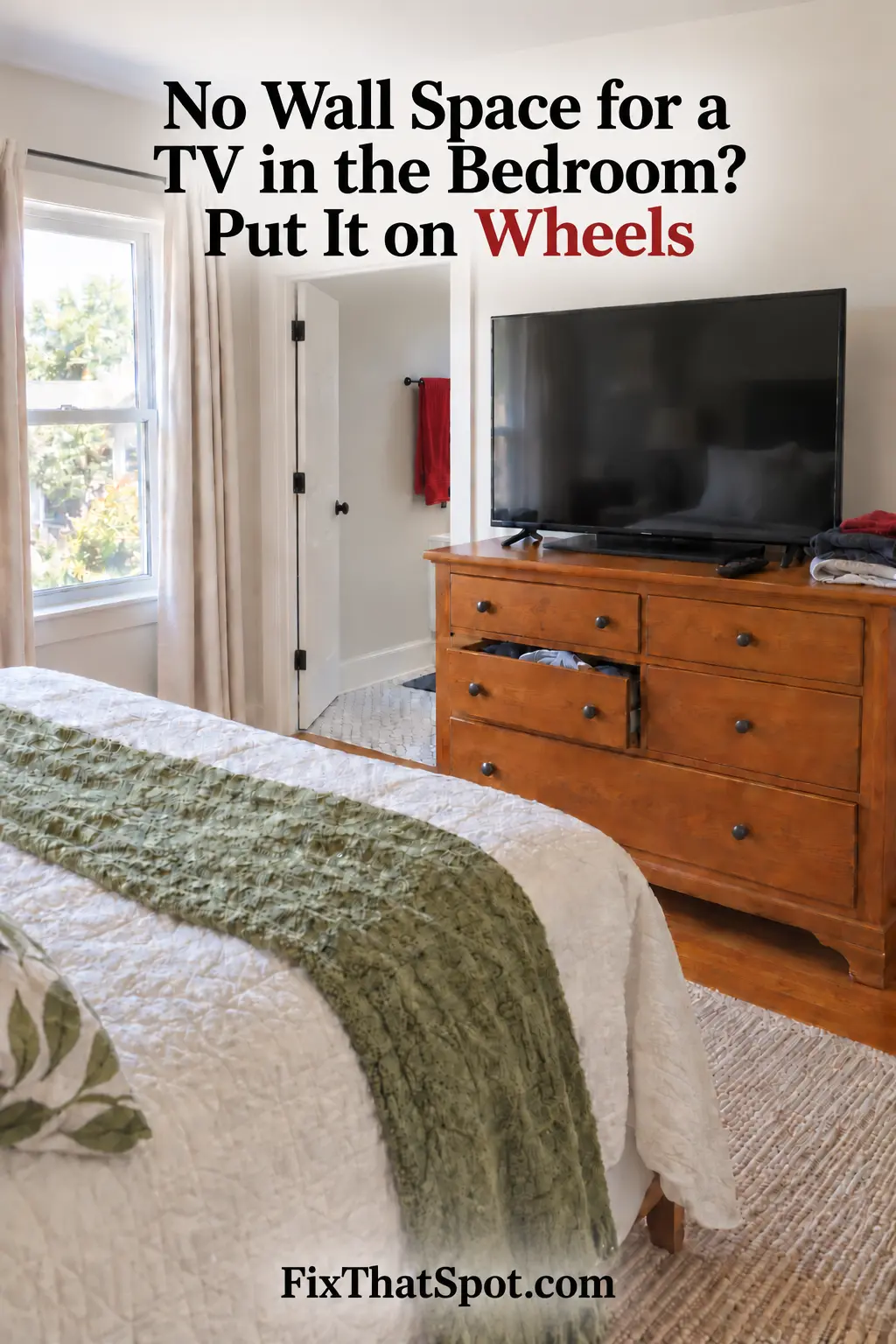
A dresser looks like the obvious place for a bedroom TV until the screen takes over the top. Folding clothes now requires another surface, and anything behind the television becomes harder to reach.
Sometimes the only wall facing the bed is not really available. Part of it may be taken up by a window, or the TV would sit where people walk into the room. Putting it farther to one side can leave the screen difficult to see from bed.
The problem is not always a complete lack of space. It is expecting one location to work all day. The best viewing position may be useful for two hours and inconvenient for the other twenty-two.
A rolling TV stand lets the viewing position and the everyday position be different. The TV can roll opposite the bed when someone wants to watch it, then move back beside a dresser or against another wall.
Nothing is hidden, and no motor raises the screen out of a cabinet. The television simply stops claiming one permanent spot.
The stand still needs somewhere to wait. That space does not need a perfect view, but the base and screen must fit without blocking a closet, door, or drawer. If several other items are already competing for the same space, it may help to consider why the bedroom feels crowded before adding another one.
Make Sure It Can Move Between Both Spots
Measure more than the place where the stand will sit. It also has to get there. Check the gap beside the bed and any tight turns near a dresser. A wheel that keeps clipping a furniture leg will make the stand much less useful.
Then look at the nearest outlets. The clips on the stand keep the cable from hanging loose, but you still need to unplug the TV before moving it. Otherwise, the cord can trail across the floor or get pulled toward the outlet.
Four casters let the stand turn in a tight area, and the wheels lock once it is in position. Hard flooring usually provides an easier route than thick carpet. A raised rug edge may be enough to make frequent movement less convenient.
Check Which Size Fits Your TV
The TV stand on wheels comes in two sizes. The smaller version is advertised for 13- to 50-inch TVs weighing up to 44 pounds. The larger version is advertised for 23- to 60-inch TVs weighing up to 88 pounds.
Check the VESA pattern as well as the screen size and weight. The smaller version supports listed patterns up to 200 × 200 mm. The larger version supports the listed patterns from 100 × 100 to 400 × 400 mm. A TV can fall within the stated screen range and still have mounting holes that do not fit.
The larger stand has three manual height settings and up to 15 degrees of tilt. These adjustments help establish a clear view from bed, but they do not need to change whenever the stand moves.
Once the TV, base, route, and parking spot have been measured, the bedroom no longer needs one location that works for everything. The screen can stand where it is useful while it is on and move back when that patch of floor is needed again.