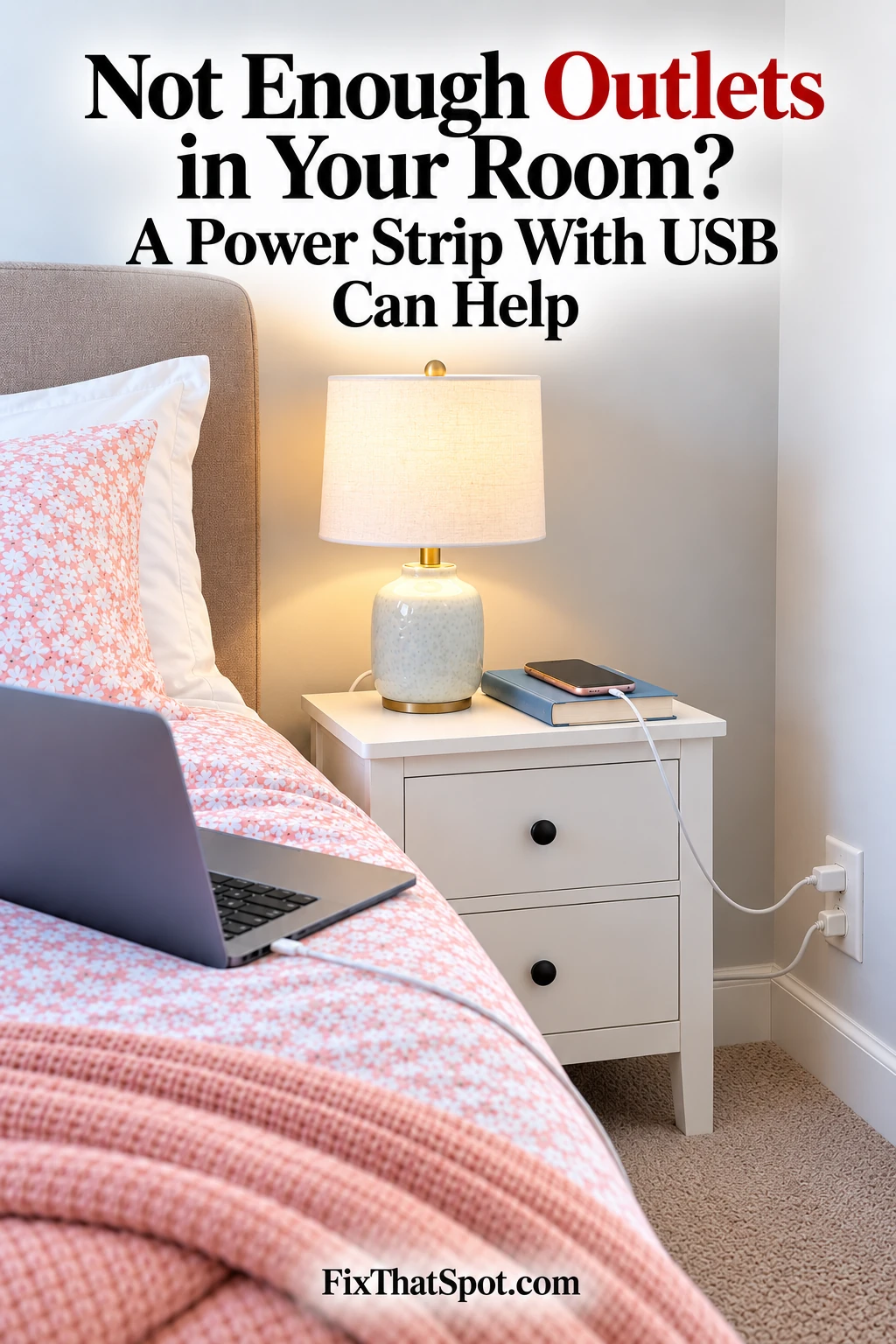

A lamp can take up half of the outlet beside a bed or desk before anything needs charging. The phone charger fits in the other socket, until a laptop comes into the room and needs that spot too. Unplugging the phone for a few hours works, but it becomes part of using the laptop every time.
There may be another empty outlet somewhere in the room, just nowhere useful. Charging a phone across the room from the bed or stretching a laptop cord away from the desk is not much of a fix. What is missing is enough places to plug things in where they are already being used.
A power strip with USB gives the phone another place to charge without taking the lamp or laptop out of the wall. The USB connection also means its charging brick can stay in the drawer.
What Matters More Than the Number of Outlets
A strip with a long row of sockets can still be awkward if it has to stay down by the wall. This becomes especially noticeable when the outlet is behind a nightstand or several feet from the end of a desk. The strip needs to reach the useful spot, not simply add more sockets at the old one.
The option here has a 10-foot cord, which gives more room to place it near the devices that need it. Its flat angled plug also sits closer to the wall than a conventional straight plug. That can matter behind furniture, where several inches of protruding plug and cord are enough to keep a nightstand from sitting where it normally would.
There are six regular outlets on the strip, along with two USB-A ports and one USB-C port. The USB connections are useful here because a phone does not need its wall charger taking up one of those six outlets. A laptop or lamp with a regular plug still has its own socket.
More outlets are not particularly helpful if the strip ends up much larger than the setup requires. Beside a bed, the usual collection may only be a lamp, phone and one or two other devices. At a desk, six AC outlets may make more sense. The point is to stop moving plugs around, not to fill every available socket.
If a lamp is using one of the scarce outlets because the bedroom has no ceiling fixture, an upward-facing floor lamp can help with that separate lighting problem. It still needs power, so the location of the room’s outlets remains part of the setup.
With the strip near the desk or nightstand, the laptop can stay plugged in while the phone charges beside it. There is no reason to keep swapping the two at the wall.