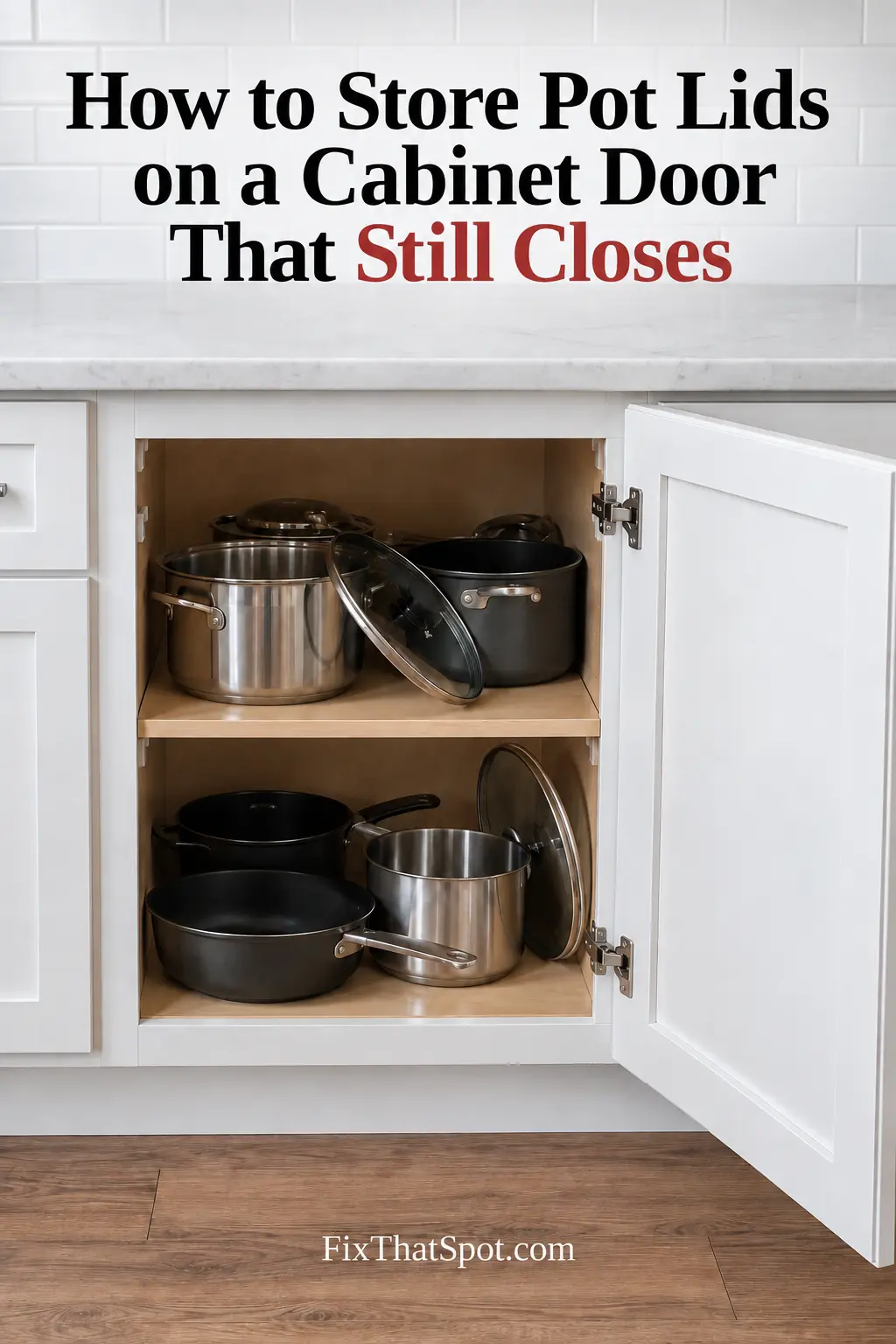
One loose pot lid can make a cabinet look fuller than it is. Lean it against the pans and it slips sideways. Lay it flat and the pan that matches it usually ends up on top. By the time several lids share the shelf, taking out one pan can involve most of the cabinet.
The inside of the door is an obvious place to move them, and often a useful one. A door-mounted pot-lid rack keeps small and medium lids upright instead of letting them spread across the shelf. Open the door and the lids come into view without bringing a saucepan with them.
The rack has six tiers and measures 6.3 inches wide by 13.6 inches high. Its U-shaped slots leave space for several common lid handles. Those details help, but neither one decides whether it belongs on a particular cabinet door. Depth does.
Allow Room for the Lid Rim and Knob
The rack measures 2.4 inches deep before a lid goes into it. Once the door begins to close, a wide rim moves toward the shelf behind it. A deep knob can catch on cookware that seemed well out of the way with the door open. The largest lid is the useful one to test here because the smaller ones are unlikely to decide where the rack can go.
Hold the rack and the largest lid against the door before attaching anything. Then close the door slowly and watch where the lid travels. This also shows whether its rim clears the hinges. A rack can fit neatly between the edges of the door and still be in exactly the wrong place.
The wire can flex around a larger lid, but the cabinet does not become deeper with it. Pull the rack forward and the lid moves forward too. It may sit securely while keeping the door an inch open, which is not much of an improvement. The manufacturer cautions against bending the rack too far, and customer feedback suggests that small and medium lids are its better use.
Two racks come in the pack, but installing both only makes sense if the door and the cabinet behind it have the room. Twelve available tiers do not guarantee space for twelve actual lids.
Adhesive pads attach at the top and bottom of the rack. The lower pad helps stop the rack from swinging when a lid comes out. Reports of peeling make the adhesive harder to judge, especially with several glass lids adding weight. The seller’s stated weight rating does not tell you how well a pad will remain attached to a particular cabinet finish.
Screws remove the adhesive question, but they introduce a different measurement. Check the thickness and construction of the door before drilling. Supplied wall hardware is not automatically suitable for a thin cabinet panel.
Once the lids leave the shelf, the pans should be easier to reach. If handles and cookware still have to be rearranged whenever the cabinet opens, the next problem is the way the kitchen cabinets are organized, not the lid rack.
With the rack placed clear of the hinges and shelf edges, the door opens with the lids and closes without meeting them. The shelf holds the pans, and choosing a lid no longer starts by moving one.