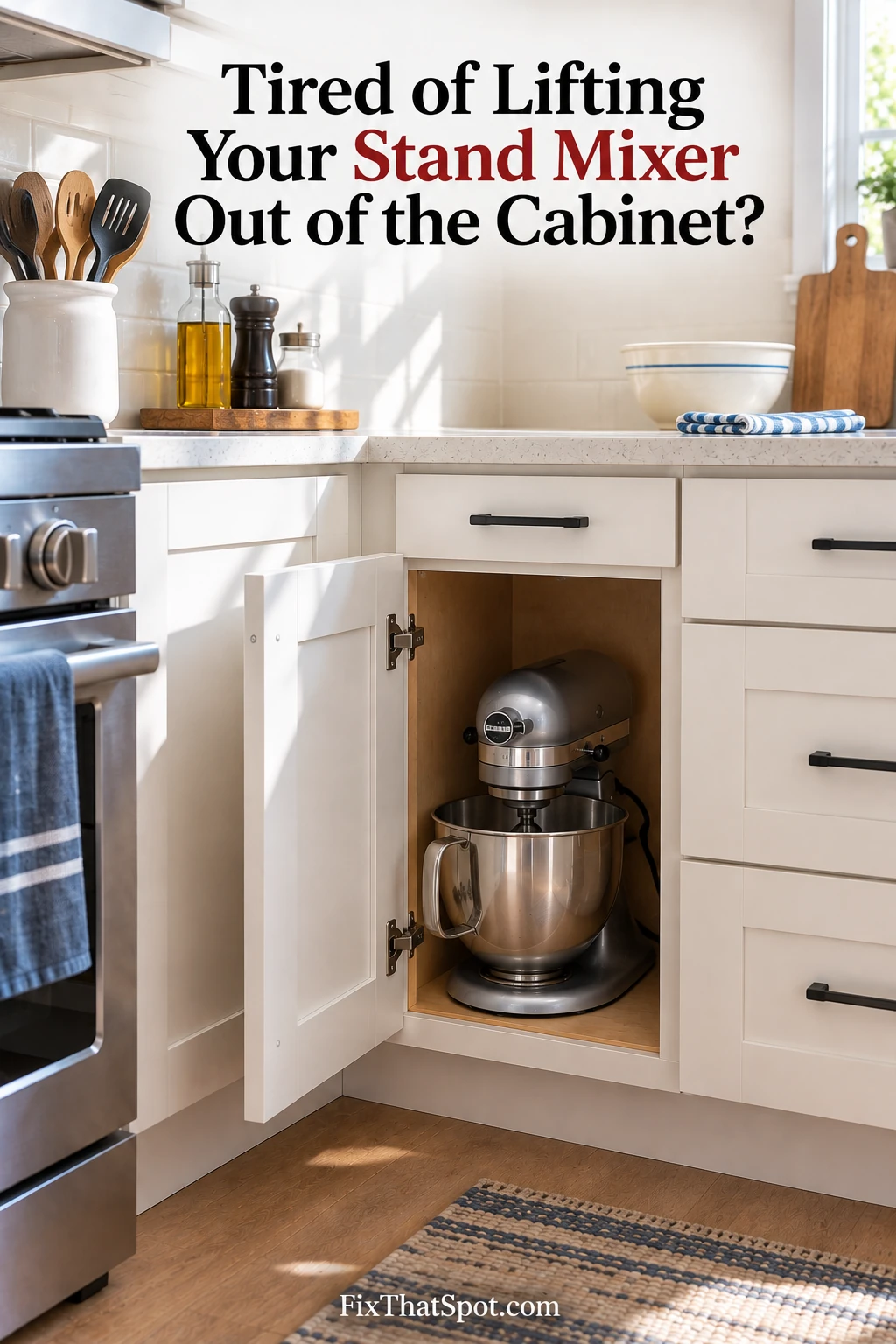
A stand mixer can spend most of the week in a lower cabinet and still claim a fair amount of attention.
Every time it comes out, someone has to lift it from below the counter to working height. Putting it away means making the same trip in reverse.
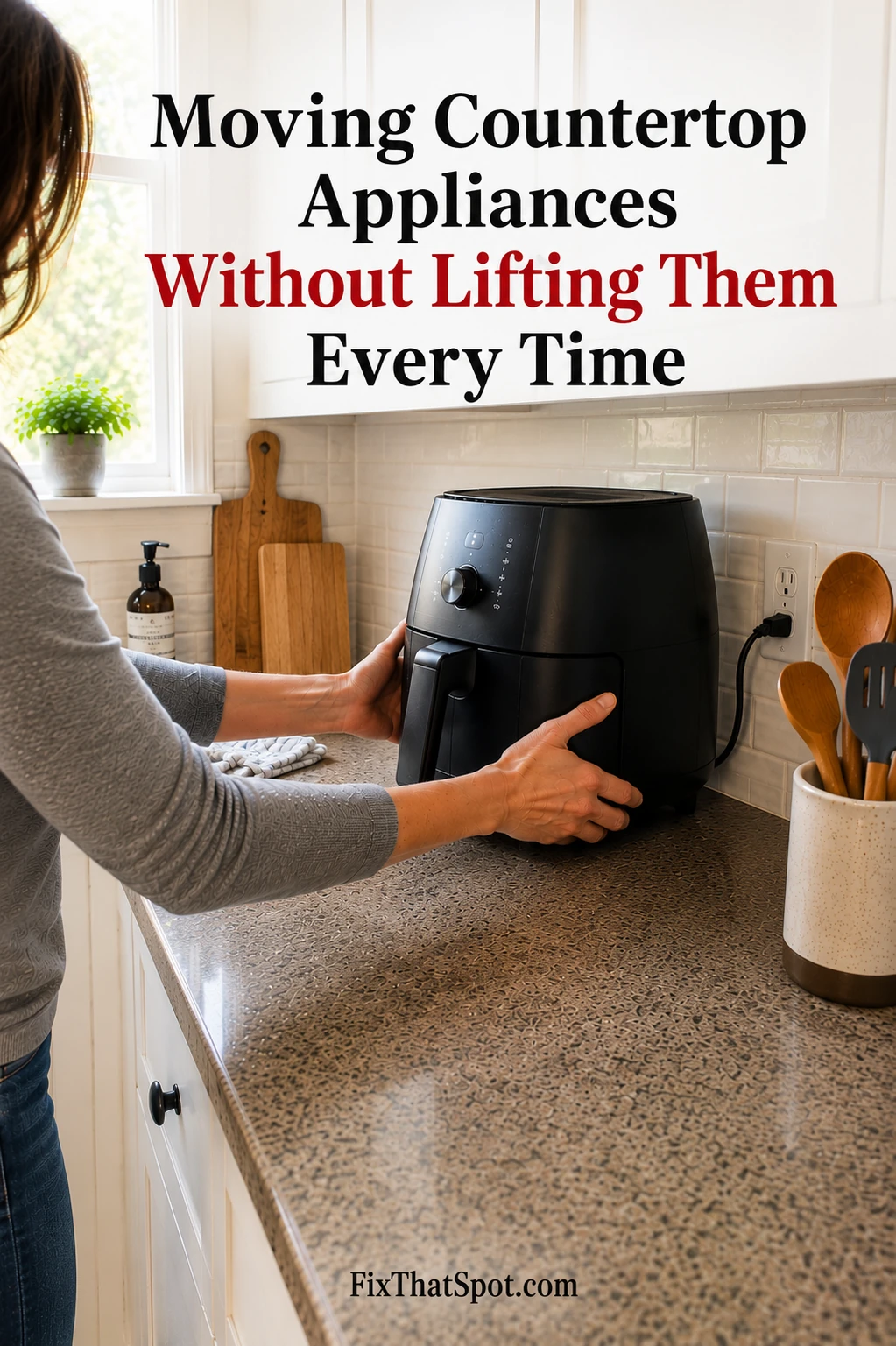
Keeping it on the counter avoids that lift. It also leaves a large appliance sitting there between uses. If that arrangement works except for pulling the mixer forward, moving a countertop appliance without lifting it is the easier problem to solve.
A mixer that really needs to live below the counter calls for a different approach. A mixer lift for a cabinet keeps the appliance on the same platform in storage and in use. Pull the release handles and the mechanism raises the platform until it locks. The mixer comes up with it, so nobody has to pick it up first.
That changes what matters when choosing a cabinet. An empty lower cabinet can look generous, but lift hardware on both sides takes some of that room away.
The lift needs at least 20 inches of cabinet depth and 24 inches of height, and it supports up to 60 pounds. Those numbers are useful, but they do not settle the fit. The available specifications do not give a minimum opening width or say how much room the arms occupy on each side.
That missing measurement deserves more attention than another few pounds of capacity. Measure the mixer itself, then check how much usable width will remain after adding the lift. A mixer that slides easily into an empty cabinet may have much less room with steel hardware beside it.
With enough clearance, the lower cabinet stops requiring a lift from floor level to counter height. The mixer stays on its platform while the mechanism raises it for use, then the soft-close mechanism lowers it back into the cabinet.