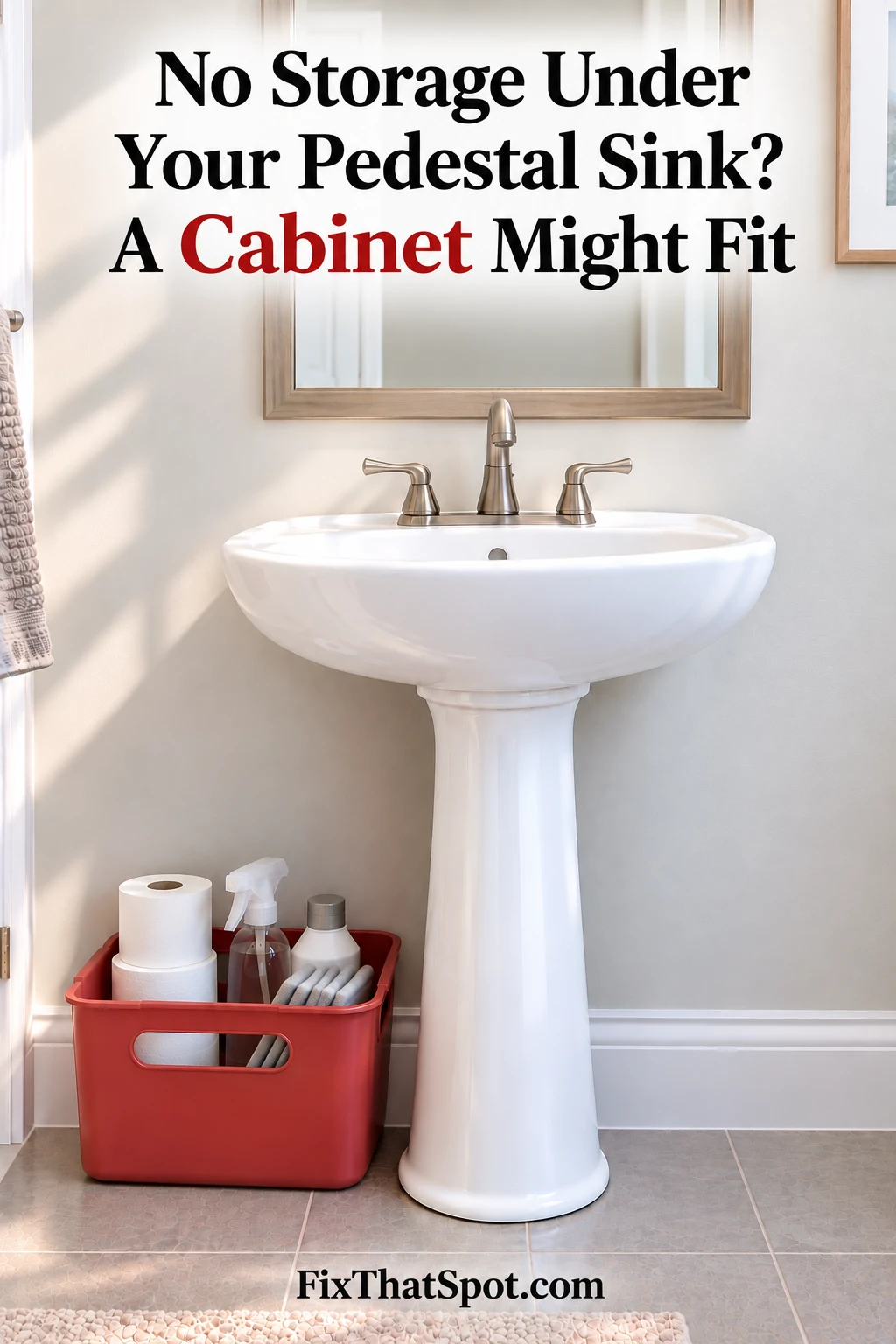
A pedestal sink can leave a surprising amount of bathroom floor looking empty while offering nowhere to keep anything. Spare toilet paper ends up beside the toilet, cleaning supplies move to another room, and the few things used every morning compete for space around the basin.
A small cabinet beside the sink might help, but there may be barely enough room between the sink and toilet. Even when it fits, its doors could open into the space where someone needs to stand.
The space beneath the sink looks promising, but the pedestal stands right in the middle. An ordinary cabinet would hit that support before reaching the wall.
A pedestal sink storage cabinet can add enclosed storage beneath an existing sink, provided its U-shaped opening fits around the pedestal. It uses space that would otherwise be difficult to fill without replacing the sink.
There is one catch. Pedestal sinks are not all shaped alike, and the empty space you can see beneath the basin is not necessarily space a cabinet can occupy.
Will the Cabinet Actually Fit Around the Sink?
The cabinet measures 23.6 inches wide, 11.8 inches deep, and 23.6 inches high. Its U-shaped opening is 8.7 inches wide and 7.9 inches deep.
The opening matters more than the cabinet’s overall width. Some pedestal sinks have narrow columns, while others widen considerably toward the floor. A cabinet might clear the upper section but stop against the wider base, leaving it sticking out farther than expected.
The pedestal may be wider near the floor than it first appears. That lower section can prevent the cabinet from sliding back against the wall, even when there seems to be plenty of room beneath the sink. The basin height and exposed pipes can also affect the fit.
The cabinet also needs enough room for its doors to open. A nearby toilet can leave plenty of space for a closed cabinet but make reaching inside awkward. That same distinction matters when a cabinet fits into a narrow space but its doors need room.
These checks may sound fussy for a small piece of bathroom furniture, but they determine whether the cabinet can actually stand where it belongs.
What Can You Keep Inside?
The two doors conceal everyday bathroom supplies, and an adjustable shelf helps separate smaller items from taller bottles. Spare toilet paper, toiletries, and compact cleaning products are more realistic contents than bulky packages.
The pedestal still occupies part of the cabinet’s interior. That makes the usable storage space smaller than the outside dimensions suggest, particularly around the U-shaped cutout.
It is worth looking at what currently needs a home before deciding whether the cabinet will help. If the main problem is a few supplies scattered around the sink, the enclosed compartments may be enough. If you need somewhere for large containers or stacks of towels, the interrupted interior could be disappointing.
There is also a stability concern. Customer feedback on this cabinet is mixed, with some buyers reporting that it can tip. The included anti-tipping hardware should be installed according to the instructions, and the cabinet should not be used to support the sink or someone’s weight.
When the pedestal fits the opening and the doors have room to swing, the cabinet puts an awkward patch of floor to work. The spare supplies can stay beneath the sink instead of occupying another shelf or crowding the space beside the toilet.