
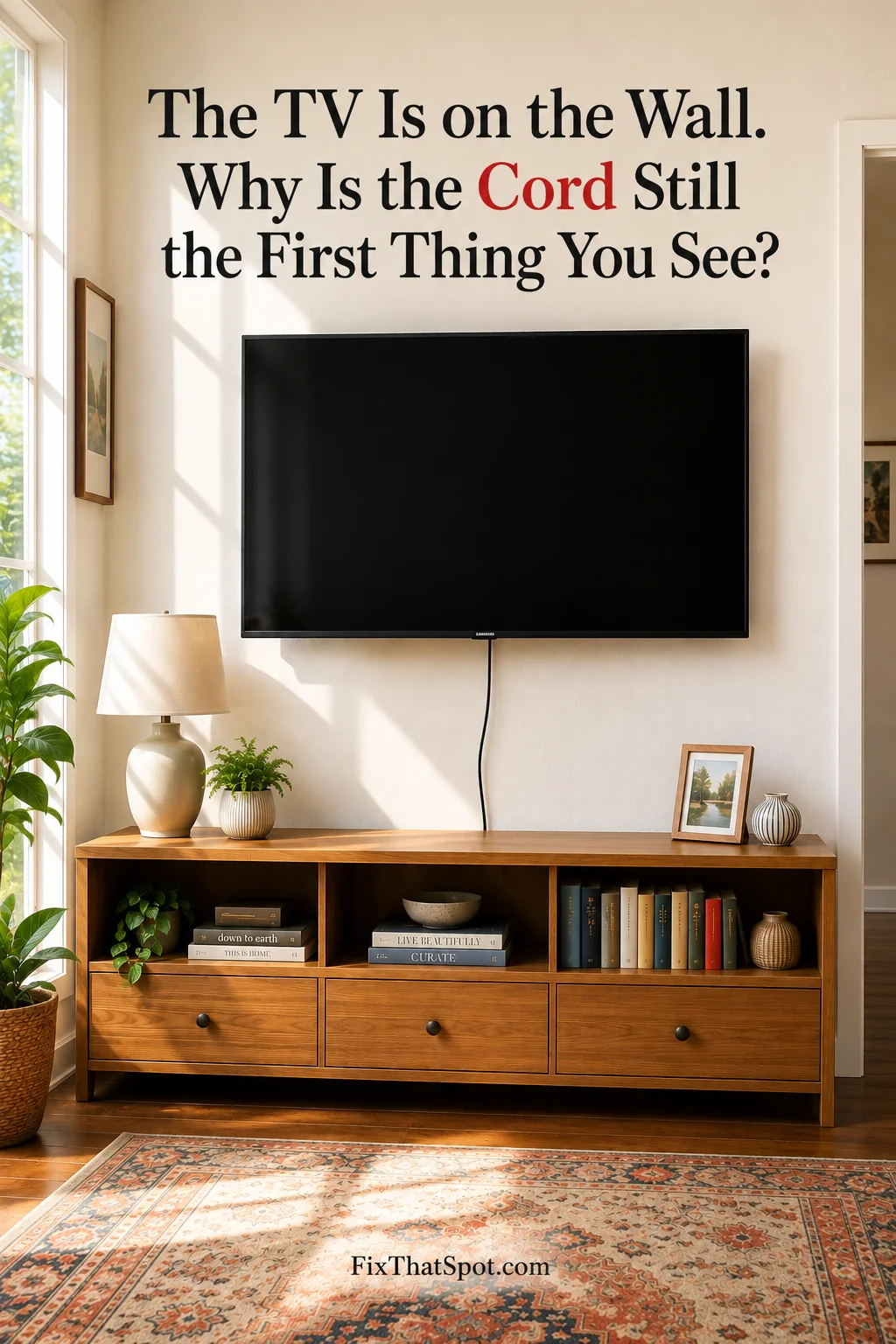
Mounting the TV clears the furniture below it and leaves the wall looking much simpler. Then there is the cord.
It drops from the bottom of the screen to the outlet, making a dark line across the part of the wall that was supposed to look clean. Push it slightly to one side and it curves back. Tape it down and the tape eventually becomes almost as noticeable as the cable.
The cord can be hidden inside the wall, although that means cutting into it. For one cable below the TV, you may simply not want the extra job.
A paintable cord cover gives it a route down the wall instead. The cable sits inside the channel rather than hanging loose, and the cover attaches to the wall without turning the job into a wiring project.
The useful change is not that the cord has vanished. It has not. The difference is that you stop seeing a loose cable wandering down an otherwise bare wall. Paint the cover to match the wall and there is even less to catch your eye.
When a Straight Cover Looks Too Heavy
A full rectangular channel makes sense when several cables need to travel together. With one TV power cord, though, that can sometimes replace a thin black line with a fairly obvious strip of plastic.
A half-round cord cover is another option for a shorter or less crowded run. Its curved profile sits more softly against the wall, which can make sense where there is only a small amount of cable to hide.
Keep the cover running straight toward the outlet if you can. Extra turns draw attention to something you were trying to hide in the first place.
The loose cable at the TV is also different from the smaller cords that collect around furniture. If phone and charger cables keep slipping behind a table or ending up on the floor, keeping charger cords from falling while hiding the excess deals with that problem separately.
Once the TV cord follows the wall instead of hanging in front of it, the television becomes the thing you notice again. Which was rather the point of putting it on the wall in the first place.