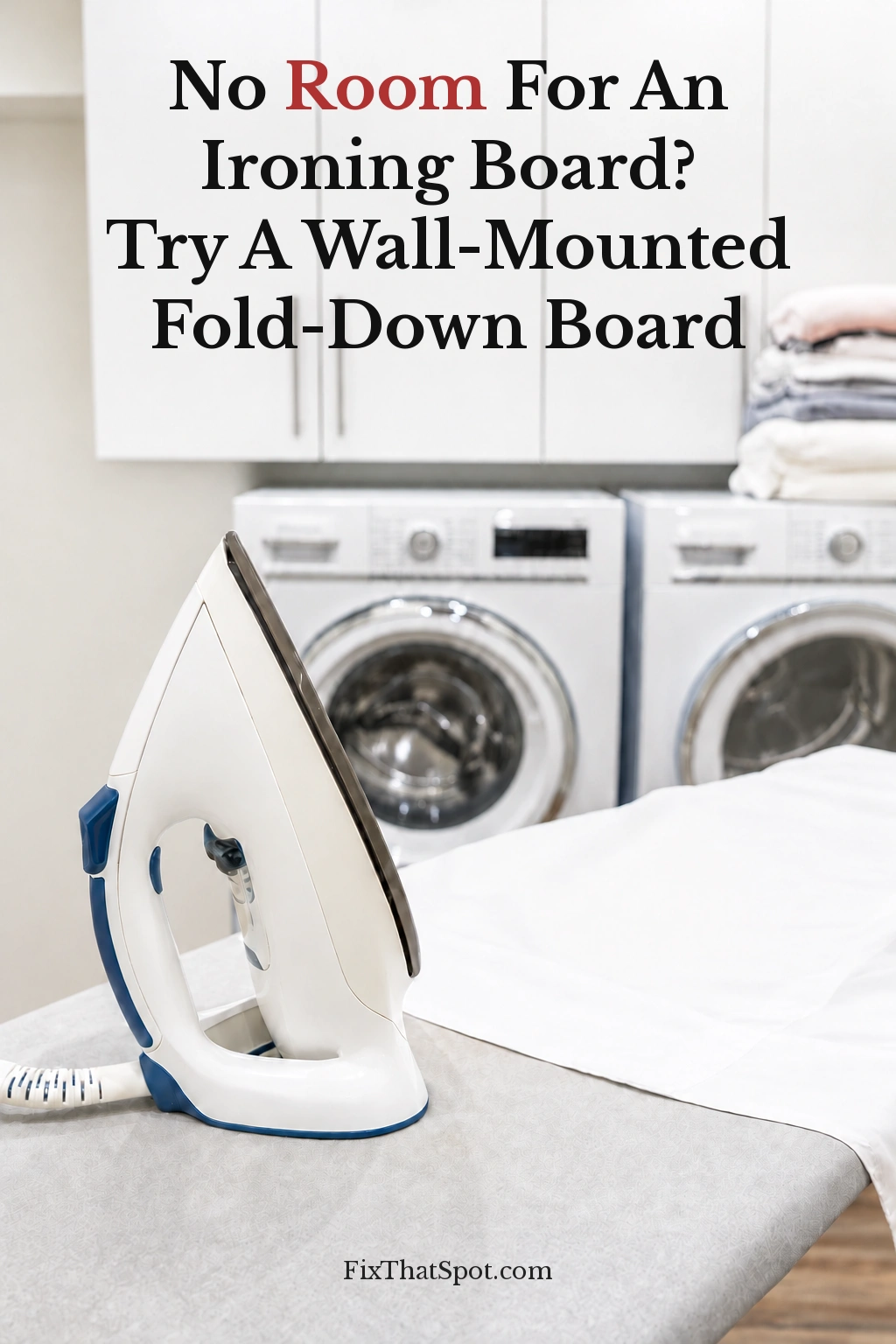

The washer has finished, the dryer has finished, and the clean laundry still needs somewhere flat to go. The top of a machine works until detergent, a basket, or the next load is already sitting there.
The bed offers more room, but that means carrying the laundry out of the laundry area just to fold it.
A permanent table fixes the missing surface and creates another problem. It occupies floor space all week for a job that only happens when there is a load waiting.
That is why the useful question is not really whether there is room for a table. It is whether there is room for one while it is being used.
A wall-mounted folding table stays against the wall until a folding surface is needed. There are no table legs left in the way afterward, and the laundry can be dealt with beside the machines instead of finding temporary space elsewhere.
This works particularly well alongside a wall-mounted drying rack in a laundry area where neither drying nor folding justifies giving up permanent floor space. The rack deals with clothes that need somewhere to hang; the table deals with what happens once they are ready to fold.
The Empty Wall Is Only Half the Measurement
A folded table can fit neatly against a wall and still be too large for the room. The space that matters appears when the tabletop comes down.
The smallest version is 31.5 inches wide and 15.7 inches deep. The two larger versions are 39.4 × 19.7 inches and 47.2 × 19.7 inches. That extra depth gives larger clothes and towels more surface while they are being handled, but it also reaches four inches farther into the room.
Four inches sounds minor on a product listing. It is less minor when that space belongs to the route past the washer or the area needed to open an appliance door.
Width and depth therefore do different jobs here. More width gives folded piles somewhere to sit. More depth gives the item in your hands more working room. Neither is useful if the open table leaves too little clearance around it.
The table can also be mounted at different heights. That matters more than its stated 80-pound weight recommendation for ordinary laundry use. The surface needs to sit where folding is comfortable without interfering with the machines or whatever has to pass beneath or beside it.
Installation is the main commitment. The listing describes a six-screw wall installation, so this is not a table that can be shifted a few inches after discovering that the dryer door catches it. The open position needs to make sense before the mounting position does.
A load of laundry does not need its own table sitting there until the next load comes along. Once the clothes are folded, the surface can go back against the wall and stop taking up room.