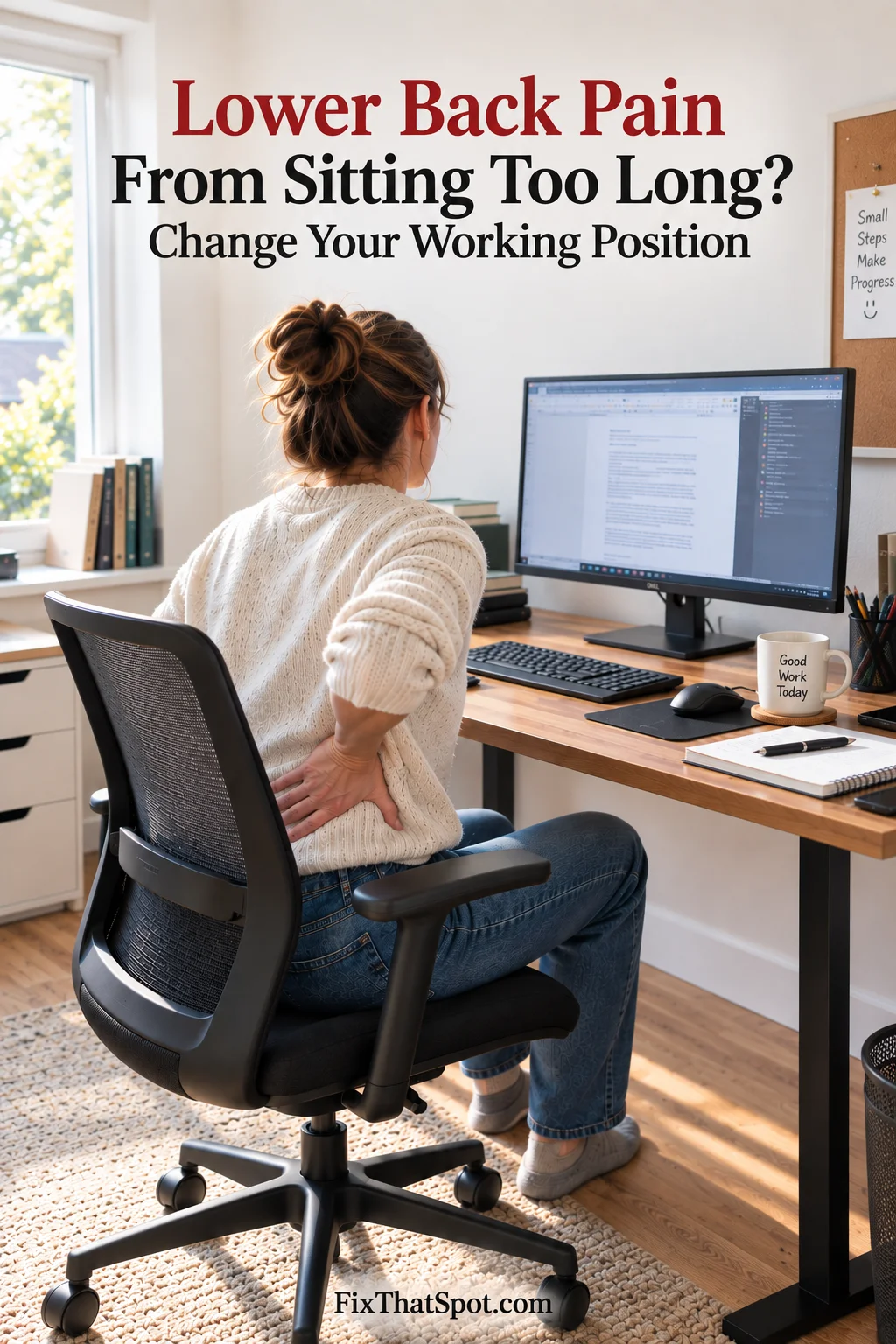
A chair can feel comfortable at the start of the day and become much harder to settle into several hours later. You shift forward, sit back again, change the position of your legs, then repeat the process without changing the one thing that has stayed the same: you are still sitting.
That is different from a chair that leaves your lower back unsupported from the moment you sit down. In that case, adding lumbar support may address the missing space behind your back. When the discomfort mainly develops after sitting for a long time, adding another cushion does not give you another working position.
A standing desk converter does. It sits on the desk you already have and raises the working surface so you can move between seated and standing work without replacing the entire desk.
The useful part is not standing all day instead of sitting all day. It is being able to change the workstation when you want to change position.
The Whole Workstation Needs to Move
A monitor at standing height is not much use when the keyboard and mouse are still down on the desk. The practical question is whether the equipment you work with can come up with you.
This converter has a 31.5 × 15.7-inch upper surface, with a maximum load of 33 pounds. That gives you actual measurements to check against your monitor setup instead of assuming everything will fit.
Those measurements matter more than the promise of an “ergonomic” workstation. Your monitor and other equipment have to fit within the available surface and weight limit, and the raised position still has to suit the person using it.
The dual gas-spring mechanism also changes the practical result. Moving between sitting and standing does not require removing the monitor and rebuilding the desk at a different height. The converter raises and lowers as a unit and locks at the selected height.
That is the distinction that matters here. A standing surface that is awkward to change may simply replace one fixed working position with another.
Check How Much Desk It Takes Up
A converter adds a substantial piece of equipment to an existing desk. This one measures 31.5 inches wide and 24.2 inches deep overall, so the desk needs enough usable surface for it before height adjustment becomes relevant.
It also remains 4.3 inches high when fully lowered. Your seated setup therefore will not return to exactly the same height it had when the keyboard, monitor, or other equipment sat directly on the desk.
A standing desk converter cannot establish why your back hurts, and changing position should not be treated as a treatment for persistent back pain. What it can change is much simpler: sitting no longer has to be the only position available while you work at the same desk.