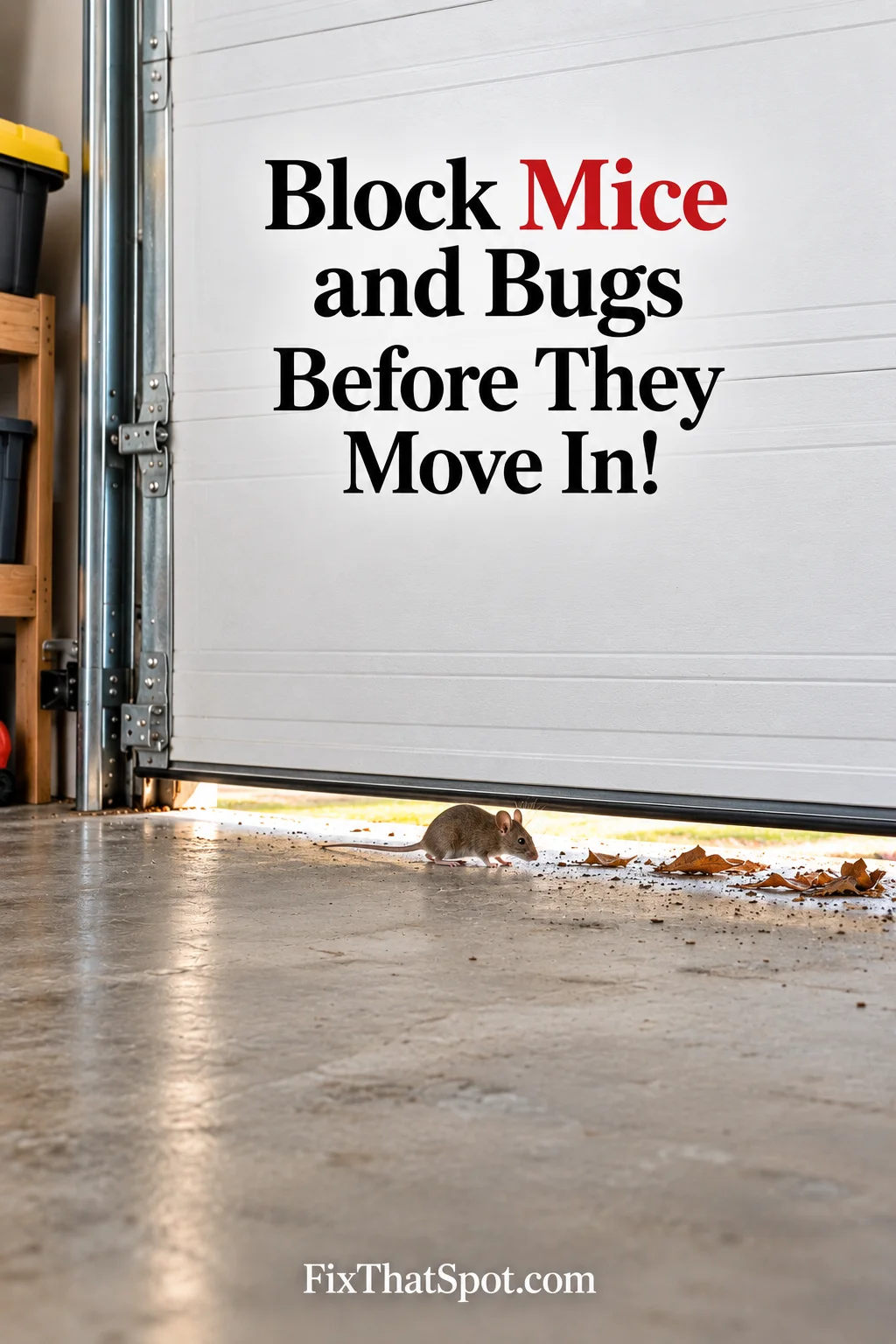
A thin line of daylight under a garage door can look harmless. Unfortunately, mice do not need much of an opening to see it differently.
Bugs and dirt can come through the same opening. On windy days, you might even find a few leaves that have made it under the door. And for a mouse, that narrow gap may be all the invitation it needs.
The obvious answer is to close the gap. The problem is that a soft seal is not always much of an obstacle to an animal that can chew.
Close the Gap With Something Harder to Chew
A metal door sweep adds a physical barrier across the bottom of the door rather than relying entirely on exposed flexible material.
This aluminum door sweep with a rubber seal uses an aluminum outer section with a two-layer rubber seal. The manufacturer says it can cover gaps up to about 1.5 inches and is intended to help keep out rodents, insects, drafts, and dust.
That combination makes sense in a garage. The rubber needs enough flexibility to close the uneven space beneath the door, while the aluminum puts something much less inviting in front of a mouse looking for a way through.
It also deals with the ordinary nuisance that comes with the same gap. Closing it can reduce the little trail of leaves and grit that otherwise appears inside every time the wind picks up.
If grit has already collected inside the narrow metal channels, cleaning the garage door tracks without damaging them requires a narrow brush rather than a metal tool that could scrape the track.
Check the Gap Before You Buy
Do not choose a sweep simply because you can see daylight.
Measure the door and the gap underneath it first. This particular sweep comes in several lengths and can be cut to fit, but the gap still needs to fall within the product’s stated range.
Also look at how the door moves.
A sweep should close the opening when the door is shut without catching badly on the floor every time the door opens. An uneven garage floor may leave one side with plenty of clearance while the other side almost touches.
That is worth finding out before drilling holes.
A Door Sweep Cannot Fix Every Mouse Problem
Closing the gap under the door removes one possible entrance. It does not make the whole garage mouse-proof.
Check the sides and corners of the door as well. Look around pipes, vents, utility openings, and damaged trim. A beautifully sealed bottom edge will not accomplish much if there is another convenient opening six feet away.
It also helps to make the garage less useful once a mouse gets inside. Cardboard, pet food, birdseed, and other easy food or nesting materials can turn a quick visit into a longer arrangement.
And if rakes, shovels, and brooms are leaning against the wall and hiding the edges of the garage, getting them onto a garage tool wall organizer makes those areas easier to inspect.
Fix the Opening You Actually Have
If the problem is a visible gap beneath the garage door, start there rather than trying to discourage mice after they are already inside.
Measure the opening, check the rest of the door for other gaps, and use a barrier suited to the size and movement of your particular door.
The goal is simple: when the garage door closes, the garage should close with it.