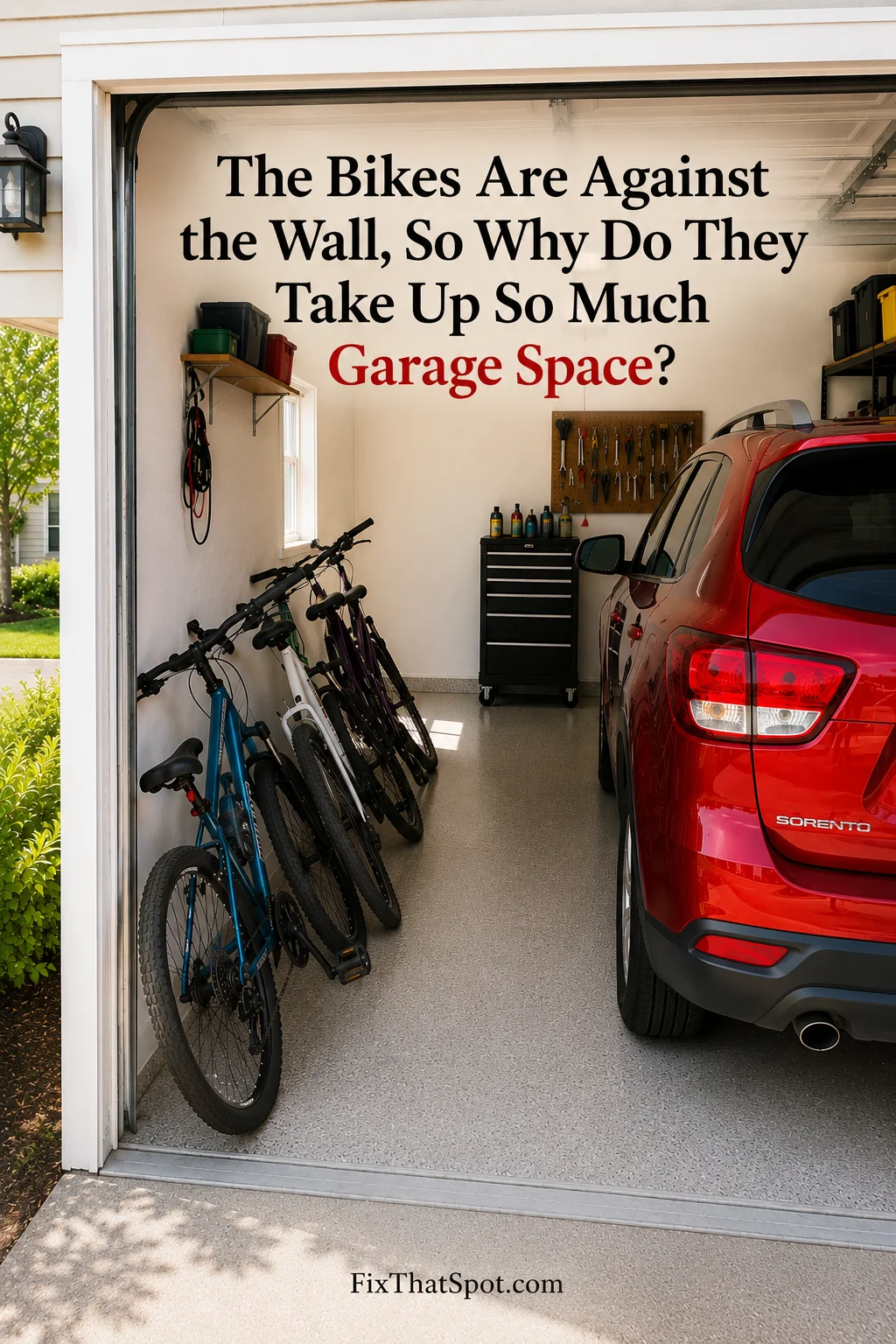
One bike against the garage wall is easy enough to live with. Add another adult bike, a couple of smaller bikes and perhaps one that comes out less often, and the wall starts developing a parking row of its own.
The trouble is that bikes do not line up particularly well. Handlebars keep them apart, pedals catch neighboring wheels, and the bike needed today can be behind two that are not.
Before long, a surprising amount of garage floor belongs to bikes even though every one of them is technically against the wall.
Pushing the row tighter only works until someone wants a bike from the back. Then one bike comes out, another has to move, and the careful arrangement lasts until everyone gets home again.
At that point, making the row tidier is not much of a solution. For garage bike storage, a swiveling wall-mounted system moves the bikes off the floor instead. Each bike hangs vertically by its front wheel and has its own place on the wall.
Hanging several bikes vertically clears the floor, but fixed mounts can create a new row to negotiate. The wheels are gone from underfoot, while the handlebars are still pointing into the space beside the car. With a swiveling mount, each bike can turn toward the wall after it is hung up and swing back out when someone needs it.
If space beside the car is already tight, protecting the garage wall from car door scrapes can help with another problem caused by the same narrow gap.
That also makes the bike in the middle less of an event. It has its own place rather than sitting behind whichever bikes happened to get home later.
The Bikes Need Room to Turn
A wall-mounted garage bike rack cannot save much usable space if the hanging bikes have nowhere to swing. A cabinet or shelf in the wrong place can stop the movement halfway, replacing a row of bikes on the floor with a row of handlebars everyone still has to avoid.
The researched system swivels through 150 degrees, so each bike can turn closer to the wall between rides and swing back out for access.
Bike weight and tire width can spoil the plan before any of that matters. Each mount supports up to 66 pounds and accepts tires up to 3.54 inches wide. A tire too wide for the hook leaves you with a very nicely mounted rack and one member of the household still parking a bike underneath it.
The mounts also need a suitable solid fixing point, such as a wall stud, concrete or masonry. During installation, a magnetic parts tray keeps screws, anchors, and washers together instead of letting the small hardware roll across the garage floor.
A household with several bikes will not suddenly have fewer of them. The difference is that they no longer need to form a parking row across the garage floor. Each bike hangs separately against the wall, leaving the space underneath open instead of filling it again every time everyone comes home.