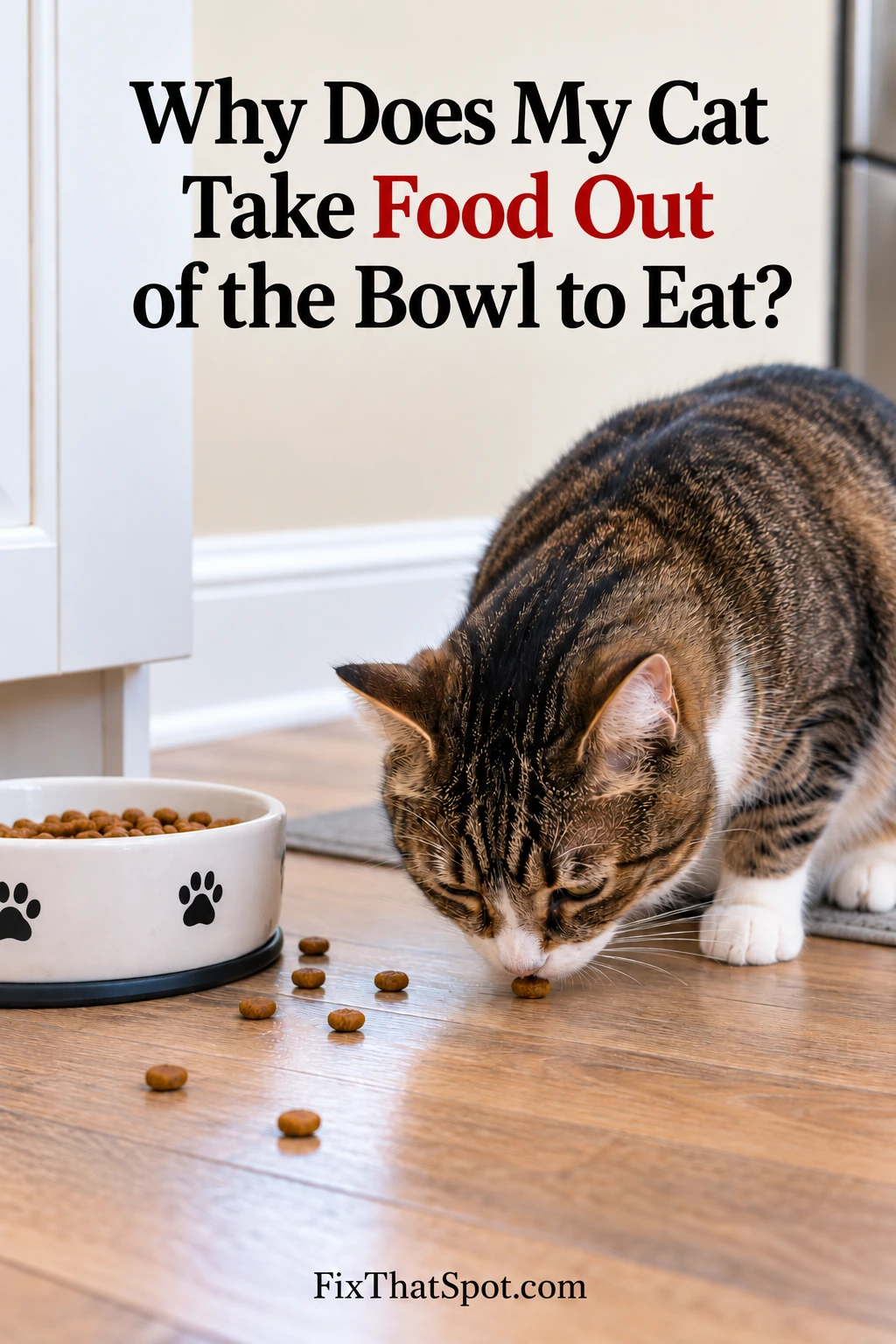
A piece of kibble lands beside the bowl. The cat eats it there, reaches back into the dish, and another piece follows. Before long, there may be a small scatter of food around a bowl that is still half full.
Cats can take food out of their bowls for different reasons. Some seem to prefer eating a piece away from the dish, while for others the shape of the bowl may affect how they reach the food. The behavior alone does not tell you which is happening.
Watch the cat reach for the next piece. Some cats lower their whole face into the dish without hesitation. Others stay near the edge, pull a piece over the rim, then eat once it is outside.
That difference is worth checking before replacing the bowl.
Put the usual food on a shallow plate for a few meals and leave it in the same feeding spot. If the food stays on the plate instead of appearing on the floor, the more open eating surface may suit the way that cat eats.
Whisker fatigue is often used to explain why cats avoid deeper bowls, but the evidence has not established it as the cause. There is no need to decide what the cat is feeling to notice that eating from a flat plate is physically different from reaching into a deeper dish.
If the plate test helps, a wide, shallow raised cat bowl gives the cat a similar open eating area without using a dinner plate every day. Its eating surface is 6.1 inches wide and 1.18 inches deep. It sits 2.75 inches above the base, with a silicone ring underneath to help keep the porcelain bowl from sliding.
Food is spread across a wider area rather than sitting at the bottom of a narrow dish. The cat can approach pieces closer to the edge without reaching as far into the bowl.
The plate test can also save an unnecessary purchase. If the cat happily removes food from the plate and eats it somewhere else, changing to another specialized bowl is unlikely to address that habit.
Pay closer attention when taking food out of the bowl is new and eating itself also looks different. A cat that suddenly struggles to chew, drops food while trying to eat, or starts eating noticeably less needs more than a different dish.