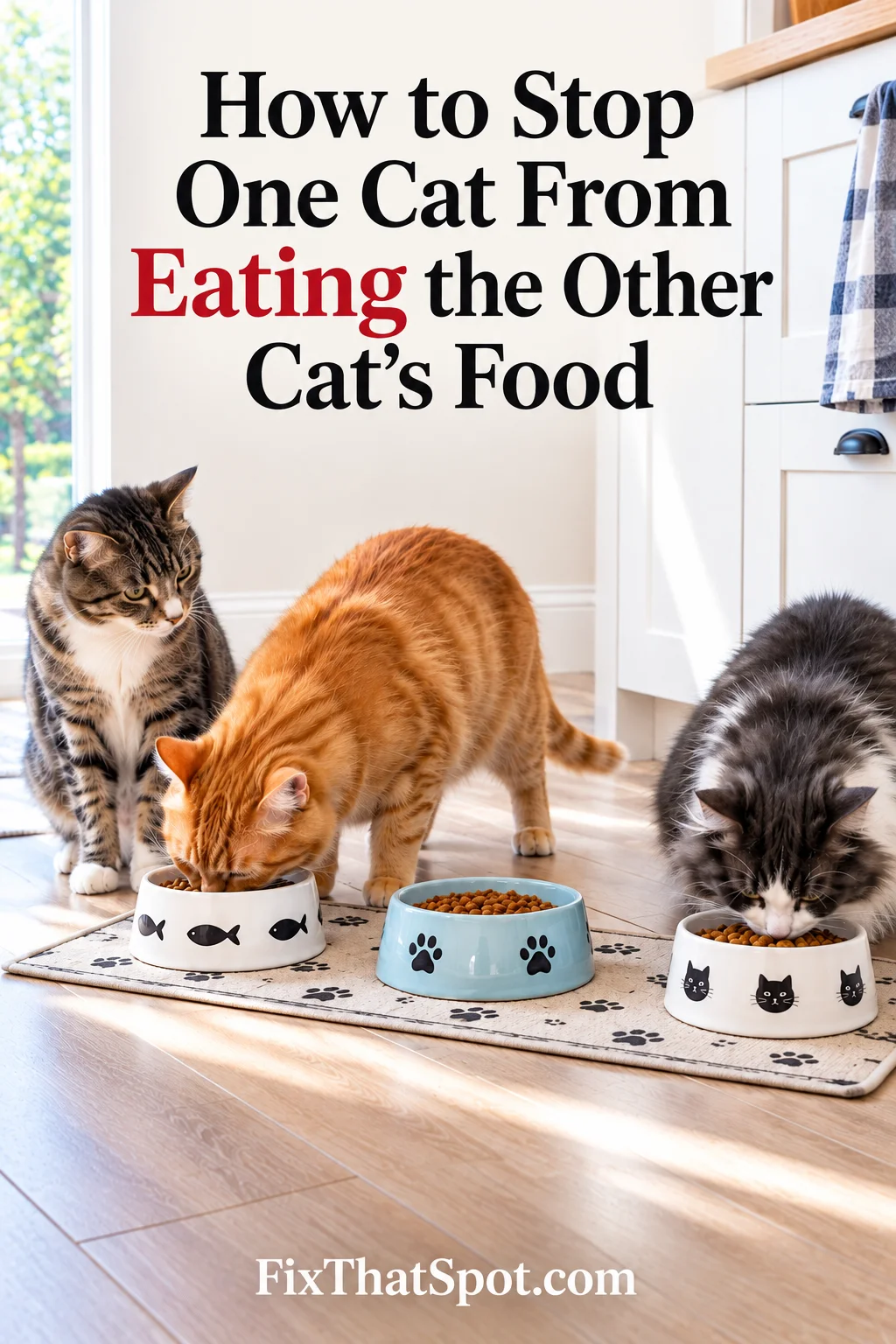
Feeding several cats can get complicated when one of them treats every bowl as its own. You can put food in different places, but that only works while each cat stays where you expect it to.
The problem becomes more obvious when cats eat differently. One may finish quickly and move on to another bowl. Another may eat a little, walk away, and come back later. By then, the food may be gone.
Spreading the bowls around the room only helps so much. Once a cat walks away, its unfinished food is sitting there for any of the other cats to find. You either have to remove it or stop the other cats from reaching it.
The important distinction is not how many bowls you put down. Each cat needs a way to have its own access to food.
An RFID cat feeder changes that access. Instead of leaving the bowl open to every cat, the feeder recognizes a registered collar tag before allowing access to the food.
In a home with several cats, that means the cat that tends to steal food cannot simply move from bowl to bowl after finishing its own.
A Timed Feeder Does Not Solve the Same Problem
An automatic feeder can control when food is dispensed. It cannot keep another cat away if the food is left in an open bowl afterward.
That matters when cats eat at different speeds or return to their food throughout the day. The faster cat may still reach food intended for a slower one.
With an RFID-controlled feeder, the useful part is the restricted access to the bowl, not simply automatic dispensing. The feeder needs to recognize the registered cat before making that food accessible.
This also changes how you can handle a household with more than two cats. You do not necessarily need every cat to eat from an RFID feeder. If one cat is regularly losing its food to the others, restricting access to that cat’s bowl may be enough to solve the specific problem.
Check How the Feeder Recognizes the Cat
Selective-access feeders do not all identify cats in the same way.
This RFID feeder with a locking food bowl works with its own RFID collar tag. One tag is included, and the feeder can pair with up to two tags. It does not identify cats from their implanted microchips.
One feeder can recognize up to two tags. That works if two cats are meant to share the food inside. It will not keep those two cats separate from each other, though. If every cat needs its own protected food, each one needs its own feeding setup.
The cat also has to wear the required collar and tag reliably. If that is not practical, this particular access system loses the feature that makes it useful.
The feeder can record when a recognized cat eats and can schedule portions through its app. Those features may help you keep track of feeding, but they are secondary here.
For a home where one cat keeps moving from bowl to bowl, the useful change is more basic: food intended for one cat no longer has to remain accessible to every cat in the house.