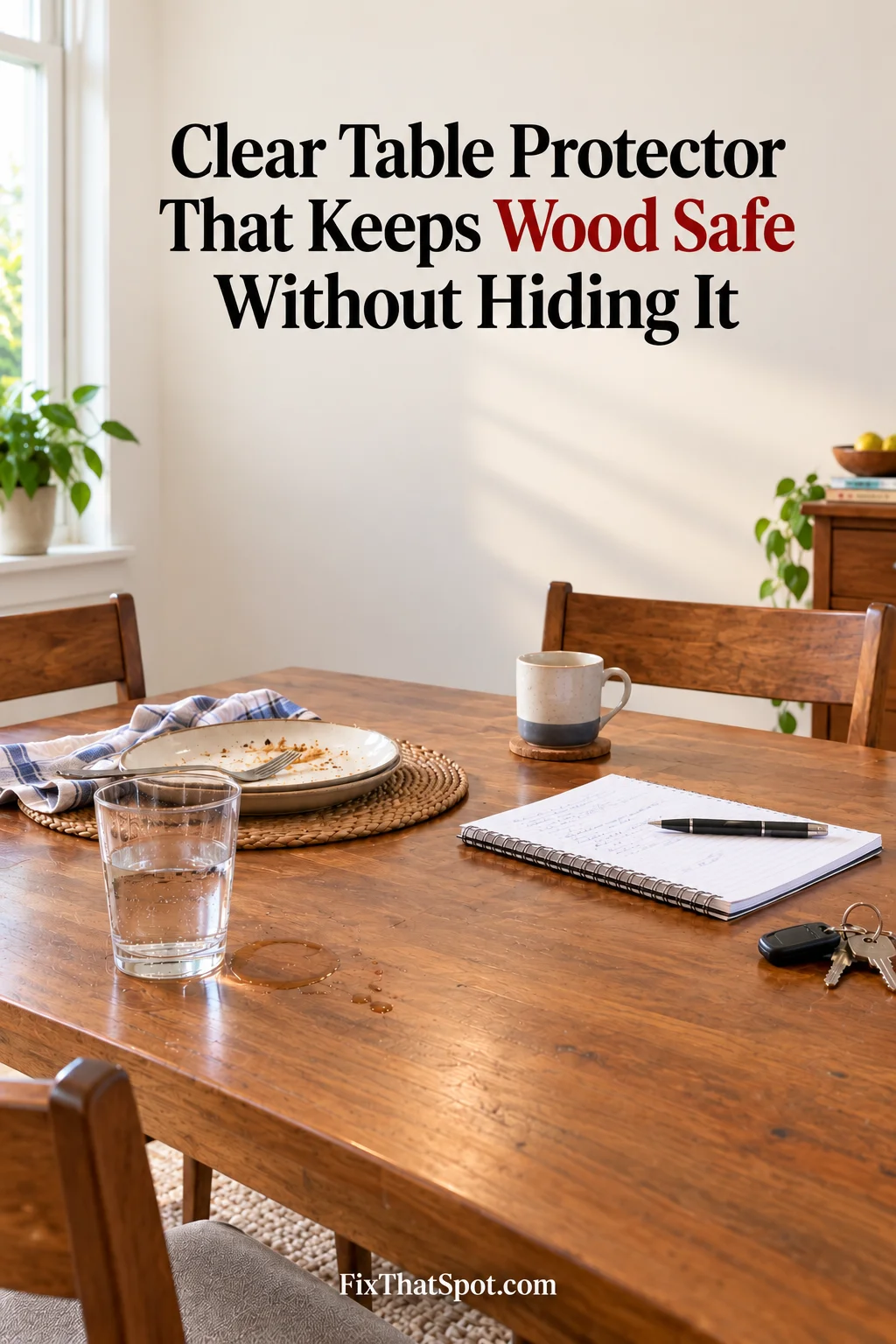
A tablecloth protects a wooden table, but then the wood disappears underneath it. Placemats leave more of it showing, right up until somebody puts a glass six inches away from one.
That is the annoying part about a table you actually use. Drinks, plates, notebooks, keys, and whatever else arrives during the day do not stay neatly inside the protected areas. Eventually something gets dragged across the bare wood or a spill lands where there is nothing underneath it.
You could cover more of the table, but that starts to defeat the point of having a wooden tabletop you want to see.
A clear table protector covers the whole working surface without hiding the wood underneath.
The Edges Make a Bigger Difference Than You Might Expect
Clear plastic is less noticeable than a tablecloth. Several inches of it hanging over every side are still going to be noticeable.
This protector measures 36 by 60 inches, but it does not have to stay that size. The PVC can be trimmed with scissors or a sharp knife, which makes it possible to follow the actual edges of the tabletop. It can also be cut for oval or irregular shapes.
That is useful for more than appearance. A protector that fits the top stays where the protection is needed instead of leaving loose material hanging down the sides.
Measure the table before cutting, and measure the protector itself too. These covers can arrive slightly larger than their stated size to account for shrinkage.
Then You Can Stop Protecting One Spot at a Time
Once the whole tabletop is covered, it matters less where somebody puts the glass.
The 1.5 mm clear table protector gives spills, stains, scratches, and scuffs a layer to reach before the wood. The waterproof surface also means a spilled drink can be wiped from the protector rather than sitting directly on the tabletop.
The tabletop is only one surface at risk. If chairs are leaving marks underneath, rubber pads can stop furniture legs from scratching the floor.
It does not make the table ready for anything. Hot plates still need something underneath them, so the placemats do not necessarily have to disappear.
They just no longer need to patrol every inch of the table. The wood stays visible, the table can still be used normally, and everyday protection is already there before somebody puts the glass in the wrong place.