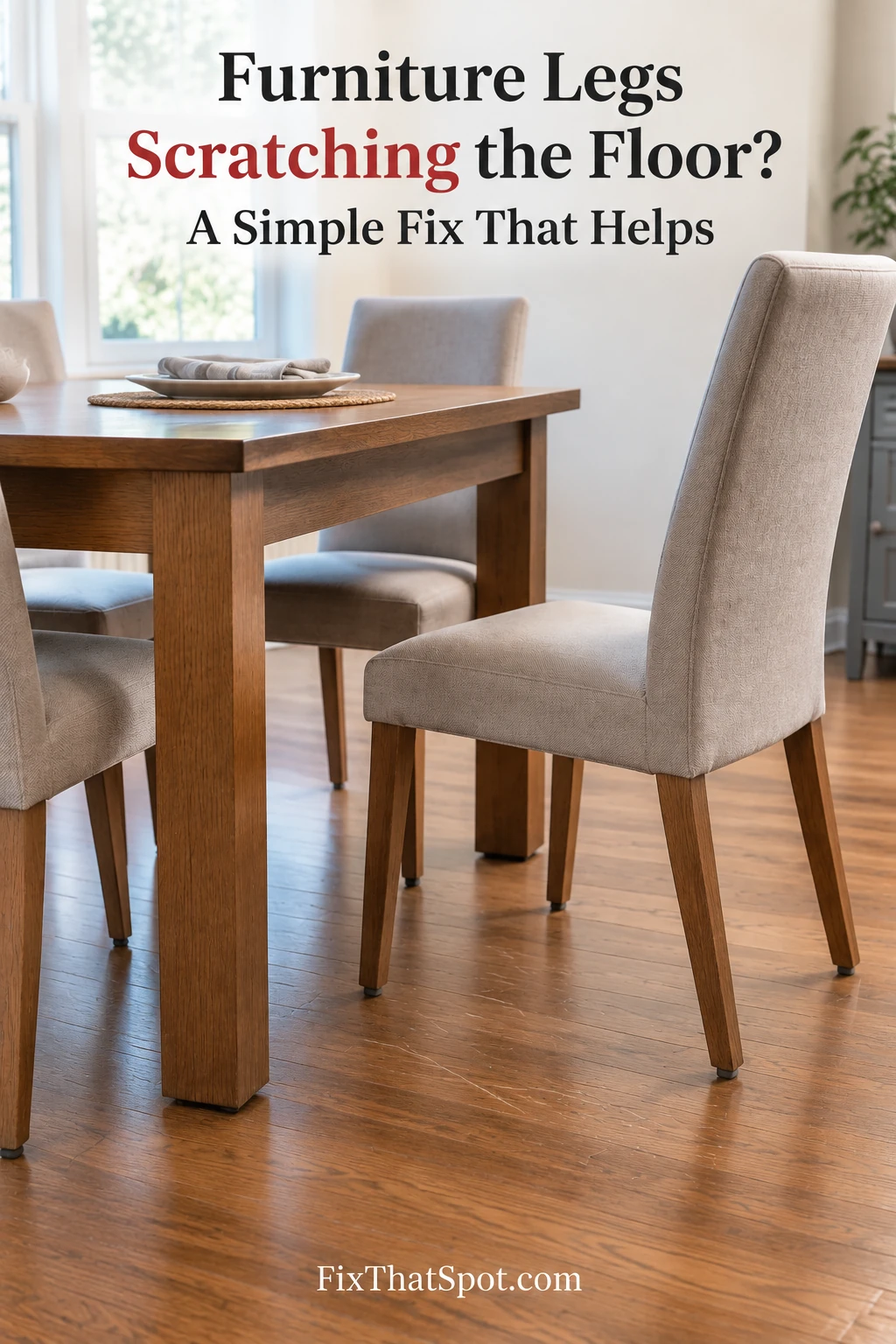
The floor usually does not get damaged all at once. Small scratches build up around the places where chairs and other furniture are moved every day.
At first, the floor may look unchanged. Then small marks begin to appear where those same legs move back and forth every day.
The same thing can happen with desks, coffee tables, and other furniture that gets adjusted often. The damage usually does not come from one large movement. It comes from small movements repeated over time.
Being more careful helps, but the furniture legs are still making direct contact with the floor.
Adding a protective layer underneath can reduce that contact. Furniture floor protectors create a softer surface between furniture legs and the floor, helping reduce scratches, scuffs, and scraping from everyday use.
Why Furniture Legs Scratch Floors
Most furniture is designed to stay stable, not to move constantly. Dining chairs are different because they are used several times every day.
The bottom of a furniture leg may look smooth, but small rough areas, dirt, or hard materials can create friction against the floor. Over time, that repeated movement can leave visible marks.
This is often easier to notice on smooth flooring where light catches every small scratch. Hardwood, laminate, and similar surfaces can show wear around the places where furniture moves most.
The frustrating part is that the damage appears slowly. A floor can look fine for months before the first marks become obvious.
What Helps Reduce Furniture Scratches
A pad under the leg changes the point where the furniture meets the floor. Instead of the leg rubbing directly against the surface, the protective layer takes some of that contact.
Different furniture needs different sizes. A dining chair may need a small round pad, while a wider furniture foot may need a larger option.
A mixed set of pads can be useful in a home with several types of furniture because the same pack can work for chairs, tables, and other pieces.
The attachment also matters. A pad that moves out of place will not protect the floor properly. Cleaning the bottom of the furniture leg first can help it stay attached during normal use.
What to Check Before Adding Furniture Pads
The right choice depends on how the furniture moves.
A chair that slides back and forth several times a day needs protection that can handle repeated movement. A sofa that rarely moves has a different job.
It is also worth checking the floor condition first. Pads can help prevent new marks, but they cannot remove scratches that are already deep.
Old pads may also need replacing. Dirt can collect underneath, and worn material may no longer provide the same barrier between the furniture and the floor.
Protect Other Surfaces Around the Home
Floors are not the only surfaces that collect marks from everyday use. Tables, desks, and other furniture surfaces can also show wear from normal activity.
A clear table protector can help protect a tabletop while keeping the original surface visible.
Once furniture legs have a protective layer underneath, everyday movement is less likely to leave marks behind.