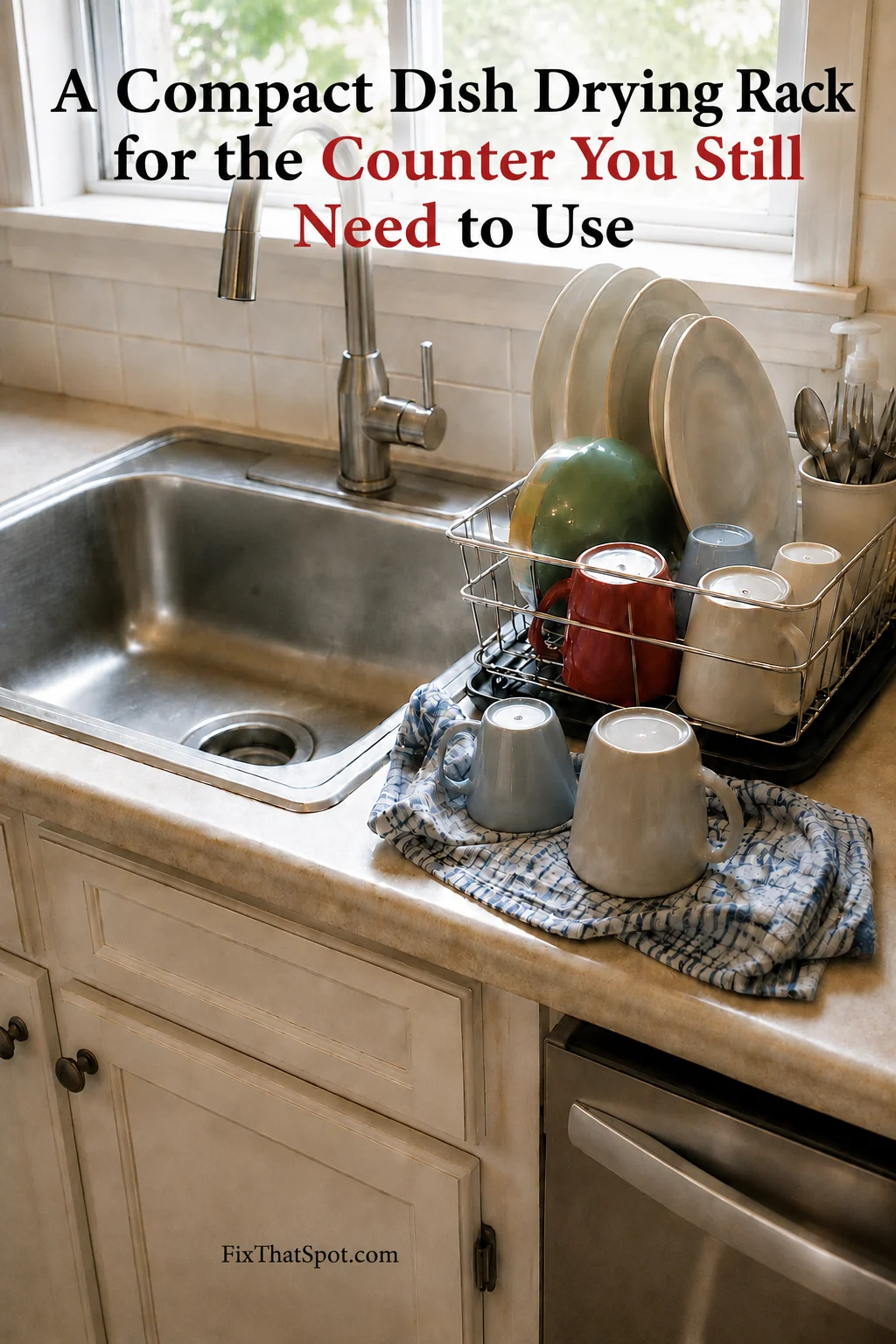
A dish rack is supposed to keep wet dishes from taking over the counter, yet in a small kitchen the rack itself can occupy nearly all the useful space beside the sink.
Once the plates are standing inside it, the last mugs end up on a folded towel because there is nowhere else to put them.
It is easy to ignore while washing up. Later, when you need somewhere to butter bread, the damp mugs and bowls are still sitting on the towel. You move them closer to the rack for a while, then move them back when somebody needs the sink.
A wider rack would hold more, although that is not much help when the counter cannot grow with it. The more useful direction is upward.
Keep the Drying Area in One Place
A compact two-tier dish rack holds plates above the bowls and mugs instead of spreading everything across one level. It uses the height above the counter, which is usually the only part of a small drying area that is not already occupied.
That changes what happens when the lower section fills. Another plate can still go onto the upper tier rather than being balanced against something that is already drying. The towel beside the rack can return to being a towel instead of serving as an unofficial extension.
A drainboard underneath also matters because a space-saving rack should not leave water collecting across the counter it has just freed. Directing the drips toward the sink keeps the wet area contained, rather than creating another patch that needs to be wiped after the dishes are put away.
The rack should hold the items that come out of an ordinary washing-up session without turning the counter into a second drying area. There is no benefit in a compact footprint if half the dishes still have to live beside it.
Sponges and brushes can create their own small obstruction once the dishes have somewhere to go. Giving them a separate sponge and brush holder for a small kitchen keeps them from being tucked into the rack after the last plate is washed.
When the dishes are dry, they can be put away without first clearing a trail of mugs and bowls from the counter. The rack remains beside the sink, while part of the kitchen becomes usable again.
If standing through a full load of dishes leaves your feet aching, an anti-fatigue kitchen mat can add cushioning directly in front of the sink.