
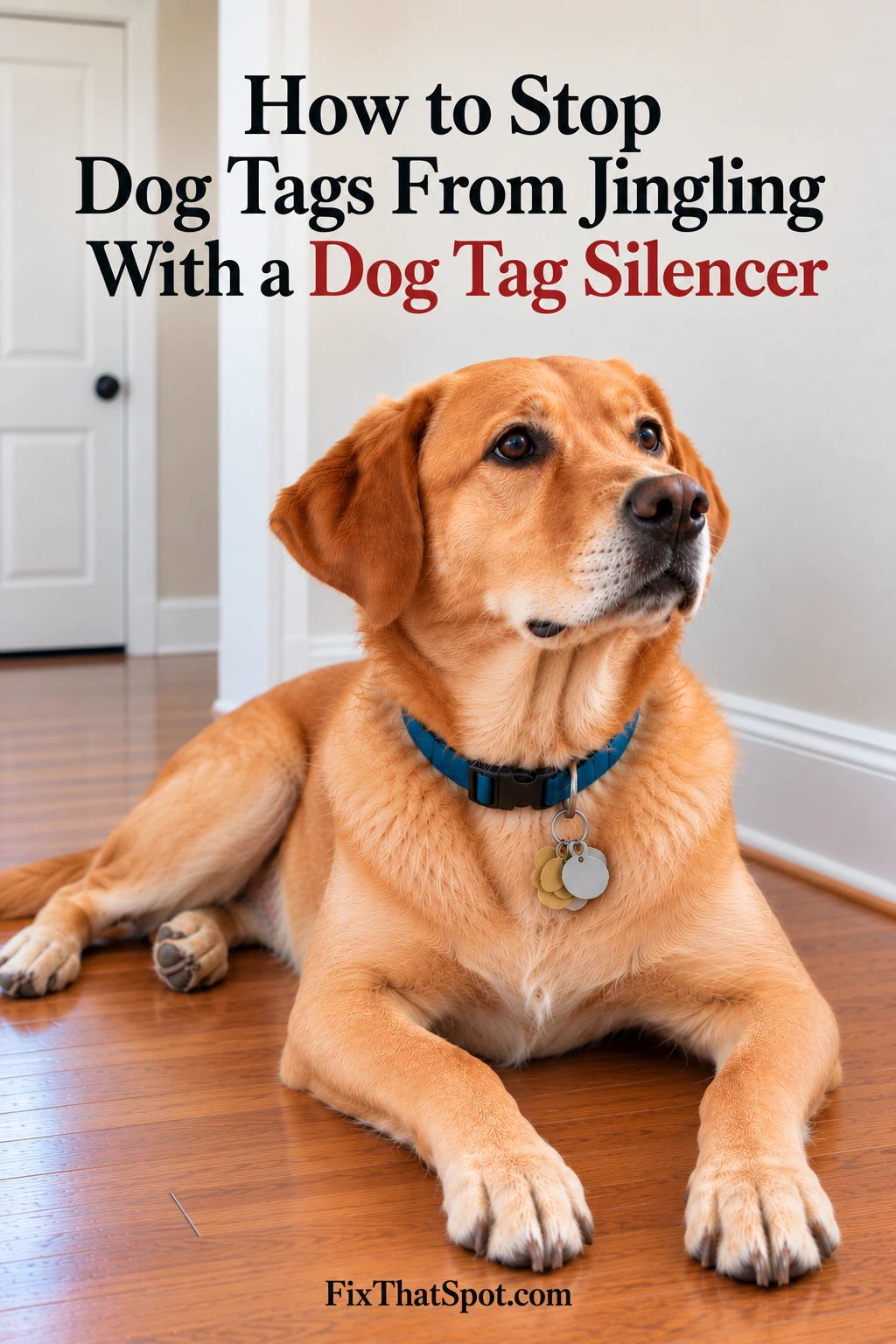
Two metal tags can sit quietly against a dog’s chest until the collar moves. Then one swings into the other. At night, that small clink is much easier to notice than it is during the day.
Taking off a tag that is no longer needed is an easy first check. Necessary tags are different. Moving them around on the same ring may seem to solve the problem while the collar is sitting still. Once the dog walks across the room, the tags separate and meet again.
Before adding anything to the collar, move the tags by hand and listen to where the sound comes from. If the noise appears when their edges meet, keeping those edges apart is the part that needs fixing. The tags themselves do not have to stay rigidly in one position.
A fabric dog tag silencer handles that contact by gathering the loose tags inside a soft pouch. They stay attached to the collar underneath it rather than being transferred to a separate holder. As the collar moves, the tags move inside the fabric instead of hanging separately with their metal edges exposed.
Make Sure the Tags Actually Fit Inside
The pouch can hold up to four tags, but counting them does not tell the whole story. Tags vary in size, and a larger one can change how neatly the group fits.
Check the fit with all the tags inside before closing the pouch. If one hangs below the fabric, its metal edge is still exposed and the jingling may continue. The useful fit is the one that contains the tags already on the collar, not simply the highest number listed for the pouch.
The buckle can be the culprit too. Hold the collar and let the tags swing as they normally would. A tag that reaches exposed metal hardware can still clink even after the other tags are covered. In that case, the pouch is addressing the wrong contact point.
That small check can prevent fixing the wrong part of the collar. A dog tag silencer is most useful when several necessary tags are knocking against one another and removing them is not the answer.
Once those tags sit fully inside the pouch, they can shift as the dog walks or settles down without loose metal edges meeting each time the collar moves.