
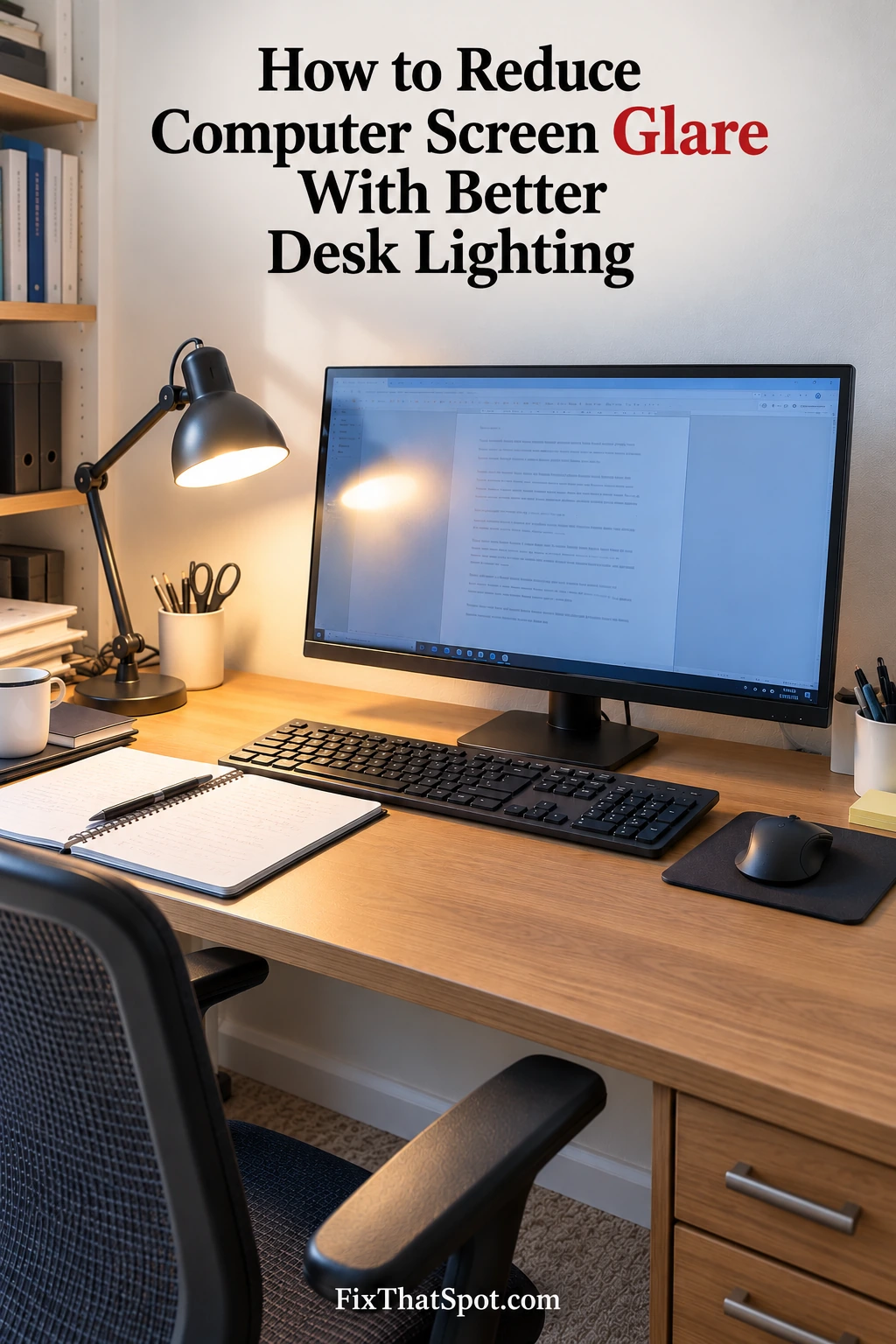
A desk can seem well lit until the monitor comes on. The screen is bright, but the keyboard, notebook, and rest of the work surface are noticeably darker. A desk lamp looks like the obvious fix, yet switching one on can replace that problem with a pale reflection across the screen.
A desk can seem well lit until the monitor comes on. The screen is bright, but the keyboard, notebook, and rest of the work surface are noticeably darker. Switching on a desk lamp looks like the obvious fix. Instead, it can leave a pale reflection across the screen.
You can shift a desk lamp around until the reflection disappears, only to find that the keyboard has gone dark again. That usually means the lamp is reaching the desk from the wrong direction. A brighter bulb will not necessarily help.
A small lamp at one side of a computer desk has a difficult job. It has to shine across the workspace to reach the keyboard and papers farther away. Depending on its height and angle, that path can cross the monitor too.
The keyboard and desk need the extra light, while the monitor does not. Keeping those two areas separate matters more than simply increasing the brightness.
Where the Light Should Fall
A wide clamp-on desk lamp approaches the desk from above instead of trying to reach across it from one corner. It clamps behind the desk, so the light bars sit above the work area without taking up space beside the monitor.
The direction of the light makes the bigger difference. The main light points down and away from the screens. Two adjustable side sections can send light toward darker parts of the desk. That means a notebook off to one side does not require turning the whole lamp toward it and putting the monitor back in the beam.
Brightness does not need to stay fixed throughout the day, either. Daylight may already be doing part of the job by afternoon, so the lamp can be turned down. If a bright streak shows up on the monitor, adjusting the angle first keeps the light on the desk without making the whole setup darker.
A window or ceiling fixture can still create its own reflection. The desk lamp cannot correct light coming from somewhere else in the room. A dark monitor makes those bright shapes easier to see. This can help identify whether the desk lamp or another light source is causing the problem.
Lighting is easy to overlook because the desk can still function when the setup is awkward. The same happens with several other home office problems that slowly wear you down: The arrangement works, but ordinary use keeps exposing the part that was not quite solved.
For computer screen glare, adding more light does little good when that light reflects straight back at you. Positioning the lamp above the monitors and directing its beam onto the work surface changes that. The keyboard and papers become easier to see without adding another bright shape to the screen.