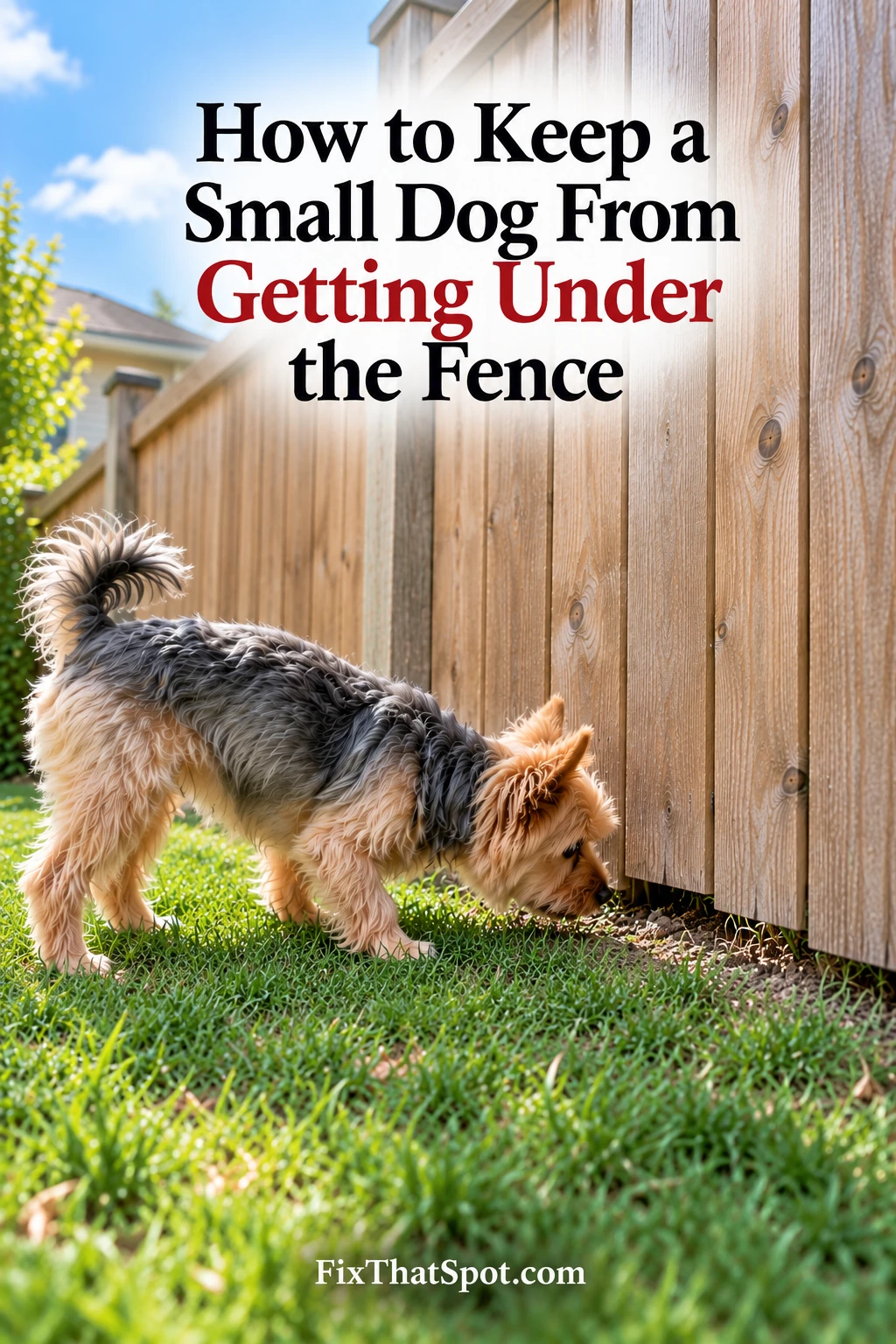
A small dog can make an otherwise solid fence look surprisingly incomplete. The boards or panels may be plenty high, yet a few inches at ground level can provide a route out.
Sometimes the escape route really is one broken board or one unusually large opening. But look farther along the bottom of the fence before treating it as an isolated repair. Similar gaps may continue beyond the place where the dog happened to get out.
That is why the lower edge matters more here than the overall height of the fence. A dog getting under the fence needs that route blocked at ground level. Adding more height at the top does nothing to change it.
When a Bottom Fence Guard Makes Sense
When a Bottom Fence Guard Makes Sense
A metal barrier for the bottom of the fence can close that lower edge while leaving the existing fence in place. It comes in 14-, 31-, and 42.5-foot lengths, so there is no reason to cover more fence than necessary.
A short opening beside a post may need only the smallest set. Longer gaps are different. Covering the known escape spot can leave the same clearance farther along the fence.
For a small dog, the openings within the barrier deserve just as much attention as its length. These panels have 1.5-inch spacing between the metal bars. A bottom fence guard does little good if the dog can squeeze through the guard itself.
The panels are 13 inches high, with pointed lower sections that go into the ground. This lets the added barrier continue below the bottom edge of the existing fence rather than ending at the same problem area.
A dog that actively digs presents a different problem from a small dog using a gap that is already there. The pointed sections extend into the ground. Even so, the barrier still needs to cover the area where the dog is finding or creating a route underneath.
The useful change happens along the bottom, not at the top of the fence. When several gaps share the same stretch, a bottom fence guard can close that vulnerable edge instead of leaving another opening for the dog to find.