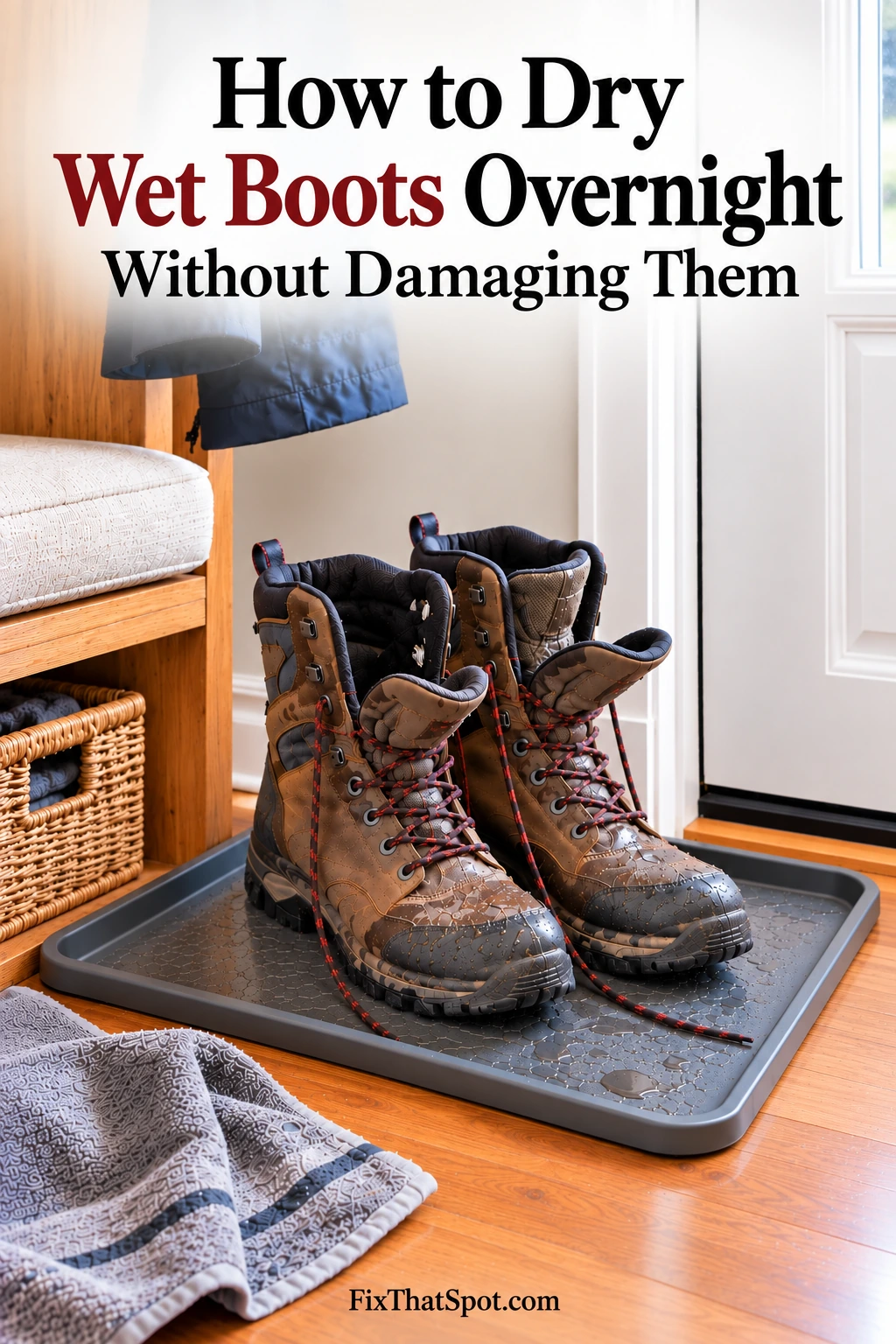
Wet boots can feel dry around the ankle by evening while the lining near the toes is still cold and damp. Leave them standing by the door as they are, and the most enclosed part gets the least help from the room air.
That changes what matters when the boots have to be dry by morning. More heat is not necessarily the answer. The first job is to give trapped moisture somewhere to go.
Start With the Parts That Stay Wet
Removable insoles can hold moisture against the bottom of the boot long after the upper has stopped looking wet. Taking them out exposes both surfaces to the air. Loosening the laces and pulling the tongue forward opens more of the interior.
If water is still sitting on or inside the boots, blot it with a towel first. Absorbent paper can draw out more moisture, but it needs to come back out once it gets wet. Otherwise, the damp paper is occupying the same space that needs airflow.
The outside of a boot can make a radiator look more effective than it is. The surface warms and dries quickly, while the damp lining around the foot is harder to reach. That is a poor reason to keep turning up the heat, especially when the boot maker limits how the materials should be dried.
For boots that are only damp, this may be enough. The harder case is a thick work boot or insulated winter boot that has become wet deeper inside. The surface can dry while the footbed and toe box are still holding moisture hours later.
When Ordinary Airflow Is Too Slow
Drying speed now depends less on making the boots warmer and more on getting air into the wettest areas.
A forced-air boot dryer sends air down inside the footwear instead of waiting for room air to reach the toe box. That is the useful difference when boots need to be worn again the next morning. A passive dryer may still work, but taking most of the night leaves little margin for footwear that started out thoroughly wet.
The no-heat setting is the part that makes this dryer more useful for different boots. Air can keep moving through the damp lining even when adding heat is not appropriate. For boots that can take gentle warmth, the heated airflow is about 105°F. There are four drying ports, with extension tubes for taller boots.
A three-hour timer shuts the dryer off rather than leaving it running indefinitely. The stated drying range is one to three hours, although saturated or heavily insulated boots may take longer. Removing the insoles and getting rid of excess water first still gives the moving air less moisture to deal with.
Wet footwear can create a separate problem underneath it. A tray for containing mud and puddles catches what drips onto the floor, while airflow deals with the moisture that stays inside.
With the boot opened up and air reaching farther toward the toes, the lining no longer has to finish drying long after the outside already feels dry.