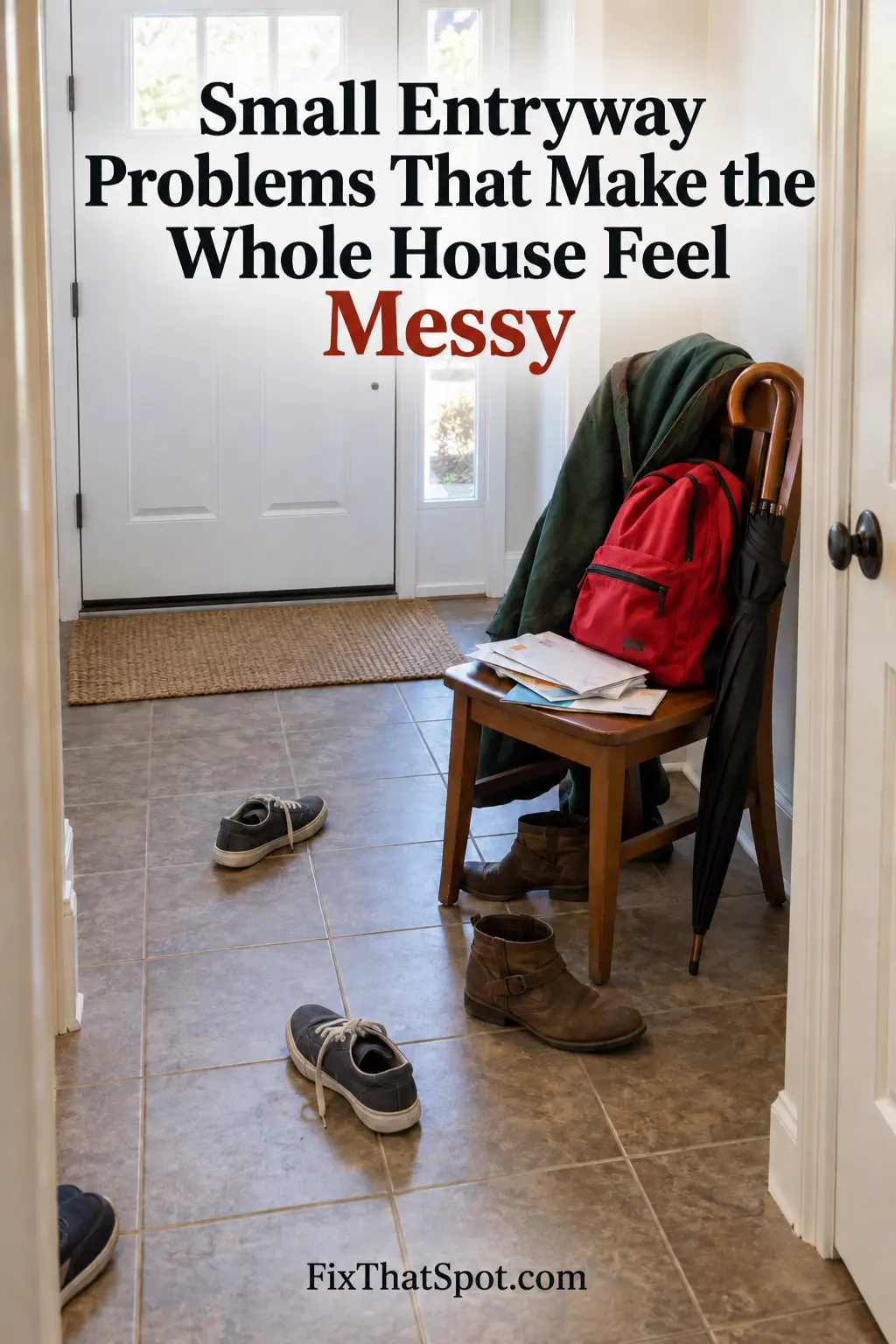
A messy entryway does not always look messy first thing in the morning. There may be one pair of shoes against the wall and a coat over the back of a chair. Neither seems worth dealing with.
Then everyone comes home. More shoes appear, and a bag lands on the chair, so the coat slips onto the seat. The mail gets placed on top because there is nowhere else nearby. If it has been raining, someone leaves an umbrella open just far enough to make walking past it awkward.
This is how most small entryway problems develop. Nobody creates a large mess. People leave a few things where they are easiest to reach, and the same small area has to hold all of them.
Start With What Is Using the Floor
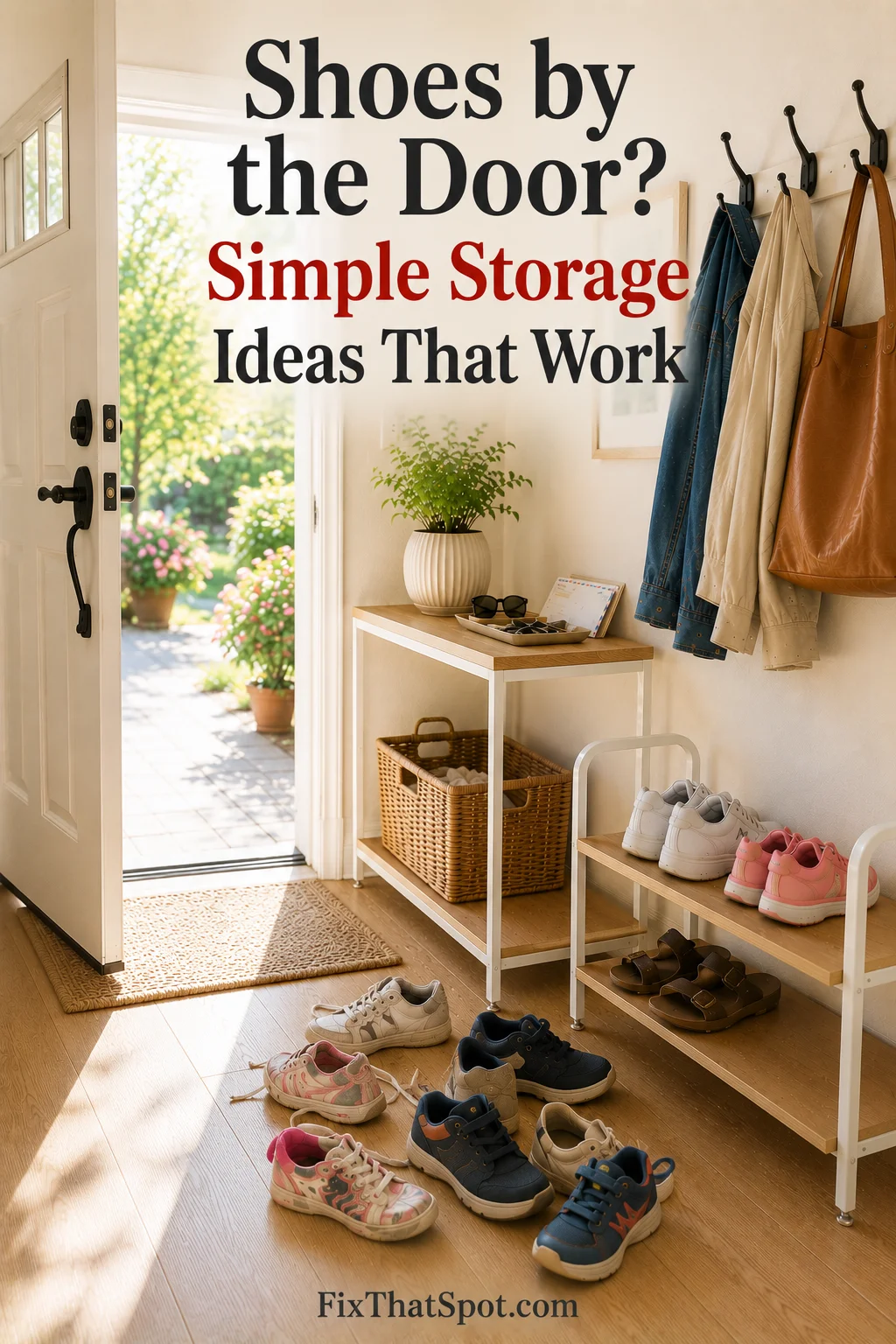
Shoes are usually the easiest place to begin because they spread. A neat row along the wall lasts until somebody pulls out a pair from the middle. Soon, the shoes closest to the door are sitting where people need to walk.
Moving them to a wider rack may not help much. The shoes become organized, but the rack takes over another stretch of the hallway. In a narrow entrance, a tall, slim shoe rack can use height without claiming as much floor or wall space.
It needs to stand close to where the shoes come off. That sounds obvious, although plenty of storage ends up in the spot where it fits rather than the spot where anyone will use it. If putting away a pair requires walking around the rack or opening a closet, the everyday shoes may continue living beside the door.
Clearing them away also exposes a problem that the shoe pile may have hidden: there is nowhere sensible to sit.
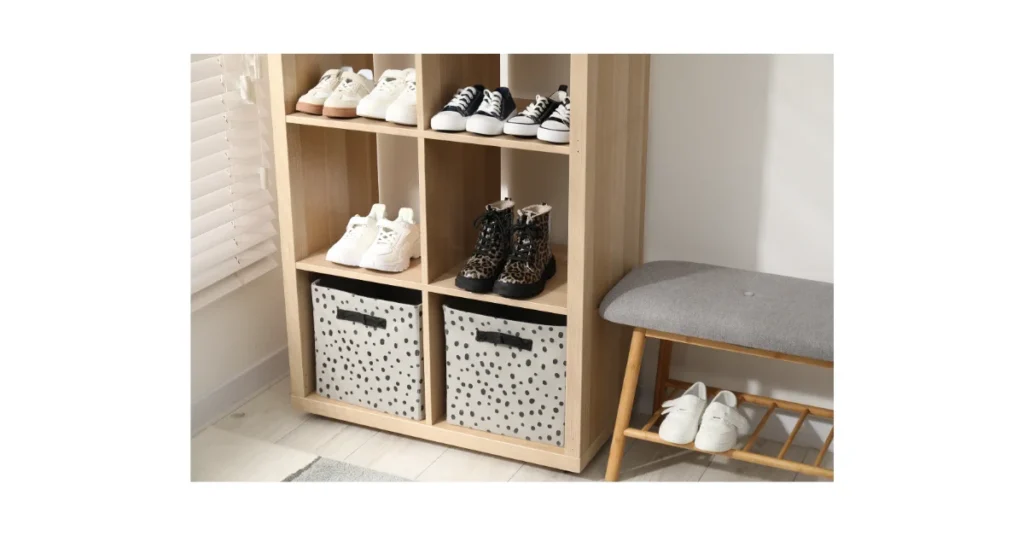
Some people can pull on their shoes while standing without giving it much thought. Laces, boots, and stiff shoes are less cooperative. That leads to leaning against the wall, sitting on the stairs, or taking the shoes into another room and coming back for the coat afterward.
A bench can help, but only if the entryway can spare the space. Otherwise, it becomes the next object everyone has to edge around. The better options for an entrance with no room to sit while putting on shoes include both permanent seating and stools that can be folded away.
Look at What the Furniture Is Holding
The chair near the door often shows what the entryway is missing. If nobody can sit on it because it holds two coats, a backpack, and yesterday’s mail, another chair is unlikely to solve much.
Coats and bags tend to stay where they can be grabbed quickly. Putting them in a distant closet creates a tidy entryway for a while, but it also asks everyone to make an extra trip each time they come home. The chair wins because it is already there.
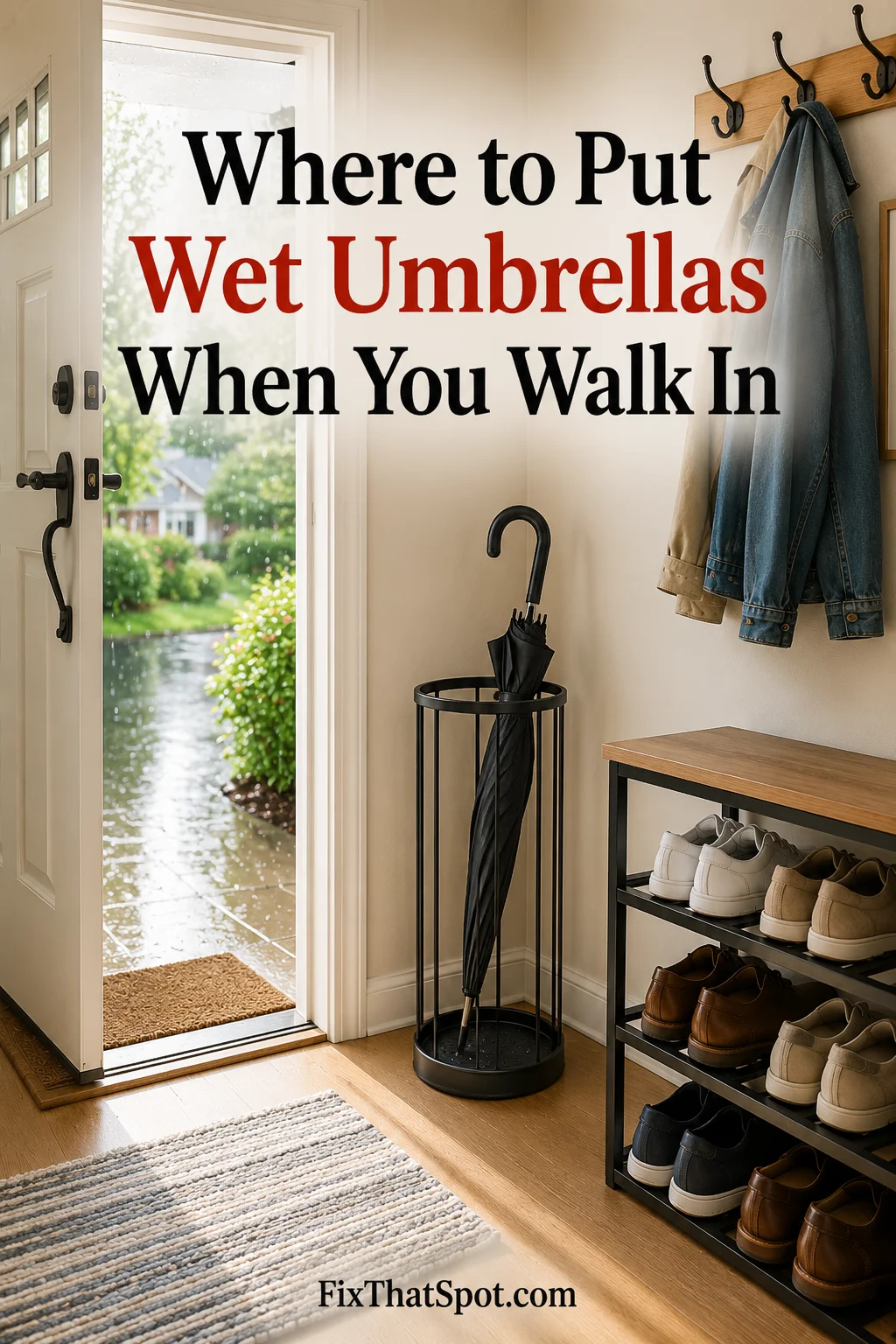
Hooks near the door give those items an equally easy landing place. They also keep bag straps from spreading across the floor. There are different ways to deal with bags, coats, and umbrellas piling up by the door, depending on whether the entryway has usable wall space or only a spare corner.
Wet umbrellas need their own spot. Hanging one beside a dry coat may clear the floor, but it moves the water somewhere less helpful.
Small objects behave differently. Keys, sunglasses, receipts, and mail can cover a surface without taking up much actual room. A bowl catches some of them, though it can eventually become the place where everything small goes to be forgotten.
An entryway drop zone organizer is more useful when it has a few clear jobs. Keys go in one place. Mail waits in another. Objects that belong elsewhere do not need a new permanent home beside the door.
Keep Wet Things Inside One Area
Rain changes an untidy entrance into a problem that travels. A small mat may catch the first steps, but wet shoes are often left partly beyond its edge. The next person steps around them, then carries water or grit farther down the hallway. By the time the floor looks dirty, the mess is no longer limited to the entryway.
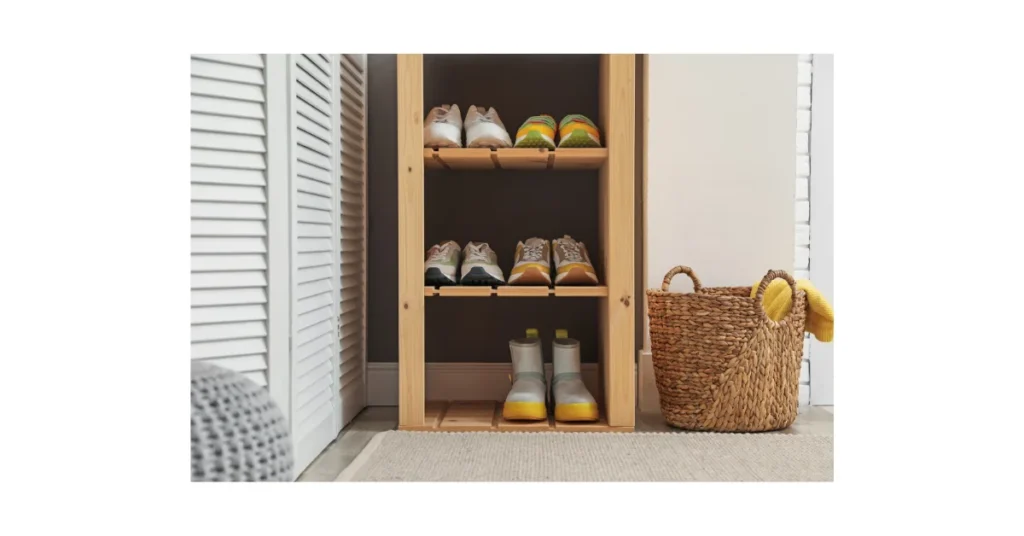
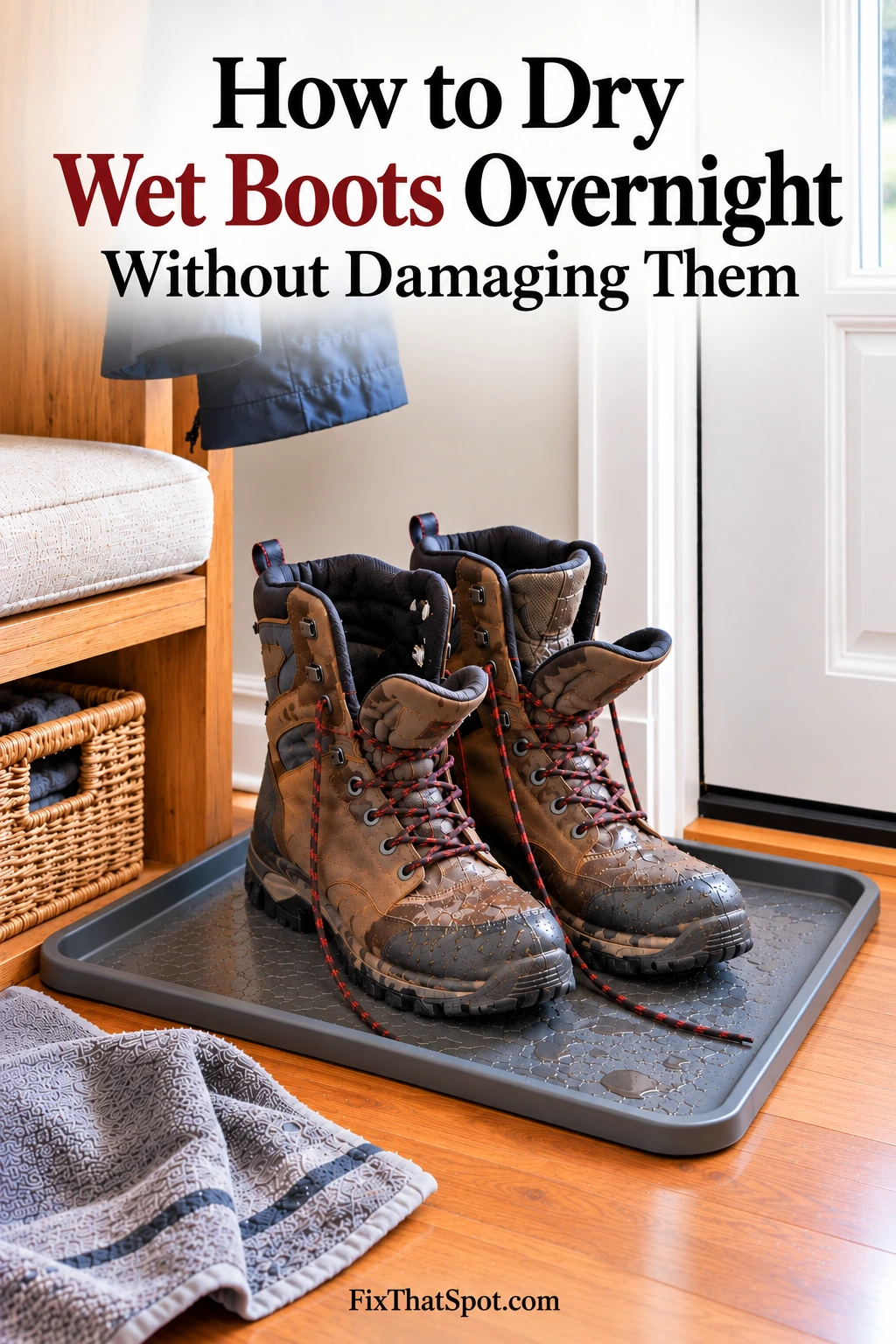
The mat needs to cover the area where shoes are removed and left to dry. A boot tray may work better when several wet pairs need to remain near the door. These fixes for mud and puddles by the entrance are less about making the area look organized and more about keeping the wet boundary from moving.
Not everything passing through the entryway needs storage there. The things that repeatedly stop there do. Once those have practical places, the remaining clutter becomes much easier to spot—and much harder to mistake for something that will be put away later.