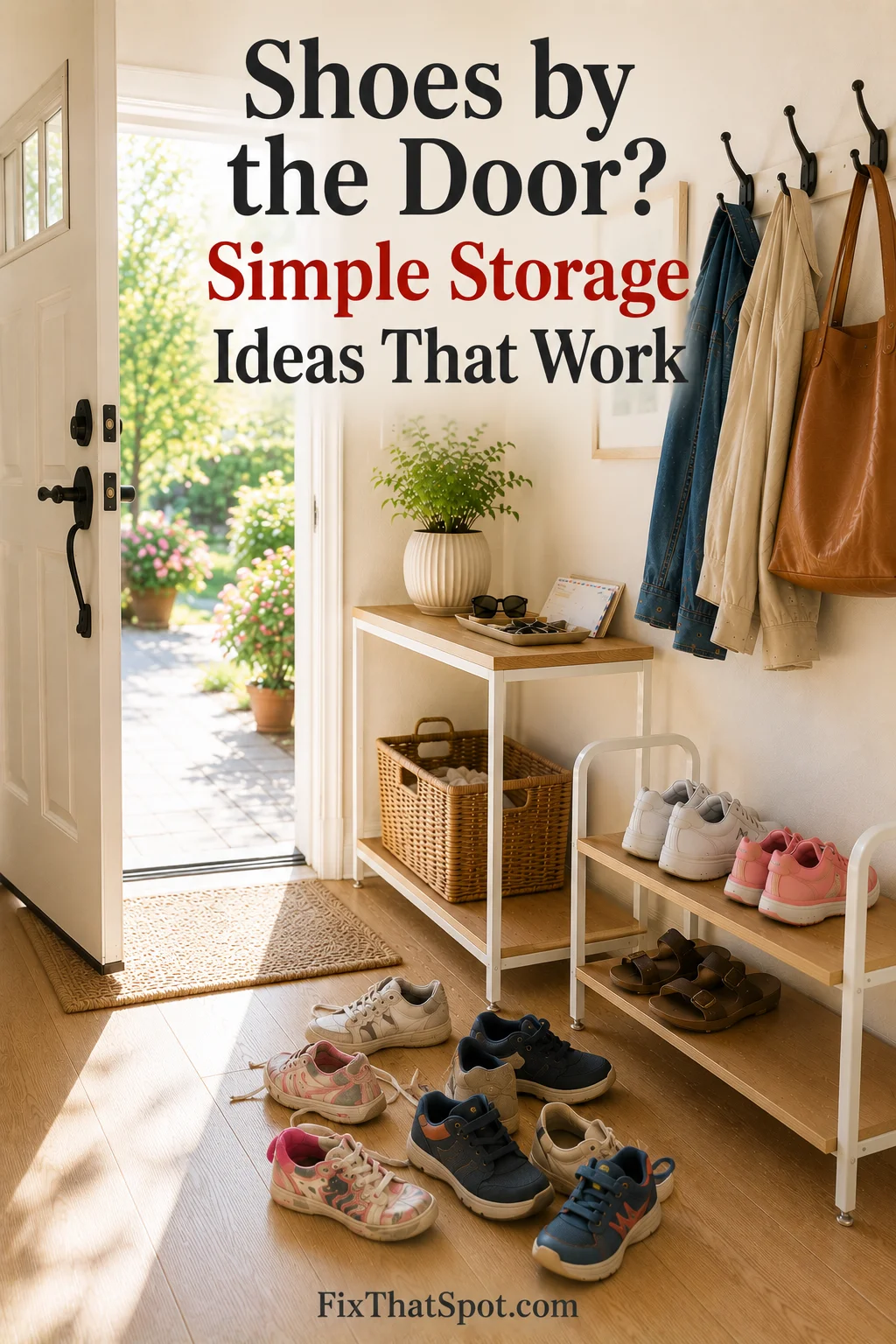
Most shoes left by the door are not waiting to be put away for the season. They are the pairs someone expects to wear again tomorrow.
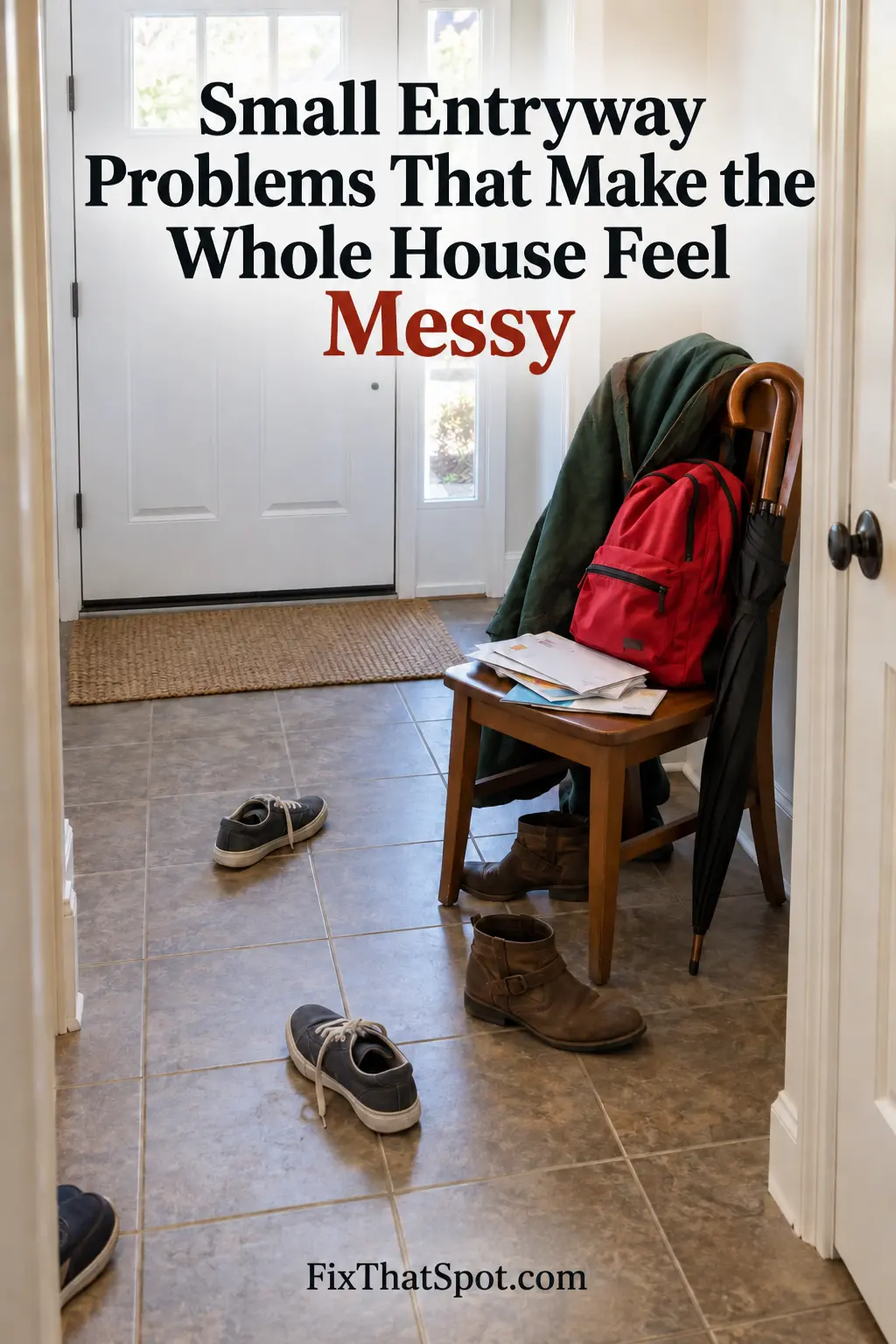
Lining them neatly against the wall works for the first few pairs. The row then grows sideways until shoes reach the door, the mat, or the part of the floor people walk through. Moving the entire row elsewhere usually does not last because the shoes still come off beside the door.
The useful storage spot is where that routine already ends.
A compact shoe bench gives those shoes two shelf levels instead of one long stretch of floor. It measures 27.6 inches wide, 11.3 inches deep, and 17.8 inches high. The top provides a place to sit while the open shelves remain directly underneath.
A lidded bench asks someone to lift the seat before putting away a pair they may wear again tomorrow. Here, the shoes can be nudged onto an open shelf as soon as they come off. They are also less likely to be kicked backward when somebody walks through the door.
The top does not need to become another surface for bags and unopened mail. Its more useful job is keeping the place to sit directly above the place where the shoes go.
Check the Floor Space Before It Arrives
That depth can take a noticeable bite out of a narrow entryway. Mark the bench’s 27.6-inch width and full depth with painter’s tape, then open the door. If it crosses the tape, that stretch of wall will not work.
Some doorways have enough depth but very little bare wall beside the trim. The bench needs the full 27.6 inches. In a shorter gap, a tall, slim shoe rack puts more shelves above a smaller section of floor.
Six pairs is possible with low, fairly narrow shoes. Bulky sneakers use up the shelf faster. Tall boots will probably end up beside the bench, leaving the shelves for the shoes worn most often.
Keeping the most frequently worn pairs on the shelves is enough to change the doorway. Tall boots can take one defined spot beside the bench instead of sharing the walking path with a spreading row of smaller shoes.