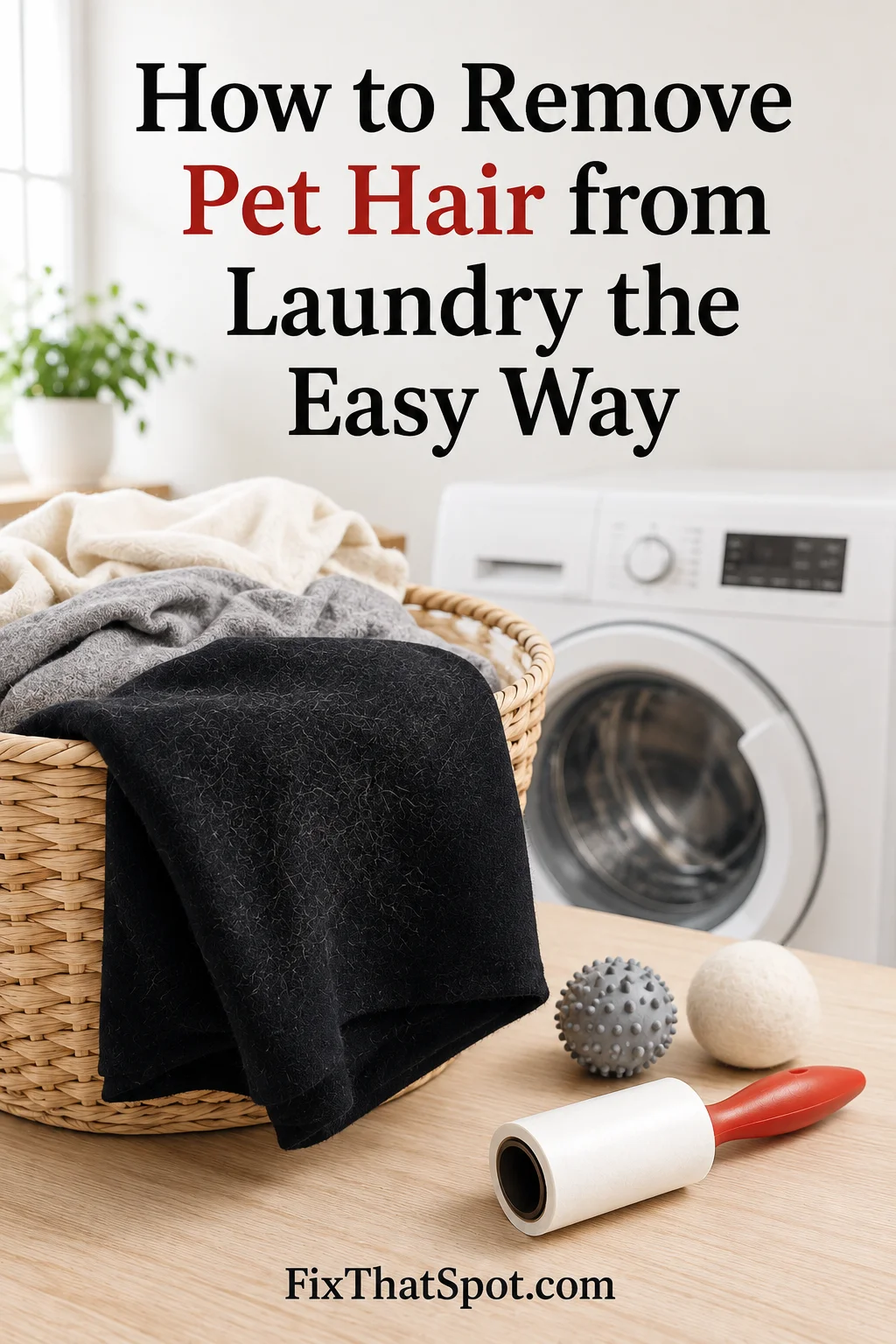
You finish a load of laundry, open the dryer, and start folding your clothes. They smell fresh and look clean until you pick up a dark shirt and see pet hair and lint still clinging to the fabric. A few quick brushes with your hand don’t make much difference, so the lint roller comes out again.
If this happens almost every time you do laundry, it usually isn’t because your clothes aren’t being washed properly. Pet hair behaves differently from dirt, which is why it often stays behind even after a complete wash and dry cycle.
Making a few changes to the way you prepare, wash and dry your clothes can remove much more of that hair before the laundry is ready to wear.
Why Pet Hair Stays on Clean Laundry
Most dirt washes away because water and detergent can lift it from the fabric. Pet hair is different. Some hairs become trapped between fibers or collect around seams, cuffs and textured fabrics where the wash struggles to dislodge them.
That’s why the lint filter often fills with fur after every load. The dryer removes the loose hair, but anything still caught in the fabric usually stays behind, even though everything else has been cleaned.
The result is familiar if you live with pets. One shirt comes out almost hair-free while another still seems to collect every loose strand.
Remove Loose Pet Hair Before Washing
The washing machine has a better chance of removing pet hair when it isn’t already dealing with a thick layer of loose fur.
If clothes are heavily covered, shake them outside or use a brush to remove as much loose hair as possible before they go into the wash. Pet blankets, throws and bedding are often worth washing separately because they can release large amounts of hair that spreads through the rest of the load.
Reducing the amount of loose hair before washing gives the machine less to redistribute and more opportunity to remove what remains.
What Actually Removes Pet Hair and Lint in the Wash
Washing can loosen pet hair and lint from fabric, but the hair still needs somewhere to go. Some leaves with the wash water, while some stays loose in the drum or settles onto other clothes.
That is why heavily covered clothes can come out looking better without coming out completely hair-free. Removing the worst of the loose hair first and leaving enough room for the clothes to move gives loosened hair a better chance of separating from the fabric instead of transferring to another garment.
If you use a reusable pet hair catcher in the washer, treat it as extra help rather than the whole solution. It may collect some of what comes loose, but it cannot compensate for an overloaded drum or clothes that went into the washer already covered in hair.
Give Clothes Room to Move During the Wash
Clothes need space to move against each other during the wash cycle. When the drum is packed too tightly, pet hair has fewer opportunities to separate from the fabric.
Avoid overloading the washing machine, especially when washing thick clothing or fabrics that already hold a lot of pet hair.
Some materials cling to pet hair more than others. Fleece, wool and other textured fabrics often need more attention than smooth synthetic fabrics or tightly woven cotton.
Let the Dryer Remove the Loosened Hair
Much of the pet hair that disappears during laundry is removed in the dryer rather than the washer.
Cleaning the lint filter before every load helps maintain good airflow so loose hair can collect there instead of remaining inside the drum.
If pet hair is a constant problem, reusable pet hair catchers can help loosen hair during the wash, while wool dryer balls help separate clothes in the dryer so additional loose hair can reach the lint filter instead of staying on the fabric.
These products work best when they support a good laundry routine rather than replace it.
A Lint Roller Should Finish the Job, Not Do the Whole Job
You may still find the occasional strand of pet hair on clothes after washing, particularly on dark garments or fabrics that naturally attract fur.
At that point, a lint roller is useful for removing the last few hairs before you wear the clothes. If you still notice pet hair collecting on freshly cleaned clothes later in the day, the problem may no longer be the laundry itself. It may be happening after the clothes come out of the dryer.
In that case, these tips for keeping pet hair off black clothes can help.