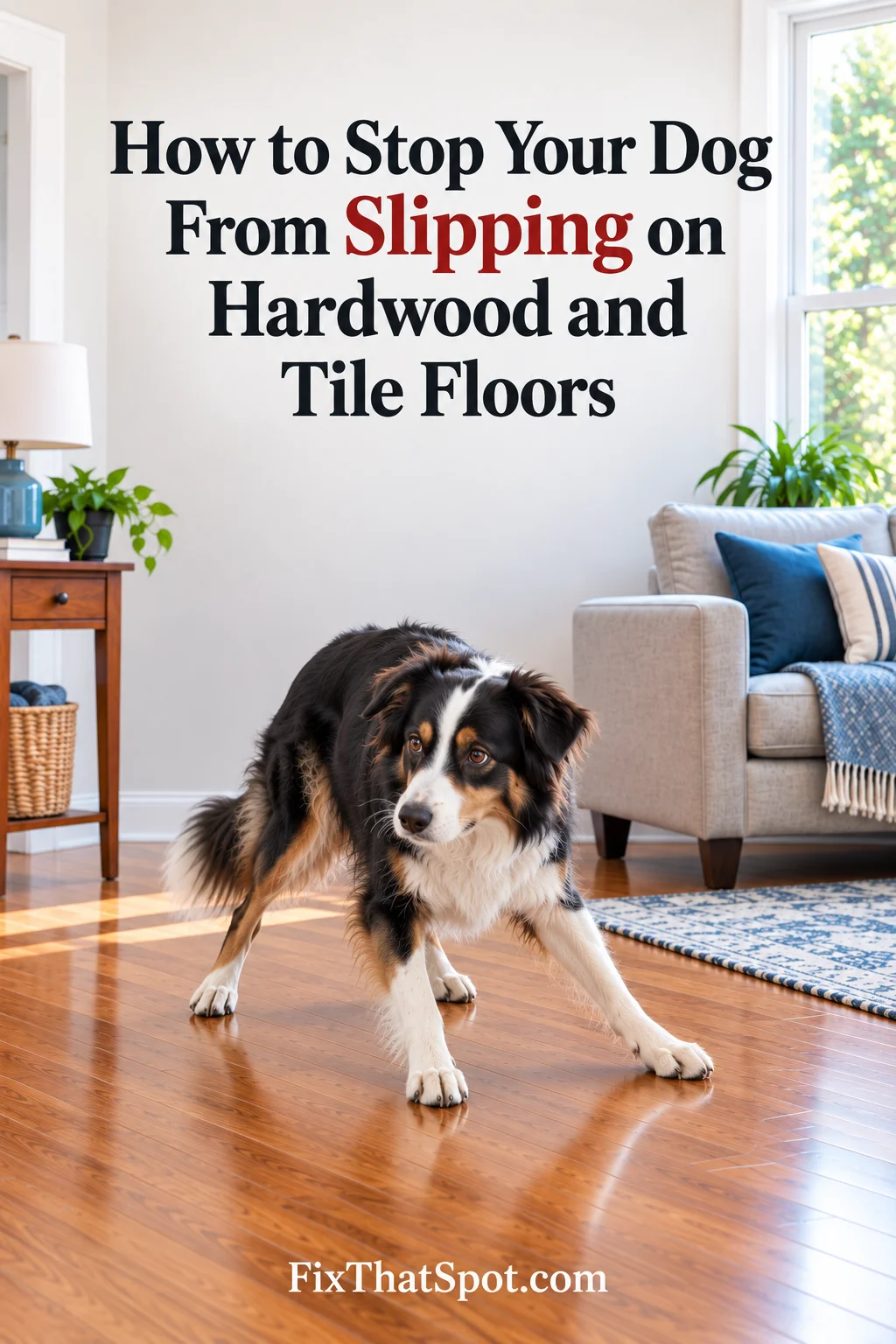
Hardwood and tile can become surprisingly difficult for a dog the moment a paw loses its grip.
You may notice it when your dog gets up, turns quickly, or tries to hurry across the room. One paw slides, another shifts to compensate, and an ordinary walk across the floor becomes a series of careful little steps.
Non-slip dog socks add a grippy surface between the paws and the floor. The useful detail with these socks is that the traction pattern is on both sides. If a sock rotates on the paw, it does not immediately leave smooth fabric facing the floor.
That addresses one of the awkward problems with putting socks on a dog: they do not necessarily stay perfectly oriented while the dog moves.
The Socks Still Need to Fit
A good grip pattern will not help much if the sock keeps sliding off the paw.
These socks come in sizes from small through XX-large. Use the manufacturer’s sizing guide and measure the paw rather than choosing a size based only on your dog’s breed or weight.
They should stay securely on the paws without being uncomfortably tight. Your dog also has to tolerate wearing them. Some dogs adjust to having their feet covered; others spend more time trying to remove the socks than walking in them.
If the socks twist during normal movement, the dual-sided grip means there can still be traction against the floor rather than requiring you to keep turning each sock back into position.
Check What Is Under the Paws Too
Before treating every slip as a sock problem, look at the floor and paws.
Water, mud, and loose debris can make an already smooth surface harder to grip. If dirty paws are regularly coming through the door, cleaning muddy paws before your dog walks through the house keeps that extra mess off the floor.
Long nails and excess fur around the paw pads can also interfere with footing on smooth surfaces.
If the slipping is new, frequent, painful, or getting worse, do not assume the floor is the only cause. Changes in mobility can also contribute to slipping and are worth discussing with a veterinarian.
When your dog is otherwise moving normally but struggles for traction on smooth flooring, properly fitted non-slip socks put the extra grip directly where the problem occurs: under the paws.