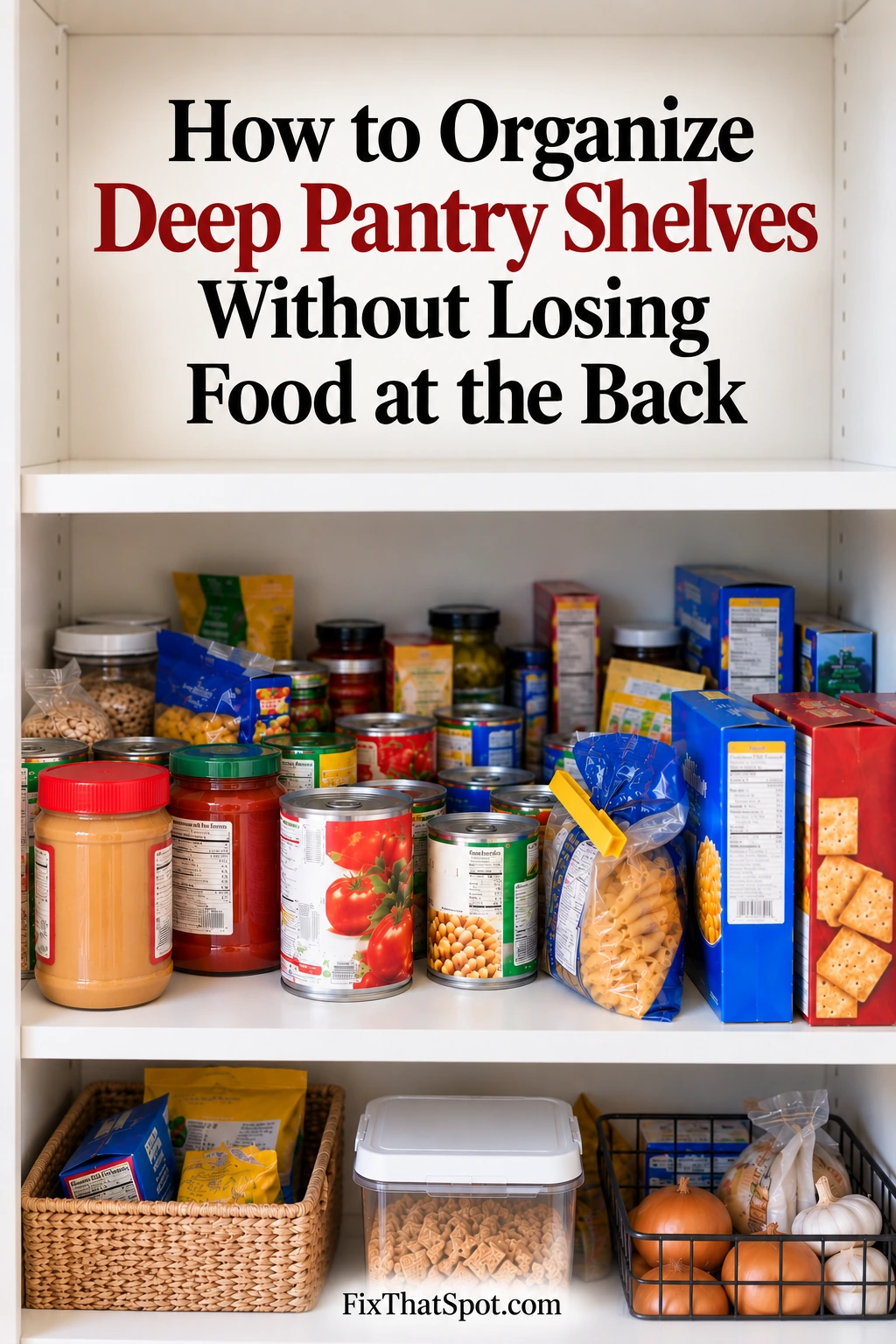
A deep pantry shelf can look half empty and still be annoying to use. There is plenty of room behind the first few cans and boxes, but putting food there means reaching past everything in front. Before long, the easiest place for new groceries is the front edge.
Things at the back are easy to forget once the front fills up. That spare jar of sauce may still be there, but finding it means shifting whatever has collected in front of it.
A long bin makes better use of that depth because the food moves as a group. With clear pantry bins with handles, a row of cans, packets or baking supplies can run toward the back of the shelf without becoming difficult to reach. Pull the handle and the things hiding 16 inches back come forward with everything else.
The 16 × 6 × 5-inch version is narrow enough to create separate rows across a shelf. That can work better than one wide container where small packages end up jumbled together again. The clear sides also help when something small has worked its way behind a taller package.
Sixteen inches is not automatically the right depth, though. The same bins come in 10- and 14-inch lengths, while the 16-inch version has 4-, 6- and 8-inch widths. A shallower pantry may need one of the shorter versions. Wider bins give larger packages more room. What matters is leaving the handle easy to grab instead of choosing a bin that disappears behind the pantry frame.
Large cereal boxes and bulky bags do not gain much from being put in another container. These bins make more sense for the smaller foods that tend to migrate behind them. The same nuisance can happen in the refrigerator, where small foods get stuck behind larger containers.