*This post may contain affiliate links for which I earn commissions.*
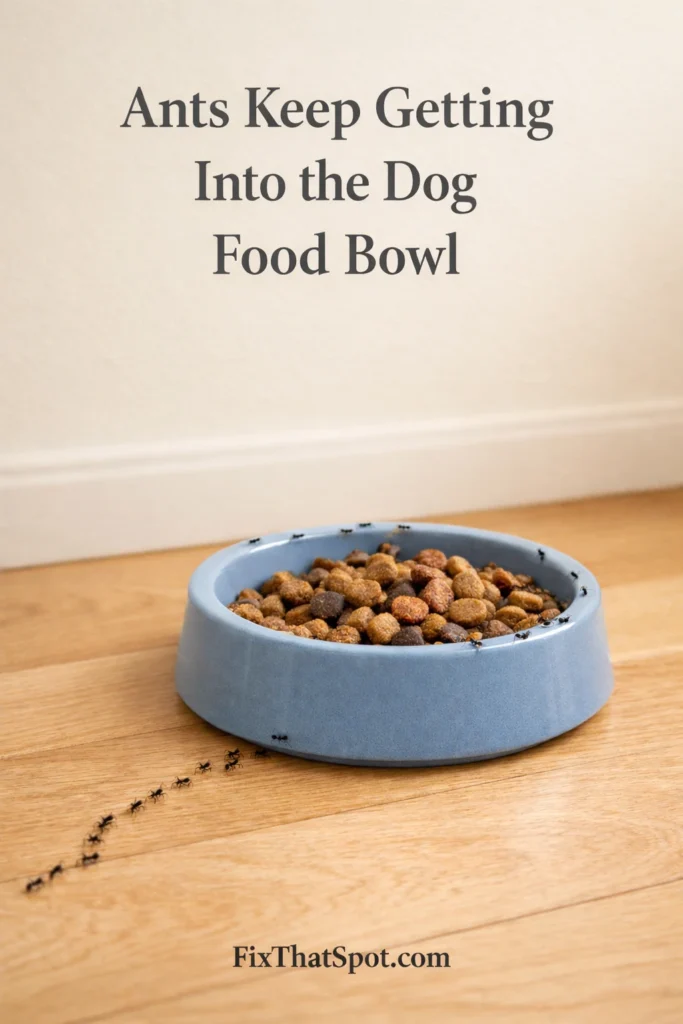
Most dog food bowls end up in the same spot every day. They stay on the floor, get refilled, and get nudged around during meals. Over time, small crumbs and residue collect around the bowl, even if it’s wiped down regularly.
That setup is enough for ants to find it.
The ants usually don’t show up one at a time. Once they do, they come back in groups, following the same path across the floor and straight to the food. The bowl might look clean, but the trail is already there.
The issue isn’t the dog food itself. It’s access. Ants only need a narrow, uninterrupted path to reach the bowl. Once they have it, they’ll keep using it, even if the food changes or the bowl gets moved slightly.
The bowl doesn’t need to sit directly on the floor. When it’s lifted onto a separate tray, the ants lose their way in. They reach the edge and stop instead of continuing underneath. The food stays where it is, but the line of ants doesn’t make it to the bowl anymore.
Because the bowl itself doesn’t change, feeding stays the same. The dog eats normally, the bowl doesn’t tip or slide as easily, and ants can’t reach the food even if they’re still active nearby. For most setups, that’s enough to stop the swarming at the bowl itself.
Even after the bowl is out of reach, ants sometimes hang around the spot for a bit. They follow the same line they did before and keep checking it, even when the food isn’t there anymore.

After a while, that slows down. Once the bowl stops being reachable, the visits stop lining up with feeding time, and the area doesn’t reset itself the same way it did before.