Seeing the food at the back of the fridge does not make it any easier to reach. A yogurt cup can be perfectly visible behind a milk jug and still require moving the jug first.
Add another container in front, and the back of a deep shelf becomes storage that gets used mostly because there was nowhere else to put things.
An open clear bin improves the view, but depth still matters. Small foods can work their way toward the back of the bin, and pulling the entire thing off the shelf to find one item is hardly an improvement.
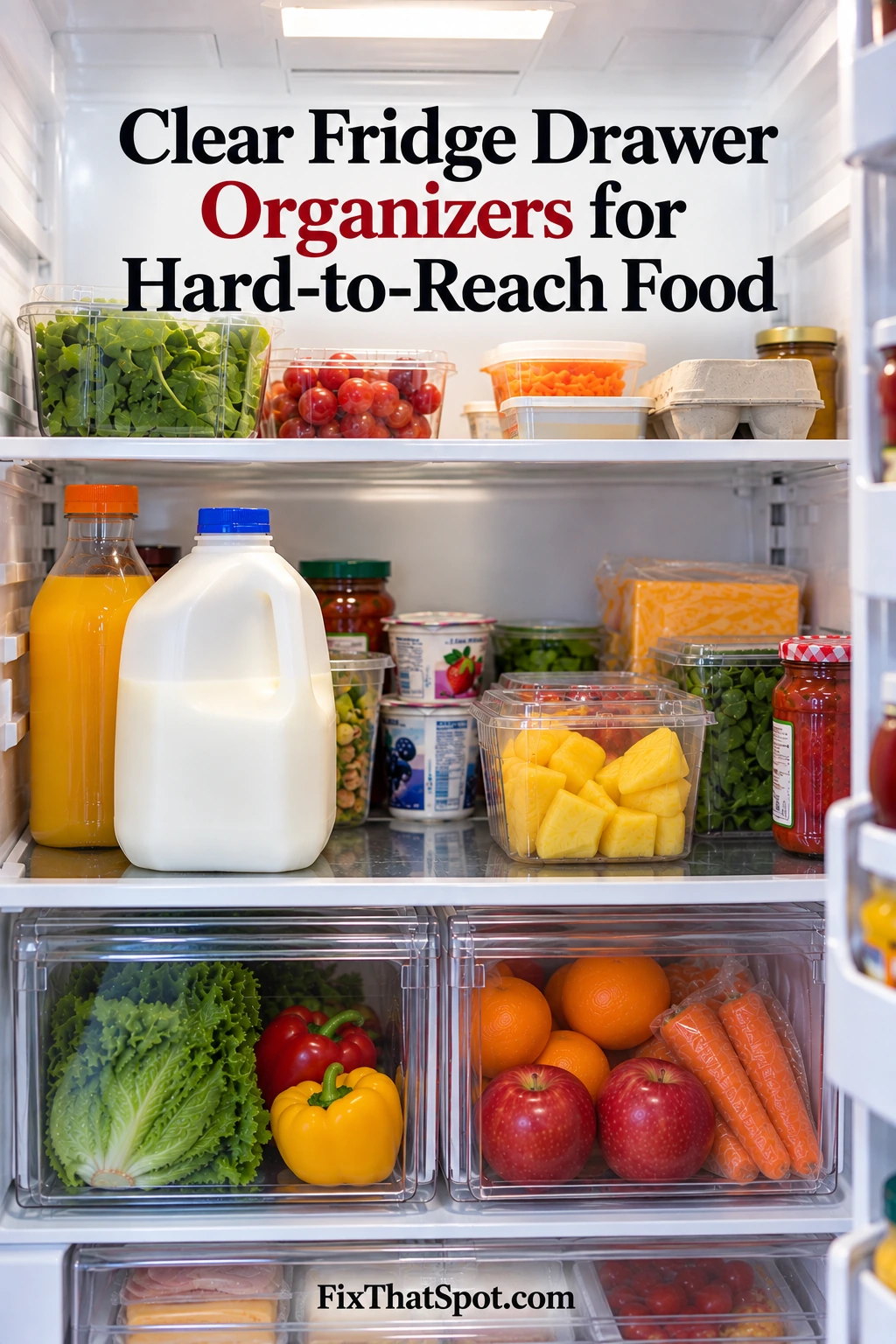
A clear pull-out fridge drawer deals with the reach instead. The drawer comes forward while its outer case remains on the shelf. That distinction is more useful here than simply choosing another transparent container.
The combination of large and small drawers also avoids treating every bit of food as though it needs the same amount of room. The larger drawers include removable dividers, while smaller drawers can keep short packages together without giving them half a refrigerator shelf. Where there is enough clearance, the cases stack, putting some of the unused height above those foods to work.
That vertical space matters in a crowded fridge, just as it does with pantry storage when you’re out of shelf space. The useful space is not always beside what is already there.
Check the Fit Before Choosing the Drawers
The organizers themselves take up room, so more drawers do not automatically mean better storage. A large case filled with a few small packages wastes the very space it was meant to fix.
The product comes in five configurations rather than one fixed arrangement. That makes the contents of the fridge worth looking at before choosing a set. Measure the available shelf space and clearance, then consider what regularly ends up buried there. The right setup is the one that gives those foods a drawer without crowding out everything around it.
Once that fit is right, reaching something from the back no longer starts by unloading what is sitting in front.