
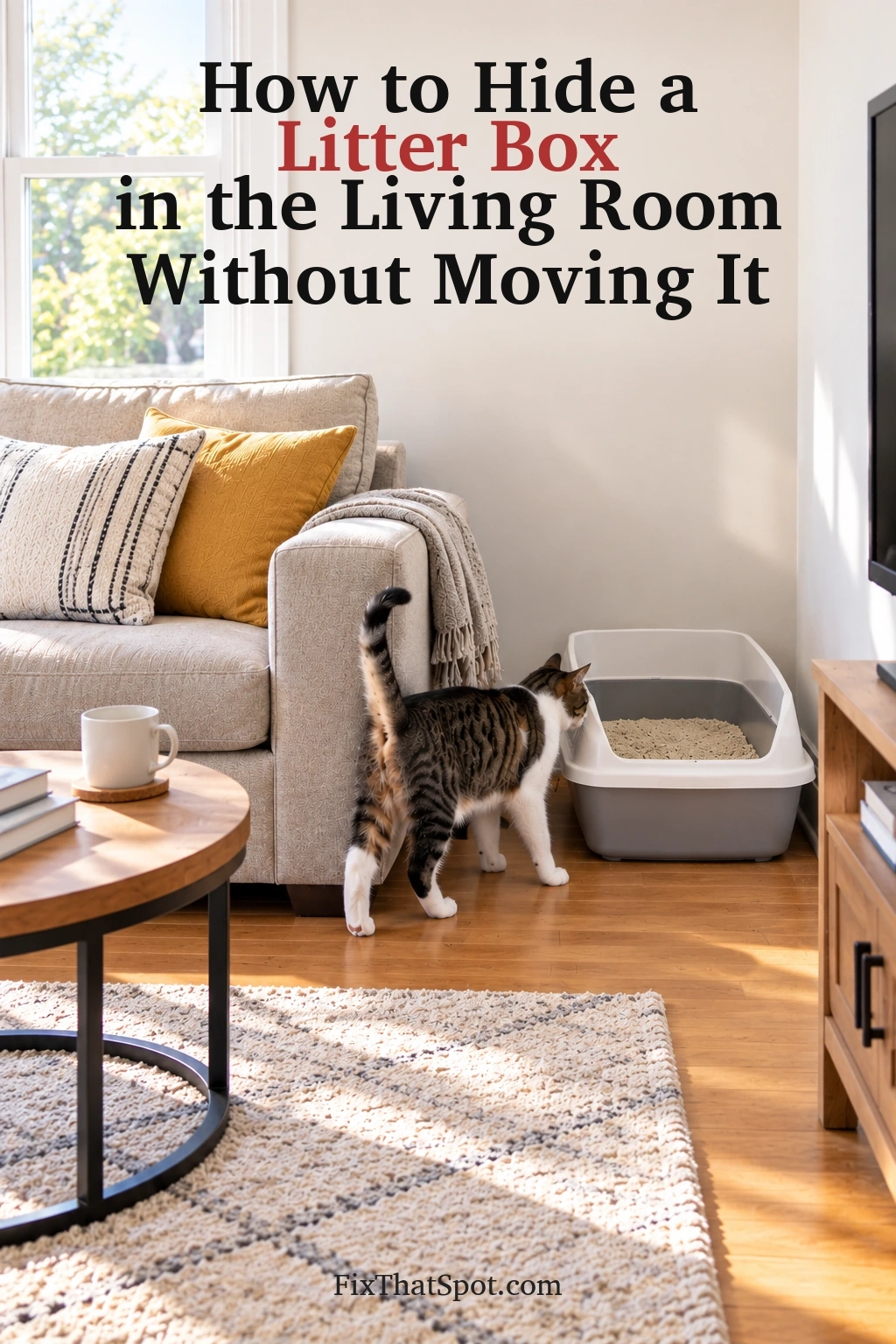
Sometimes the litter box ends up in the living room because there simply is not a better place for it.
The bathroom may be too small. Another room may stay behind a closed door. In an apartment, there may not be another suitable room at all.
That leaves an open litter box sitting beside furniture you look at every day. Moving it somewhere inconvenient does not solve much, especially when the cat already uses that location reliably.
A litter box furniture enclosure can make the box less noticeable without changing where it lives. The litter tray sits inside a cabinet-style enclosure, with an opening for the cat to come and go.
The important part is making sure the enclosure works as a litter-box space, not just as a better-looking piece of furniture.
Check the Space Inside, Not Just the Cabinet Size
The outside dimensions tell you whether the enclosure fits beside the sofa or along the wall. The inside dimensions tell you whether it will actually hold your litter box.
Measure the tray, including any raised rim or hood. There should also be enough room for the cat to stand and turn comfortably inside.
Cleaning access matters too. Doors that open across most of the front make it much easier to pull out the tray and scoop it without reaching through the cat entrance.
A cabinet that fits the available corner but makes the litter box awkward to use will quickly become its own household problem.
Hiding the Box Does Not Hide the Smell
Closing a litter box inside furniture deals with what you can see, not necessarily what you can smell.
Look for ventilation openings rather than choosing an enclosure that seals the litter box as completely as possible. Regular scooping still matters, and the inside needs to be easy to wipe clean.
If odor is already spreading beyond the litter-box area, deal with that separately. There are other ways to keep litter box smells from spreading through the house rather than expecting the furniture to contain them.
Leave the Entrance Easy to Reach
A side entrance can help keep the litter box itself out of direct view, but the cat still needs an easy route in and out.
If a dog is also trying to reach the tray, a dog-resistant enclosed litter box uses a restricted route rather than relying on an ordinary cabinet opening to block access.
Do not push the entrance tightly against a wall, sofa, or other furniture. Leave enough clear floor for the cat to approach and turn away normally.
Some cats may hesitate to use a box that suddenly has walls, a roof, and a smaller entrance. Watch whether the cat continues using the litter box normally after making the change.
If the cat is comfortable with the enclosure, the litter box can stay in the living room without looking like a plastic tray left in the corner. You have not lost its practical location; you have simply made it fit the room better.