
*This post may contain affiliate links for which I earn commissions.*
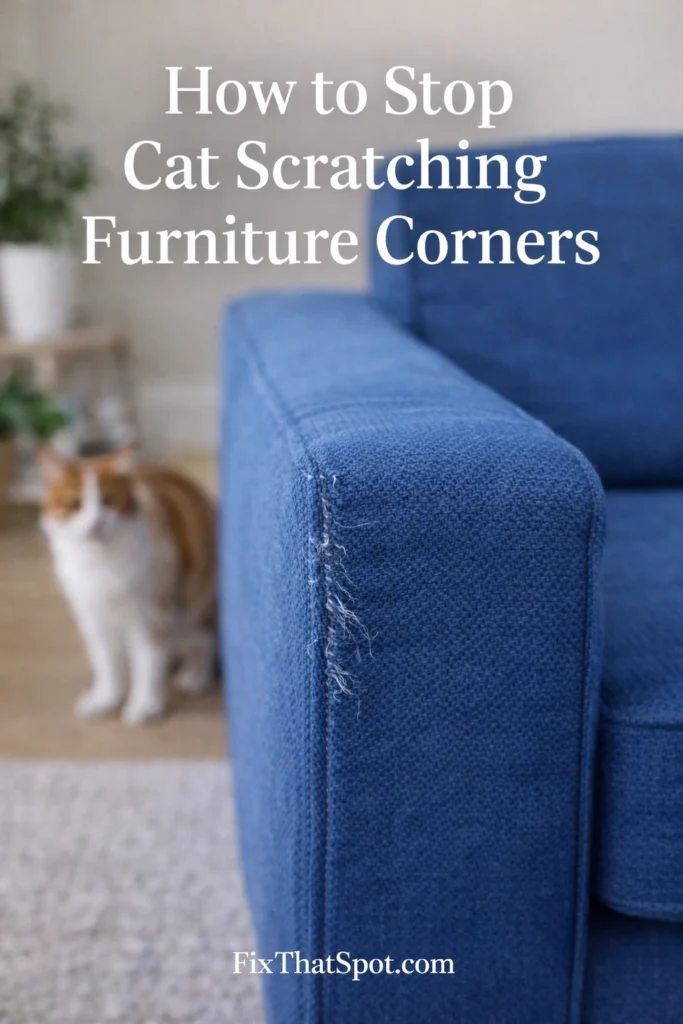
Scratches usually show up on one edge first. A sofa arm, the front corner of a couch, maybe the side of a chair. Even when a scratching post is nearby, the furniture corner often gets picked instead.
Corners are solid. They don’t wobble, and they give enough height for a full stretch. Once a cat starts using one spot, it tends to stay that way.
At first it’s just loose threads. Then the fabric begins to thin along the seam. On lighter upholstery, the damage shows quickly.
Moving the scratching post closer sometimes helps, but it doesn’t protect the furniture itself. If the cat already prefers that edge, the fabric stays exposed.
Covering the corner directly is more reliable. A clear adhesive furniture protector placed over the scratched area creates a hard, smooth surface that claws can’t dig into. Instead of catching the weave, they slide across it.
Most protectors come in flat panels sized for vertical edges. You peel the backing, press them into place, and smooth out any air pockets. If the corner gets heavy use, twist pins can hold the panel tighter so it doesn’t lift at the top. Some panels can be trimmed slightly to better fit narrower arms.
They’re transparent, so they don’t change the look of the sofa much. From across the room, most people won’t notice them. They work best on tightly woven upholstery. Leather, velvet, or very soft fabric usually isn’t a good match, since adhesive doesn’t hold well there.

Once the protector covers the corner, the damage stops spreading. The cat may still try the same spot out of habit, but the surface underneath stays intact.