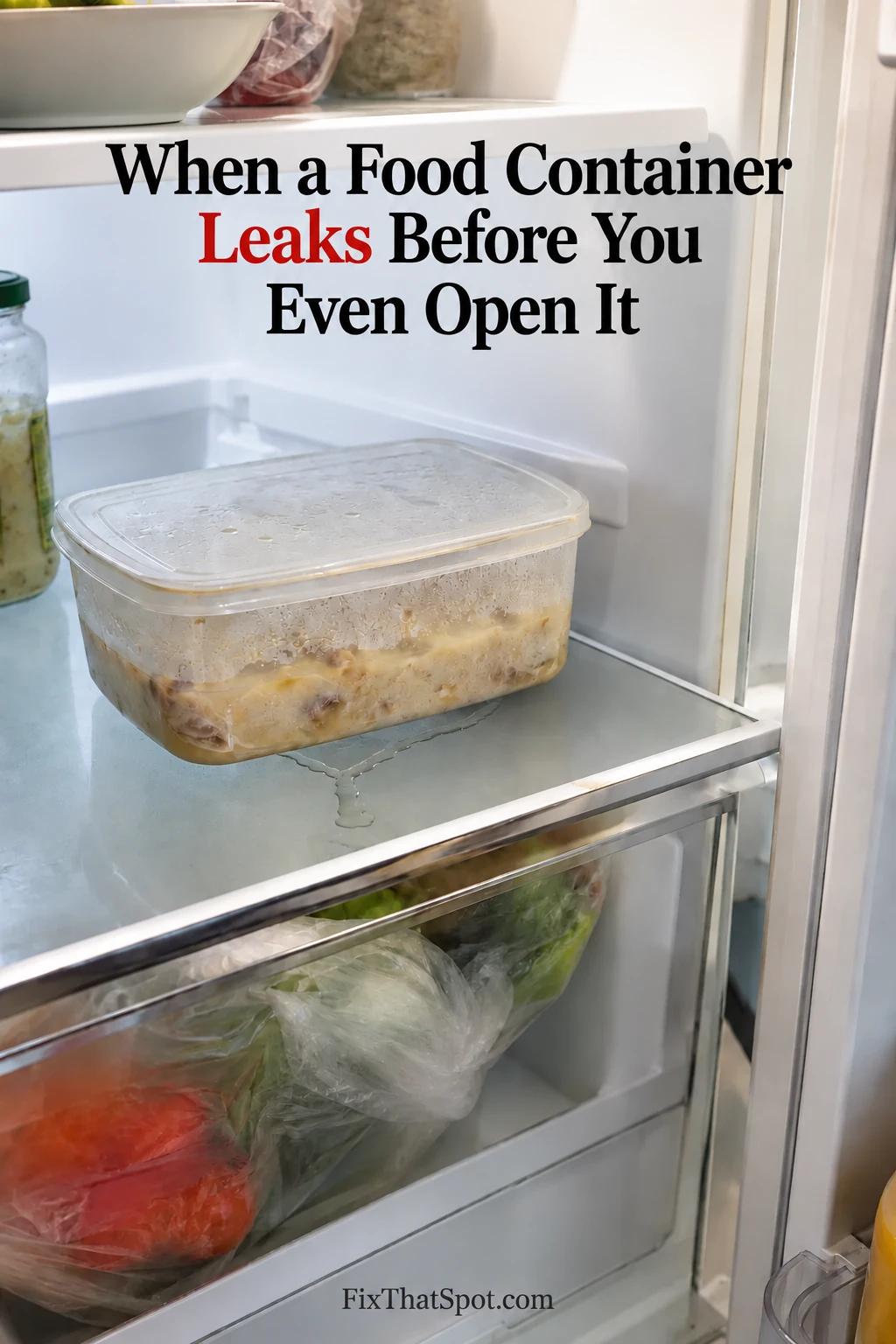
A food container can look properly closed and still leave a damp ring on the refrigerator shelf. By the time it is noticed, the container has to be lifted carefully, the shelf needs wiping and the leftovers are sitting on the counter while the lid receives a rather suspicious inspection.
Wrapping the container in a bag avoids the shelf cleanup, but it also admits that the lid cannot be trusted. Taking lunch out of the house adds another layer of caution, usually involving an upright position and a hope that nobody moves the bag.
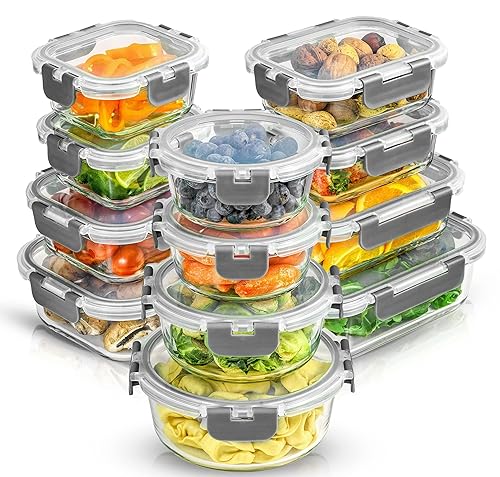
Leak-proof glass food containers remove that uncertainty when the lid seals evenly around the rim and the clips hold it there. The useful change is simple: a container of leftovers can be moved, stacked or carried without first arranging everything around the possibility of a leak.
Where Leaks Usually Begin
The seal deserves more attention than the number of pieces in the set. A loose or twisted gasket can leave one side of the lid looking closed when it is not. Removable seals are easier to clean properly, although they need to sit back in their grooves without buckling at the corners.
Several small clips are also more useful than one stiff closure that pulls down only part of the lid. Each clip should close without forcing it. A lid that needs wrestling into place tends to be set down “for a moment,” which is often how uncovered leftovers spend the night in the fridge.
The containers still need somewhere sensible to go when they are empty. If the cupboard already requires a search for every matching lid, making kitchen cabinets easier to use may prevent the new set from joining the same jumble.
Glass containers can help with leftovers, but they do not create more room for unopened food. When groceries have already spread beyond the pantry, adding storage where shelf space has run out deals with that separate problem.
The real improvement appears the next time a container is lifted from the fridge and the shelf beneath it is still dry.