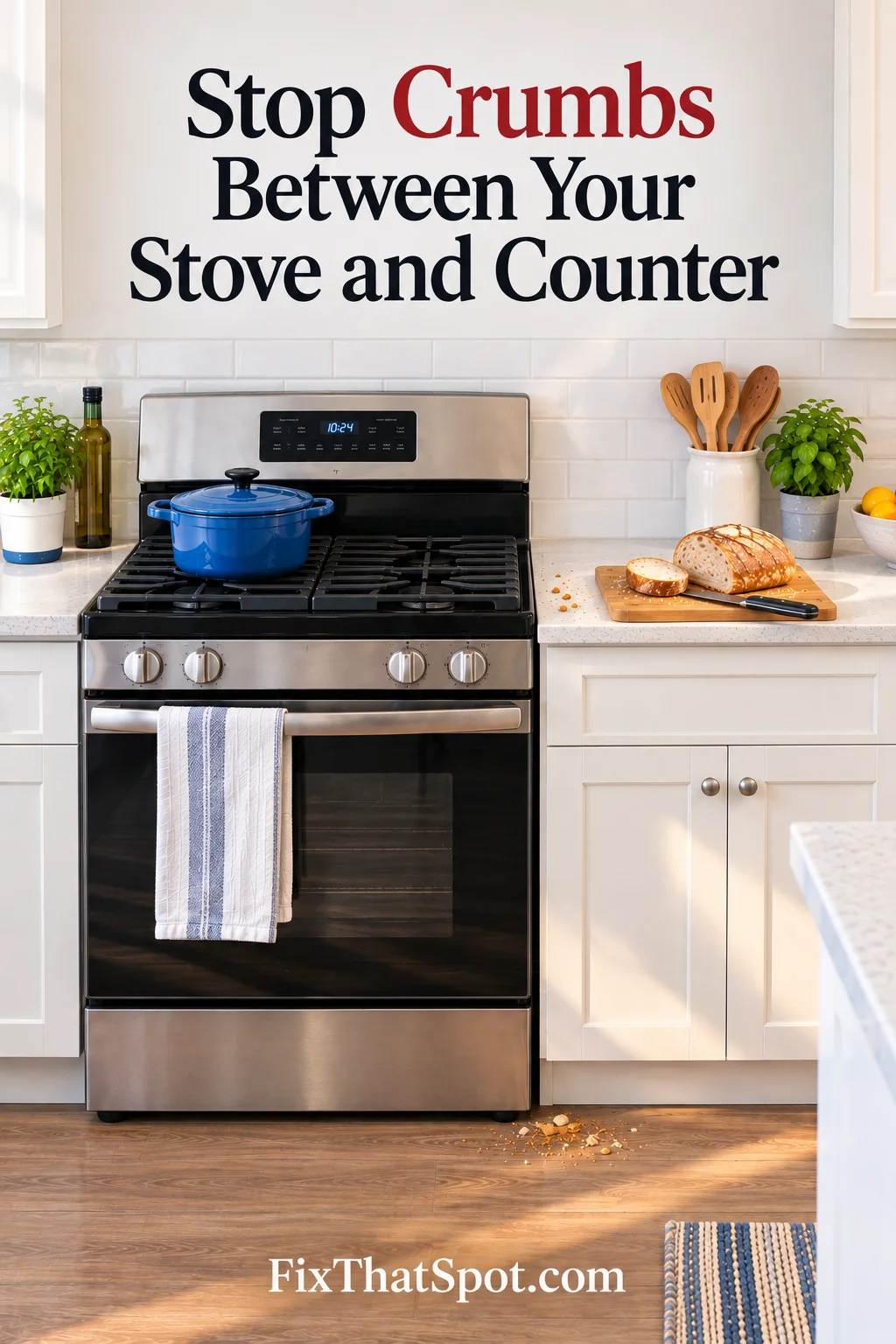
A piece of chopped onion lands beside the stove. The cloth catches it on the next wipe, carries it to the counter’s edge, and sends it straight into the gap.
The counter looks clean. The onion is now somewhere below it.
A pair of telescoping steel stove gap covers closes those openings without filling them permanently. One strip runs along each side of the stove. Crumbs and small drips land on the cover instead of slipping down where the cloth cannot follow.
The strips extend from 13.8 to 27.5 inches, so their length can follow the side of a shorter cooktop or a deeper range. Extending them farther does not make them wider, though. The gap itself must fall between 2 and 17 mm.
Check the gap at both ends of the stove. It may be narrow near the front and wider at the back if the appliance sits slightly crooked between the cabinets. Anything beyond 17 mm rules out this cover.
Height can rule it out too. The steel strip is meant to bridge surfaces that are close to level. A raised stove edge leaves it sitting at an angle rather than covering the opening.
Using a cover on each side closes both gaps. When grease or crumbs collect around the edges, each strip simply lifts away for cleaning. The stove stays where it is.
Crumbs slipping beside the stove are one of those small kitchen problems that slowly take over the counter when there is no easy way to catch them.
The next scattering of crumbs still reaches the edge. It just stops where the cloth can reach it.