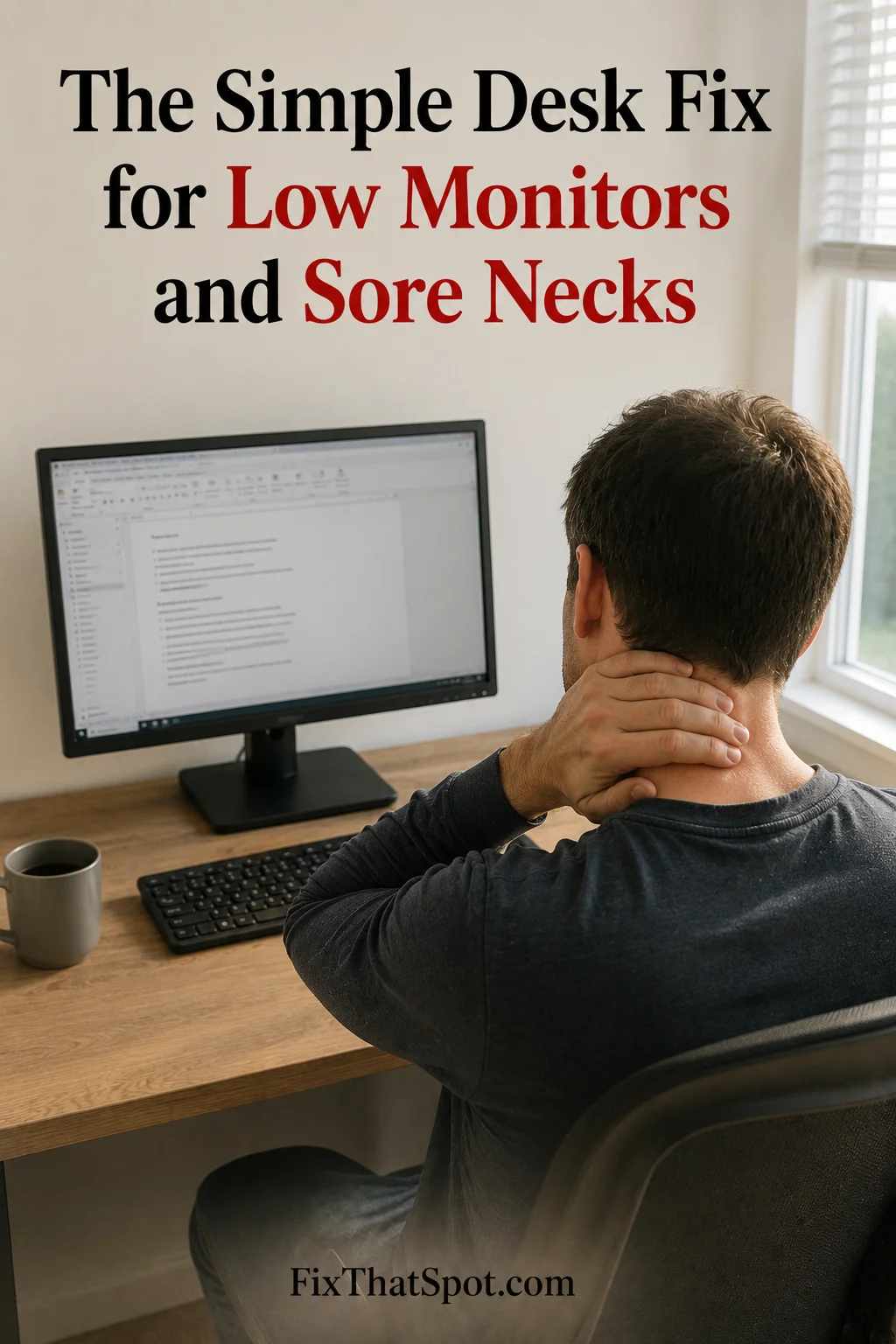
The monitor hadn’t moved, but by the middle of the day, looking down at it no longer felt like looking down.
Sitting up straighter helped whenever it came to mind. Then the next email, spreadsheet, or meeting quietly took over. Hours later, standing up was often the first time the neck felt stiff, even though nothing had seemed uncomfortable while the work was getting done.
You Don’t Notice It While It’s Happening
A low monitor doesn’t suddenly pull your head forward. It happens so gradually that there’s never a moment worth noticing.
Each glance at the screen is only a little lower than your eyes would naturally rest. One glance doesn’t matter. Hundreds of them do. Before long, the lower position simply feels normal because that’s where you’ve been looking all day.
That’s why trying to “remember your posture” rarely lasts. Sitting up isn’t the difficult part. Forgetting you’re sitting up is.
Let the Monitor Do the Work Instead
Instead of asking your body to keep correcting itself, move the screen. When the top of the monitor sits around eye level, your eyes naturally stay higher, and your neck has less reason to follow the screen downward. You can still move, lean, and change position during the day, but you’re no longer starting from a posture that quietly became normal without you noticing.
Some monitors simply won’t go high enough. That’s when a monitor stand or an adjustable monitor arm starts making sense. The goal isn’t to create the perfect workstation. It’s to stop spending the whole day looking slightly downward without realizing it.
Not sure whether height is really the problem? Slide a few solid books under the monitor for a couple of days. If you finish work without the familiar stiffness, you’ve already found your answer.
Small Desk Problems Have a Habit of Collecting
Papers that keep disappearing under notebooks or getting buried in small piles create a different kind of interruption. It’s not painful like a stiff neck, but it has the same habit of breaking your concentration over and over again. Simple desk organizers that keep papers in sight, solve that problem by keeping the documents you actually use where you can see them.
The change often feels a little unusual at first, not because it’s wrong, but because you’ve become used to looking lower than you realized. After a few days, that new position usually starts to feel just as natural, except the workday is less likely to end with the same familiar stiffness.