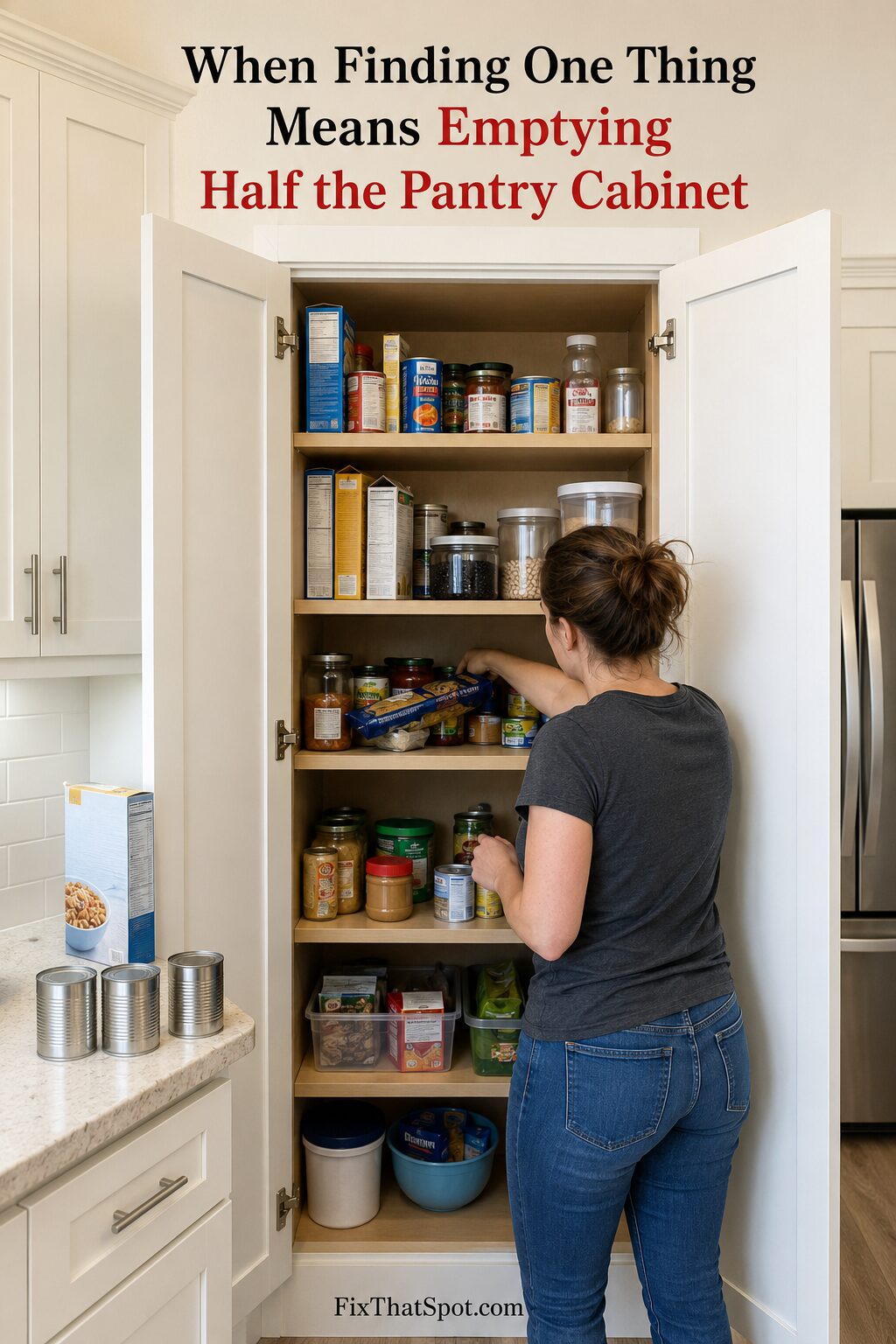
You were sure there was an open bag of rice in the pantry cabinet. It is not at the front, so out comes the cereal. Then two cans. A packet of pasta has somehow ended up lying across everything behind them.
The rice is there, pressed against the back wall. By then, finding it has taken longer than measuring it into the pan, and the counter is covered with all the food that was in the way.
Putting everything back takes almost as long. There was room before, but now one of the cans refuses to fit. You push it into another gap, where it hides whatever was already behind it.
Most of the shelf is technically available. In everyday use, though, the food near the front is what you see and remember. A packet pushed behind the cereal can sit there until you happen to uncover it, sometimes just after buying another one.
Neater rows help until more groceries arrive. Once the front fills again, getting to the back means taking everything out and starting over.
Bring the Back of the Shelf to You
A pull-out shelf brings the hidden food forward instead of making you reach past everything in front of it.
That works for a straight shelf. If food is disappearing around a blind corner instead, a kidney-shaped Lazy Susan for a corner cabinet brings that section around to the doorway.
The packet lying behind the cereal is no longer hidden. Jars at the back come forward without the jars in front being removed. The shelf may hold the same amount of food, but finding something no longer begins with unloading it.
This also makes putting groceries away less of a guessing exercise. You can pull out the shelf, see where similar items already sit and place the new food beside them. An opened packet is less likely to vanish behind unopened ones simply because there was no clear view of the back.
Make Sure the Whole Shelf Comes Forward
A pull-out shelf is only useful when it brings the food at the back within easy reach. Some shelves stop before the rear section has fully cleared the pantry. That still leaves you leaning in and reaching behind the front items, which is exactly what you are trying to avoid.
Check the pantry door and hinges as well. The shelf needs a clear path through the opening without catching or scraping. Once it can come forward properly, taking out a packet of rice should be one movement: pull, pick it up, and push the shelf back.
When the back of the shelf is easy to reach, but there is still a large gap above the cans, adjustable pantry shelves can make that empty height usable.