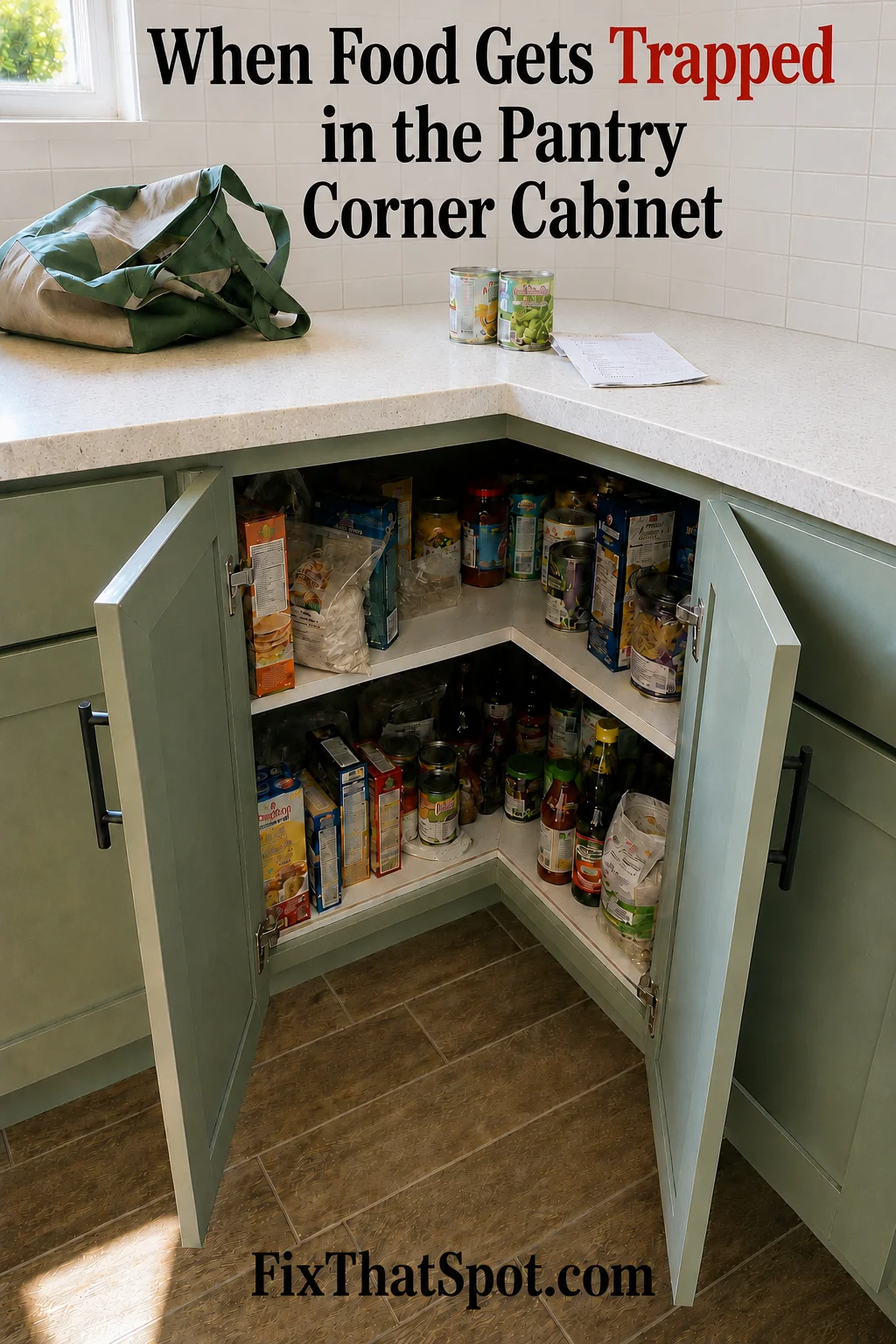
The pasta sauce sits at the very back of the corner cabinet, label turned toward the door and looking deceptively within reach. A bottle comes out first, then two cans. As they’re pulled forward, a nearby packet slips into the gap they leave behind, and that has to be taken out as well, but the jar is still in the back.
Reaching farther only pushes something else around the bend. By the time the sauce is on the counter, the bottle, cans and packets are lined up beside it. Dinner has not started, but the cabinet has already been unpacked.
Putting everything back never quite works the same way twice. You try to recreate the original order, but it slips into something else. A packet ends up wedged behind a bottle, a can gets nudged into the corner just to make space. It looks reachable, but it isn’t, the next thing you’ll see and still have to move everything for.
This is how the corner gradually becomes home to duplicate jars, unfamiliar tins and ingredients bought for one recipe several months ago. Nothing has been deliberately forgotten. It has simply moved beyond the point where retrieving it feels worth rearranging the cabinet.
A kidney-shaped Lazy Susan for a corner cabinet changes what happens when the doors open. The shelves rotate around a centre post, bringing the section stored around the bend into the doorway. The jar moves to the front instead of everything in front of it moving to the counter.
Make Sure the Shelves Can Complete the Turn
This is an installed corner-cabinet mechanism, not a round tray placed on top of the existing shelf. The kidney-shaped opening allows the shelves to pass the cabinet doorway as they rotate.
The important measurements are inside the cabinet. The shelves need room to turn without scraping the walls, and the centre post must fit between the mounting points above and below. A generous-looking doorway does not help if the shelf gets halfway around and meets the side of the cabinet.
Independently rotating shelves also avoid disturbing the level that is behaving itself. If the missing jar is below, only the lower shelf needs to turn.
The same solution is not needed everywhere food becomes difficult to reach. When groceries disappear behind one another on a straight shelf, finding one thing can mean emptying half the pantry cabinet. When the wasted space is above a short row of food, adjustable pantry shelves can use the gap above the cans.
Once the corner rotates into the doorway, it stops being the part of the cabinet used for food that can wait indefinitely. The pasta sauce comes out first. The rest of the pantry stays where it is.