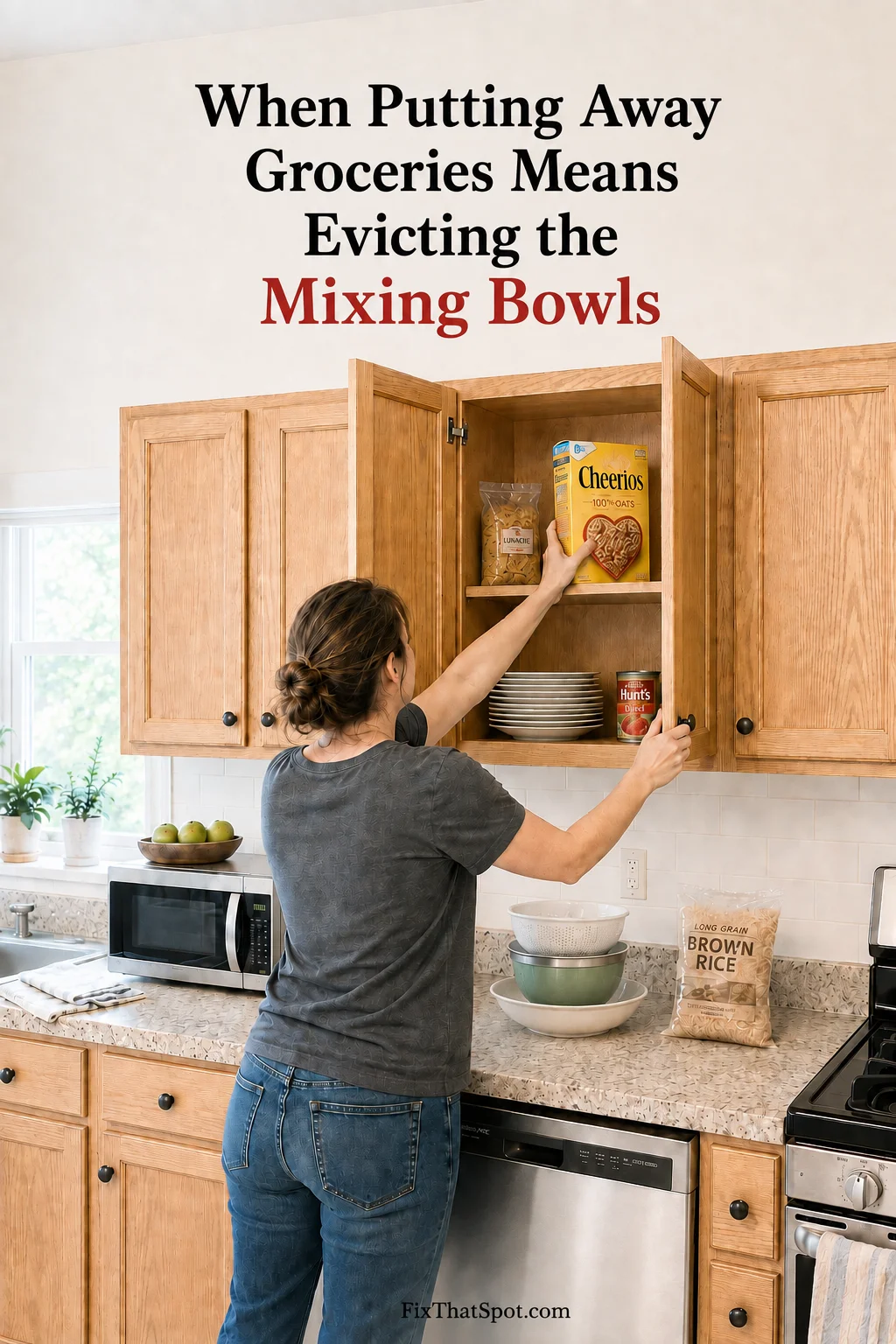
The groceries are almost put away when one box of cereal is left on the counter. There is no space for it where the rest of the food lives, but there might be room beside the plates.
The plates move along. A serving bowl goes on top of the mixing bowls, although it does not quite belong there. The cereal fits if it is turned sideways.
That leaves the bag of rice. It stays on the counter for now.
A few days later, someone buys another box of cereal and puts it beside the first. The rice has acquired a bag of flour and two tins. None of this looks permanent. It is only waiting for a proper place, which is why it can remain there for several weeks.
The kitchen may have plenty of cabinets, but they were already doing other jobs. Giving groceries a shelf does not create more storage. It simply leaves the dishes with less.
Give the Displaced Food Its Own Place
A freestanding pantry cabinet adds the missing food-storage capacity without requiring the existing kitchen cabinets to surrender more shelves.
The change is easy to notice when groceries come home. The cereal goes into the pantry cabinet instead of starting another round of rearranging. Rice no longer needs a temporary corner of the counter. The flour leaves the cupboard where it has been sitting in front of the baking dishes.
The useful part is not that every packet can be arranged perfectly. It is that groceries finally have somewhere to go without pushing something else out.
Once the food has a proper place, a magnetic grocery list on the fridge can help prevent buying another packet of something already sitting in the cabinet.
This also stops food from spreading according to whichever gap happened to be available that day. Breakfast food does not need to live in one cabinet while tins occupy another and unopened packets gather beside the toaster. One storage cabinet gives these items a shared destination.
A new cabinet solves the storage shortage. What happens inside it may be another matter. Once tins and packets begin lining up on deep shelves, finding one thing can mean emptying half the pantry cabinet.
Look at What the Cabinet Must Take Over
Before choosing a freestanding pantry cabinet, gather the food currently living outside the pantry in your mind, or in one place if that is practical. Include the groceries on the counter and those tucked among plates, mugs and serving dishes.
Taken separately, a cereal box here and three tins there do not appear to need much room. Seen together, they show the amount of storage the kitchen is actually missing.
The cabinet needs to take over that displaced food. Otherwise, the first grocery trip may fill it, and the next bag of rice will return to the counter as though nothing happened.
Once the cabinet holds what was previously scattered around the kitchen, the mixing bowls can have their shelf back. They may still be stacked badly, but at least the cereal is no longer involved!