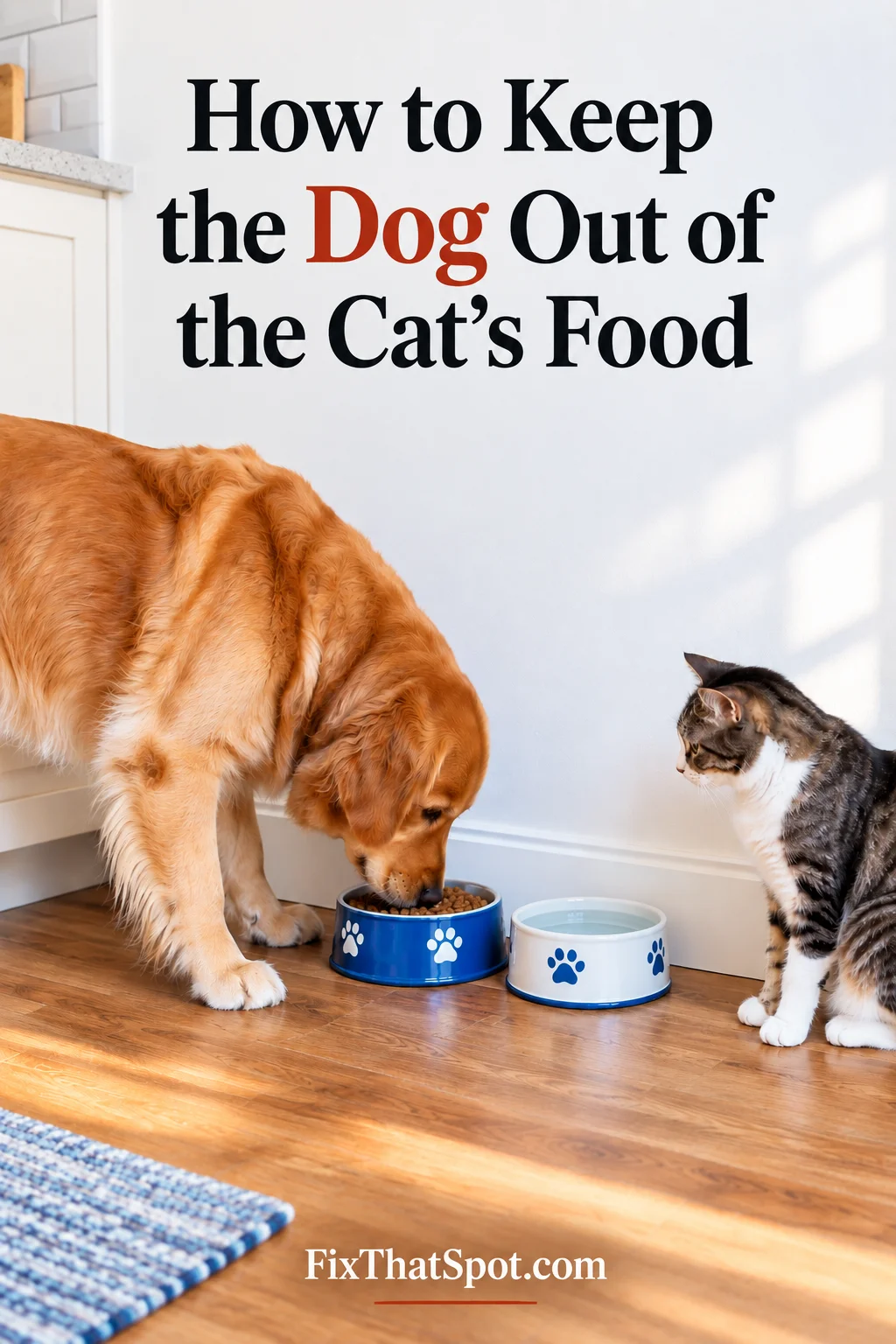
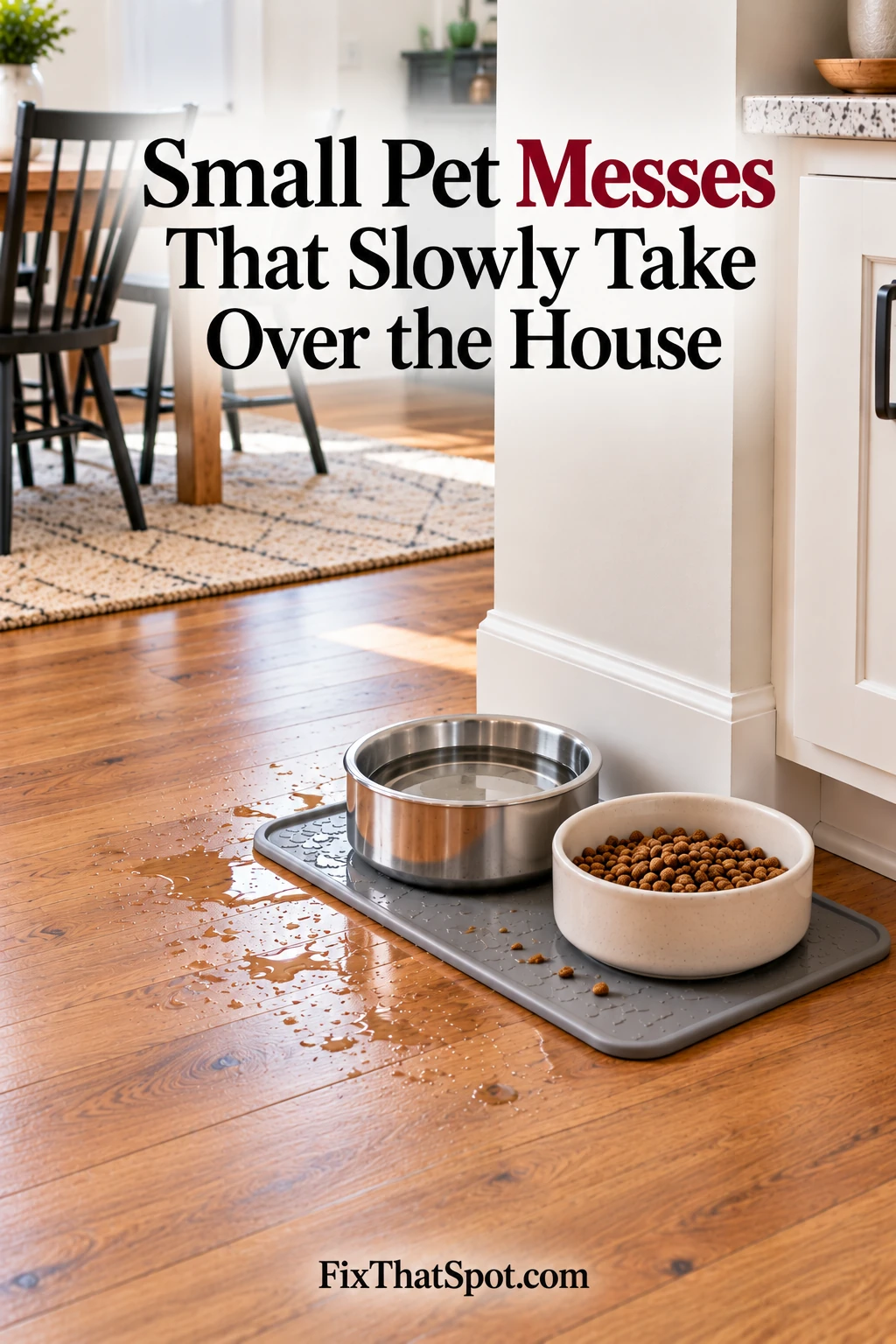
A few drops beside the water bowl do not look like much. Neither does a little litter outside the box or a few paw prints across the kitchen floor. The trouble is that these small messes rarely happen once.
Pets use the same parts of the house every day. The floor gets wet again after it was wiped, hair returns to clean clothes, and litter turns up several feet from the box. Keeping up with it can mean cleaning the same spots over and over.
Water Around the Bowl Does Not Always Stay There
Some dogs finish drinking and walk away with water still dripping from their mouth. The bowl may be sitting neatly on a mat while a trail appears across the floor a few seconds later.
A larger mat can catch splashes close to the bowl, but it cannot do much about water carried away on a dog’s mouth. When that is what keeps happening, it makes more sense to reduce how much water leaves the drinking area.
For a dog that regularly drips water everywhere after drinking, changing the drinking setup can make more difference than repeatedly wiping the floor.
Pet Hair Finds Its Way Into the Laundry
A shirt can look clean when it goes into the hamper and come out of the dryer with pet hair still clinging to it. Dark pants and other smooth fabrics tend to make every remaining strand especially easy to see.
The hair often gets there long before laundry day. Sitting on the couch, picking up the dog or letting the cat settle on a pile of clothes is enough to transfer it. Once everything is mixed together in the hamper, a few hairy items can become part of the whole load.
There are ways to deal with pet hair in the laundry without spending the next ten minutes going over clean clothes with a lint roller.
Litter Travels Farther Than the Box
The first few pieces usually land directly outside the litter box. Others get caught between the cat’s paws and appear in the hallway, beside furniture or on a completely different floor.
Sweeping around the box helps with what can be seen, but the litter itself is not always the only problem. Odor can make the area noticeable even shortly after the scattered pieces have been cleaned up.
If that is happening, dealing with litter box smells spreading through the house tackles the part of the problem that a broom cannot reach.
Muddy Paws Can Cross a Room Before You Notice
A dog does not have to come through the door covered in mud to leave marks behind. Damp dirt around the pads can make a dark print near the entrance, another in the hallway and several lighter ones farther inside.
By the time the first print is noticed, the dog may already have crossed the room. Cleaning those marks solves today’s mess, but another wet walk can put them straight back.
Cleaning muddy paws before they cross the floor keeps more of that dirt near the entrance instead of following the dog through the house.

The Litter Box Can Take Over a Corner
Sometimes there is no spare laundry room, utility room or quiet hallway where a litter box can disappear. The living room may simply be the place where it fits and where the cat can always reach it.
The box itself is only part of what becomes visible. Add the scoop and spare litter nearby, and one corner starts looking more like a pet-care station than part of the room.
When moving it is not practical, hiding a litter box in the living room can make the area less conspicuous without changing the location the cat already uses.
Stop the Mess Before It Travels
The easiest time to deal with a pet mess is usually while it is still in one spot. Water beside the bowl takes seconds to wipe up. Once the dog walks away dripping, there may be marks halfway across the room. Mud and litter spread in much the same way.
A small change near the bowl, litter box or door can save repeated cleanup elsewhere. The house will still show signs that pets live there, just with fewer of those signs scattered from one room to the next.